Activated Carbon in Koi Ponds: When to Use and When to Avoid
Carbon removes medications from pond water - using it during treatment eliminates the treatment. This is the most important thing to know about activated carbon in koi ponds. Many keepers have had a disease treatment fail without understanding why, and the answer was carbon in the filter running throughout the medication course.
KoiQuanta's treatment log notes when carbon is added to remove medication post-treatment. No competitor covers carbon filtration in the context of treatment management as a specific protocol consideration.
TL;DR
- Add carbon to the filter for 48-72 hours post-treatment.
- Once exhausted (typically after 2-4 weeks of active use), it stops adsorbing new compounds.
- A 25% water change removes 25% of any dissolved organic compound, improves overall chemistry, and doesn't have the "exhausted carbon releasing compounds" risk.
- Remove it after 48-72 hours of targeted use.
- Don't use carbon as permanent filtration media - it exhausts within 2-4 weeks and provides false security beyond that.
- After treatment completion, adding carbon for 48-72 hours is an effective way to clear remaining medication.
- Activated carbon exhausts its adsorption capacity within 2-4 weeks of active use.
How Activated Carbon Works
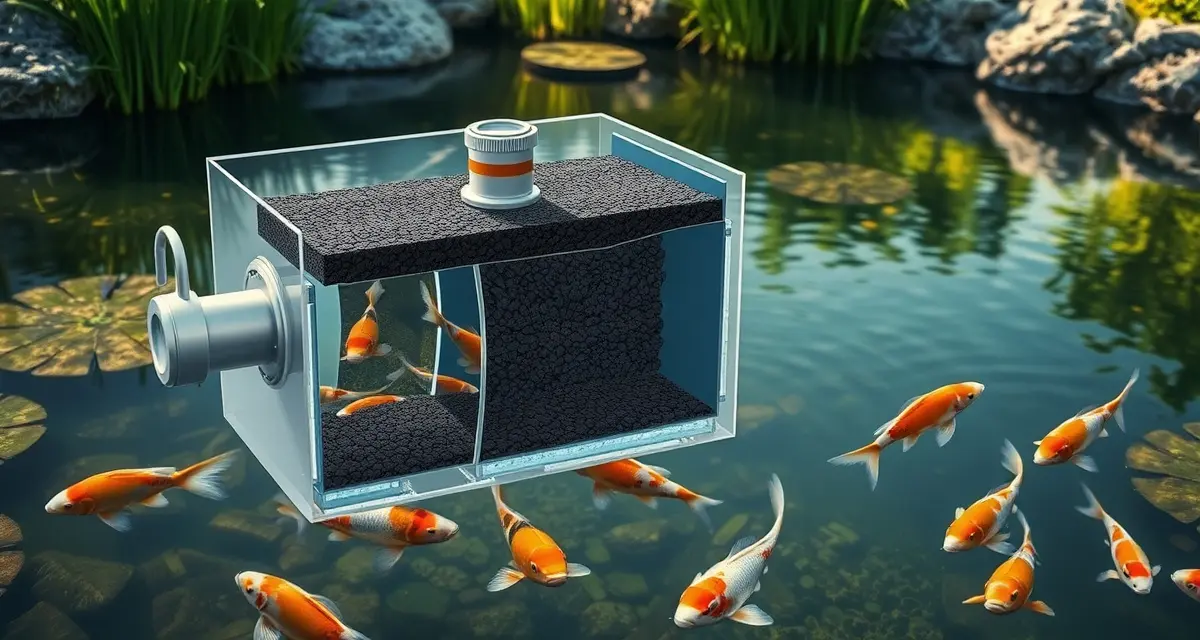
Activated carbon (also called activated charcoal) is a processed form of carbon with a vast surface area created by its highly porous structure. This surface adsorbs (binds to its surface) a wide range of organic compounds from the water passing through it.
The mechanism is adsorption, not absorption. Organic molecules stick to the carbon's surface through a combination of physical and chemical attraction. Once the surface sites are occupied, the carbon is "exhausted" and can no longer adsorb additional compounds.
Activated carbon doesn't discriminate well between harmful and beneficial organic compounds. It removes:
- Medications and treatment chemicals
- Chlorine and chloramines
- Dissolved organic compounds (tannins, phenols, some organic acids)
- Odour and colour compounds
- Some hormones and metabolic byproducts
This broad spectrum removal is both its benefit and its limitation.
When to Use Carbon in a Koi Pond
Post-treatment medication removal: The most clearly indicated use for activated carbon in a koi pond. After completing a treatment course - antibiotics, antiparasitic, organophosphates - activated carbon rapidly removes the remaining medication from the water column. This is valuable because many medications remain bioactive in the water long after treatment completion and can stress fish or continue affecting the biological filter.
Add carbon to the filter for 48-72 hours post-treatment. Remove it after medication removal is complete.
Emergency removal of a harmful substance: If a contaminant enters the pond - herbicide runoff, household chemical spill, oil contamination - activated carbon can help remove it quickly while other corrective actions are taken. This is an emergency use, not a routine one.
New pond or new liner odour: New rubber liners and some pond products can leach compounds that are mildly irritating to fish. Carbon in the filter during initial cycling can help remove these compounds more quickly.
Treating discoloration from tannins: If you've added wood, peat, or organic matter to your pond and the water is stained brown-yellow from tannin release, carbon removes the tannins and clears the discoloration.
When water has chloramine concerns: Chloramine (used in some municipal water supplies) is not completely removed by standard dechlorinators the same way chlorine is. Carbon effectively removes chloramine.
When Not to Use Carbon in a Koi Pond
During any medication treatment: This is the most critical prohibition. Run carbon during treatment and you're removing the treatment as fast as you add it. Any disease treatment in a pond with carbon running is ineffective.
The mistake often goes unrecognised. The keeper adds medication, observes no improvement, adds more medication (now without carbon), and wonders why the first dose didn't work. The carbon was there the whole time.
Before starting any medication course, remove all carbon from your filters.
As permanent filtration media: Activated carbon is not suitable as a permanent biological filtration component. Once exhausted (typically after 2-4 weeks of active use), it stops adsorbing new compounds. Exhausted carbon may also release previously adsorbed compounds back into the water as the water chemistry changes - a phenomenon called "desorption." Permanent carbon in a filter that's not being replaced regularly provides false security and potential risk.
When biological filtration is compromised: Carbon has some antimicrobial properties that can affect biological filter bacteria at high concentrations. During a filter recovery period, don't add carbon.
Carbon in Specific Contexts
Quarantine Tanks
Carbon has a more defined role in quarantine tanks than in display ponds:
- During observation period: No carbon, or minimal carbon. You want to maintain water quality without removing compounds that might be diagnostic (some biological indicators of fish health alter water chemistry in ways you can observe).
- During treatment: Remove all carbon before any medication. This is especially important in quarantine tanks where treatments are frequently administered.
- Post-treatment: Add carbon for 48-72 hours to clear medication before introducing new fish or transferring fish to another system.
Water Changes and Carbon
Water changes are generally preferable to carbon for most water quality management in established ponds. A 25% water change removes 25% of any dissolved organic compound, improves overall chemistry, and doesn't have the "exhausted carbon releasing compounds" risk. Carbon is most valuable when:
- You can't perform an adequate water change quickly
- You specifically need to remove a medication or contaminant that water changes can't efficiently dilute
- The compound you're removing is best addressed by adsorption rather than dilution
Does Carbon Filter Remove Medications from a Koi Pond?
Yes, effectively and rapidly. Most common koi medications are adsorbed by activated carbon within hours to a day. This is why carbon removal before treatment is so important - and why carbon addition post-treatment is an effective way to clear residual medication.
Specific medications and their carbon removal:
- Malachite green: Rapidly adsorbed by carbon
- Potassium permanganate: Oxidising agent, partially neutralised by carbon
- Oxytetracycline: Adsorbed effectively
- Salt: NOT adsorbed by carbon. Salt remains in the water column regardless of carbon use. To remove salt, water changes are needed.
Can I Use Carbon in a Koi Pond Permanently?
No. Carbon as a permanent filter component creates a false sense of filtration while gradually exhausting its capacity. After 2-4 weeks, it contributes nothing. After exhaustion, the risk of desorption increases - previously captured compounds potentially releasing back into the water.
The correct approach is to keep activated carbon available for specific use cases (post-treatment, emergency contamination, odour events) and add it temporarily when those situations arise. Remove it after 48-72 hours of targeted use.
Log carbon use events in KoiQuanta's treatment log with the dates added and removed. This prevents the common mistake of forgetting carbon is in the filter when starting a new treatment course.
Frequently Asked Questions
When should I use carbon in my koi pond?
The primary use case for activated carbon in a koi pond is post-treatment medication removal: after completing a treatment course, add carbon to the filter for 48-72 hours to rapidly clear residual medication from the water. Additional valid uses include emergency removal of harmful contaminants, treating tannin discoloration from organic material, and addressing chloramine in the water supply. Don't use carbon as permanent filtration media - it exhausts within 2-4 weeks and provides false security beyond that. Most importantly, never run carbon during any medication treatment, as it removes the medication from the water and renders treatment ineffective.
Does carbon filter remove medications from a koi pond?
Yes, activated carbon removes most common koi medications rapidly - within hours for many compounds. This is a dual-edged property: beneficial for removing medication residue after treatment is complete, but catastrophic if carbon is running during treatment. The carbon adsorbs the medication from the water column as fast as you dose it, leaving the fish without effective therapeutic exposure while you're consuming your medication supply. Always remove all carbon from your filters before starting any medication treatment. After treatment completion, adding carbon for 48-72 hours is an effective way to clear remaining medication.
Can I use carbon in a koi pond permanently?
No. Activated carbon exhausts its adsorption capacity within 2-4 weeks of active use. After exhaustion, it no longer removes compounds from the water and provides no benefit. At exhaustion, there is also risk of desorption - previously captured compounds releasing back into the water as carbon surface chemistry shifts. Carbon used permanently requires replacement every 2-4 weeks to maintain effectiveness, which is expensive and rarely done consistently. For ongoing organic compound management, biological filtration, mechanical filtration, and regular water changes are the appropriate approach. Keep carbon for targeted use: specific situations where adsorption removal is the right tool, used for 48-72 hours and then removed.
What is Activated Carbon in Koi Ponds: When to Use and When to Avoid?
Activated carbon in koi ponds is a highly porous filtration media that adsorbs dissolved organic compounds, tannins, chlorine, and medications from pond water. This KoiQuanta guide covers the critical distinction between when carbon helps your pond and when it actively harms your fish — specifically during medication treatments. Understanding this balance prevents one of the most common and costly mistakes koi keepers make: running carbon filtration while treating sick fish, which neutralizes the medication entirely.
How much does Activated Carbon in Koi Ponds: When to Use and When to Avoid cost?
Activated carbon itself is inexpensive — typically a few dollars per pound — and this guide is free. The real cost consideration is timing mistakes. Running carbon during a medication course wastes the cost of the treatment and risks losing fish. The protocol covered here (targeted 48-72 hour post-treatment use) is far more cost-effective than using carbon as permanent filtration media, which requires replacement every 2-4 weeks and provides false security once exhausted.
How does Activated Carbon in Koi Ponds: When to Use and When to Avoid work?
Activated carbon works through adsorption — dissolved compounds bond to the enormous internal surface area of the porous carbon granules. It effectively removes medications, tannins, chlorine, and some organic waste. However, it exhausts its capacity within 2-4 weeks of active use. Once saturated, it stops adsorbing new compounds. The guide explains that carbon is best used in targeted 48-72 hour windows — particularly after completing a medication course — rather than as permanent filtration media.
What are the benefits of Activated Carbon in Koi Ponds: When to Use and When to Avoid?
The primary benefit of activated carbon is rapid removal of specific compounds from pond water, most importantly residual medication after a treatment course completes. It also removes tannins (which discolor water), chlorine, and dissolved organics that cause odor. Used correctly in short, targeted bursts, it gives koi keepers precise control over pond chemistry. The guide also clarifies that regular 25% water changes achieve much of the same water quality improvement without the exhaustion risk.
Who needs Activated Carbon in Koi Ponds: When to Use and When to Avoid?
Any koi keeper who treats fish for disease or parasites needs to understand this guide. The most critical audience is anyone currently running activated carbon as permanent filtration media — a common beginner mistake. If you've ever had a medication treatment fail inexplicably, carbon left in the filter during treatment is a likely culprit. Keepers managing water quality, tannin staining, or post-treatment cleanup will also find the targeted-use protocol directly applicable.
How long does Activated Carbon in Koi Ponds: When to Use and When to Avoid take?
The actual filtration process takes 48-72 hours for targeted post-treatment carbon use — this is the recommended window to run carbon after completing a medication course before removing it. For water clarity and tannin removal, results are often visible within 24 hours. Carbon exhausts its full adsorption capacity within 2-4 weeks of continuous use. Beyond that timeframe, it provides no benefit and should be removed rather than left in the filter providing false security.
What should I look for when choosing Activated Carbon in Koi Ponds: When to Use and When to Avoid?
Look for high-quality activated carbon with a large surface area, ideally specified in square meters per gram. Avoid cheap bulk carbon that may contain phosphate binders that leach into pond water. Choose a form factor compatible with your filter media bags for easy removal after 48-72 hours — this is essential, since easy removal prevents it from being left in indefinitely. Avoid products marketed specifically as 'permanent' pond filtration carbon, as the exhaustion timeline makes that claim misleading.
Is Activated Carbon in Koi Ponds: When to Use and When to Avoid worth it?
Yes — when used correctly. The targeted 48-72 hour post-treatment protocol is genuinely effective at clearing residual medication and gives keepers clean control over treatment endpoints. The guide is worth reading for any koi keeper, even if you never intend to use carbon, because understanding why to remove it during treatments prevents treatment failure. The caution against permanent use is equally valuable — many keepers spend money replacing exhausted carbon that's doing nothing while believing their filtration is actively working.
Related Articles
- Long-Term Salt Use in Koi Ponds: Benefits, Risks, and Best Practices
- Zeolite in Koi Ponds: Ammonia Removal Benefits and Limitations
- Green Water in Koi Ponds: Causes, Risks, and How to Clear It
- What Koi Pond Liner Should I Use for Long-Term Fish Health?
Sources
- Associated Koi Clubs of America (AKCA)
- Koi Organisation International (KOI)
- University of Florida IFAS Extension Aquaculture Program
- Fish Vet Group
- Water Quality Association