Koi Pond Filtration: What System Do You Need for Healthy Water?
A properly sized biological filter for koi should be able to process the full pond volume every 2 hours at peak fish load. This is the baseline specification most koi pond filtration systems fail to meet. Aquatic store staff selling filtration often quote ratings based on ornamental goldfish ponds or lightly stocked water features. Koi produce dramatically more waste per inch of body length than goldfish, and filtration rated for a 1,000-gallon ornamental pond may be completely inadequate for a 1,000-gallon koi pond at moderate stocking.
KoiQuanta's water quality tracker shows when filtration is failing before fish suffer. Filter performance trend analysis detects gradual filtration decline weeks before fish show clinical signs of poor water quality, giving you time to correct the problem before it becomes an emergency.
TL;DR
- A properly sized biological filter for koi should be able to process the full pond volume every 2 hours at peak fish load.
- Koi produce dramatically more waste per inch of body length than goldfish, and filtration rated for a 1,000-gallon ornamental pond may be completely inadequate for a 1,000-gallon koi pond at moderate stocking.
- A filter rated for 2,000 gallons in a garden pond context should be considered adequate for a 1,000 to 1,500-gallon koi pond.
- A 2,000-gallon pond needs a pump moving 1,000 to 2,000 gallons per hour through the filter.
- Persistently detectable ammonia (even at 0.25 mg/L) indicates the biological filter is not processing fish waste fast enough.
- Antibiotic treatments for fish disease also affect filter bacteria; monitor ammonia and nitrite for 2 to 3 weeks after antibiotic treatment.
- For a 2,000-gallon koi pond at moderate stocking, look for filtration rated to 4,000 gallons or larger.
The Two Types of Filtration Koi Need
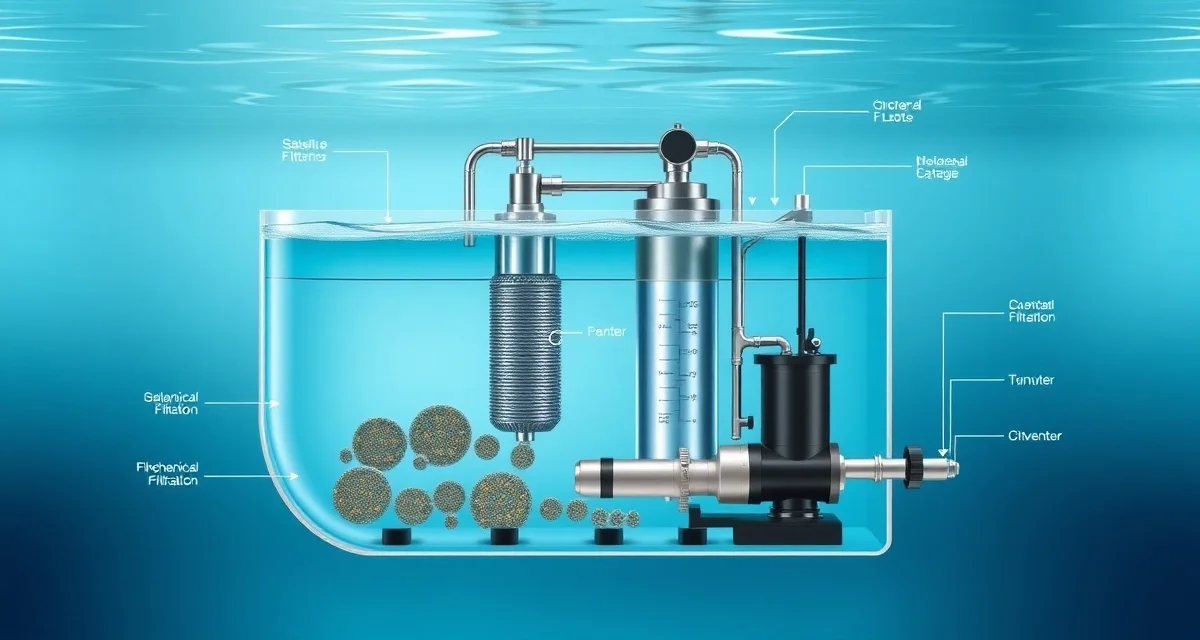
Mechanical filtration removes solid waste particles from the water: fish feces, uneaten food, dead plant material, and debris. Without mechanical filtration, solid waste accumulates on the pond bottom and in biological filter media, providing an ongoing source of ammonia as it decomposes and clogging biological media that needs open flow to function.
Common mechanical filtration includes:
- Settlement chambers (allow heavy solids to sink and be removed)
- Vortex chambers (use rotational flow to separate particles)
- Filter pads and sponges (physically trap particles)
- Drum filters (self-cleaning screens that remove particles down to 60-100 microns)
Biological filtration converts ammonia (excreted by fish) to nitrite, then to nitrate, through colonies of nitrifying bacteria living in the filter media. Without adequate biological filtration, ammonia and nitrite accumulate to toxic levels.
Effective biological filtration requires:
- Large surface area for bacterial colonization (media like ceramic rings, K1 media, or bonded filter foam)
- Continuous water flow through the media
- Adequate oxygenation of the media (nitrifying bacteria are aerobic)
- Protection from disruption (aggressive cleaning, chlorinated water, or antibiotics can crash biological filter function)
Most effective koi pond filtration systems use both mechanical and biological stages in sequence: mechanical first to remove solids before they reach biological media, then biological to process the ammonia in the water passing through.
Sizing Your Filter Correctly
Filter manufacturers rate their products for maximum pond volumes, but these ratings are frequently optimistic, particularly for koi ponds. When sizing a filter for koi:
Use pond volume as the baseline. The total gallons in your pond determines the scale of filtration required.
Apply a koi-specific multiplier. Filtration rated for a specific pond volume should be used for a koi pond at roughly 50 to 75% of the rated maximum. A filter rated for 2,000 gallons in a garden pond context should be considered adequate for a 1,000 to 1,500-gallon koi pond.
Account for fish load. A lightly stocked pond (80 inches of fish per 1,000 gallons or less) can use filtration closer to its rated maximum. A heavily stocked pond needs more filtration per gallon.
Check turnover rate. Your pump should move the full pond volume through the filtration system in 1 to 2 hours. A 2,000-gallon pond needs a pump moving 1,000 to 2,000 gallons per hour through the filter.
Plan for head pressure. The pump's gallons-per-hour rating is at zero head (no vertical lift). Every foot of vertical lift and every elbow in the plumbing reduces actual flow. Size the pump to deliver the required flow at the actual head pressure of your installation.
Signs Your Filtration Is Failing
Ammonia consistently detectable: In a properly filtered and properly stocked koi pond, ammonia should be undetectable (zero) at all times except briefly after feeding. Persistently detectable ammonia (even at 0.25 mg/L) indicates the biological filter is not processing fish waste fast enough.
Nitrite spikes: Nitrite is the intermediate product of biological filtration. If ammonia is being converted but nitrite is accumulating, the second stage of the nitrogen cycle (nitrite to nitrate) is lagging. This happens in new filters cycling for the first time or in filters that have been disrupted.
Rapid deterioration of water clarity: Mechanical filtration failure allows particulate matter to accumulate in the water column.
Increasing disease frequency: As discussed with overstocking, chronically poor water quality from inadequate filtration immunosuppresses fish, leading to more frequent disease events.
KoiQuanta's koi pond water quality tracker logs all key parameters over time. Tracking ammonia, nitrite, and nitrate across weeks reveals filtration performance trends that aren't visible in individual test results. The ammonia tracking guide covers the specific patterns that indicate biological filtration problems.
Maintaining Your Koi Pond Filter
Clean mechanical media regularly. Filter pads, settlement chambers, and vortex chambers accumulate solid waste and need cleaning based on your fish load. Many koi hobbyists clean mechanical media weekly in heavily stocked ponds. Clean mechanical media using pond water, never tap water, to avoid killing beneficial bacteria.
Never clean biological media aggressively. Biological filter media hosts the nitrifying bacteria that process ammonia. Aggressive cleaning kills these bacteria and causes ammonia and nitrite spikes. If biological media needs cleaning, rinse gently in pond water and clean only a portion at a time to preserve the bacterial colony.
Monitor for reduced flow. Clogged mechanical media reduces flow through the biological stage, reducing filtration efficiency. Monitoring filter flow rate is part of routine maintenance.
Protect from chlorine and antibiotics. Chlorinated tap water added to the pond without dechlorination can kill biological filter bacteria. Antibiotic treatments for fish disease also affect filter bacteria; monitor ammonia and nitrite for 2 to 3 weeks after antibiotic treatment.
Frequently Asked Questions
What size filter do I need for my koi pond?
As a starting point, choose a filter rated by the manufacturer for at least twice your actual pond volume. For a 2,000-gallon koi pond at moderate stocking, look for filtration rated to 4,000 gallons or larger. Pair this with a pump that turns over the full pond volume every 1 to 2 hours. Higher stocking density requires proportionally larger filtration. When in doubt, size up: over-filtering a koi pond has no downside, and under-filtering is one of the most common causes of preventable koi deaths.
How do I know if my koi pond filter is working?
Test ammonia and nitrite weekly. In a properly functioning filter in a properly stocked pond, both should be zero at all times except briefly after feeding. If either parameter is consistently detectable, your filtration is not keeping up with your fish load. You can also assess water clarity, check that filter flow rate hasn't dropped (indicating clogging), and observe fish behavior for non-specific stress signs. KoiQuanta's water quality trend charts show whether parameters are stable, improving, or trending in the wrong direction over time.
Do I need both mechanical and biological filtration for koi?
Yes. Mechanical and biological filtration are not interchangeable. Mechanical filtration removes solids; biological filtration converts ammonia. Without mechanical filtration, solid waste clogs biological media and decomposes to produce more ammonia than the biological stage can handle. Without biological filtration, mechanical filtration leaves ammonia in the water even if the water looks clear. A complete koi pond filtration system requires both stages working in sequence. Single-unit all-in-one filters for small ponds include both stages, but larger or more heavily stocked ponds benefit from dedicated mechanical and biological chambers.
What is Koi Pond Filtration: What System Do You Need for Healthy Water??
Koi pond filtration is a two-stage system combining mechanical and biological filtration to maintain safe water quality. Mechanical filtration removes solid waste particles using settlement chambers, filter pads, or drum filters. Biological filtration converts toxic ammonia excreted by koi into less harmful nitrate through nitrifying bacteria colonies living on high-surface-area media. A properly sized system should process the full pond volume every 2 hours at peak fish load. Koi produce significantly more waste than goldfish, so filtration rated for ornamental ponds is typically inadequate for koi at the same volume.
How much does Koi Pond Filtration: What System Do You Need for Healthy Water? cost?
Koi pond filtration systems range from a few hundred dollars for basic gravity-fed setups on smaller ponds to several thousand for multi-chamber systems with drum filters on larger installations. The key cost principle is to buy filtration rated for at least twice your actual pond volume. A 2,000-gallon koi pond needs filtration rated for 4,000 gallons or more. Undersized filtration creates chronic water quality problems that lead to disease, medication costs, and fish losses far exceeding the price difference between adequate and inadequate filtration. Pump sizing, plumbing, and media costs are additional considerations.
How does Koi Pond Filtration: What System Do You Need for Healthy Water? work?
Water flows through two stages in sequence. First, mechanical filtration traps solid waste using settlement chambers, vortex separators, or filter pads, preventing debris from clogging the biological stage. Second, water passes over biological media with large surface area where colonies of nitrifying bacteria convert ammonia to nitrite, then nitrite to nitrate. These bacteria require continuous water flow and adequate oxygen to function. The pump moves the full pond volume through both stages every 1-2 hours. A 2,000-gallon pond needs a pump delivering 1,000-2,000 gallons per hour at the actual head pressure of the installation.
What are the benefits of Koi Pond Filtration: What System Do You Need for Healthy Water??
Properly sized filtration maintains zero ammonia and zero nitrite at all times, which are the two parameters most directly responsible for koi disease and death. Adequate filtration prevents chronic immunosuppression from poor water quality, reducing disease frequency and medication costs. Clear water allows you to observe fish behavior and spot health problems early. Stable water chemistry reduces fish stress, improving growth rates and color development. KoiQuanta's water quality trend tracking shows whether your filtration is keeping up with your fish load over time, detecting gradual decline weeks before fish show clinical symptoms.
Who needs Koi Pond Filtration: What System Do You Need for Healthy Water??
Every koi keeper needs adequate filtration, but this guide is especially important for new pond builders who risk buying undersized equipment, hobbyists experiencing recurring disease problems that may stem from inadequate filtration, and keepers who are adding fish to existing ponds and approaching the capacity limits of their current system. Dealers managing multiple tanks with high fish loads need filtration that can handle peak stocking density. Anyone whose ammonia or nitrite readings are consistently above zero should evaluate whether their filtration is undersized for their current fish population.
How long does Koi Pond Filtration: What System Do You Need for Healthy Water? take?
Installing a new filtration system takes 1-3 days for most pond setups. The critical timing factor is biological filter maturation: new biological media takes 4-8 weeks to develop sufficient nitrifying bacteria colonies to process the full ammonia load from your fish. During this cycling period, ammonia and nitrite will be detectable and require monitoring every 2-3 days. Do not add your full fish load until the cycle is complete. KoiQuanta's cycling tracker monitors your parameter progression and confirms when the nitrogen cycle is established and the filter can handle your planned stocking level.
What should I look for when choosing Koi Pond Filtration: What System Do You Need for Healthy Water??
Size the filter for at least twice your pond volume -- a 2,000-gallon koi pond needs filtration rated for 4,000 gallons minimum. Ensure the system includes both mechanical and biological stages in sequence. Check that the pump delivers adequate flow at your actual head pressure, not just the zero-head rating. Choose biological media with high surface area like ceramic rings or K1 moving bed media. Verify the mechanical stage is accessible for regular cleaning without disrupting biological media. Plan for future fish growth: koi can triple in size over several years, dramatically increasing waste production beyond what they produced when first added.
Is Koi Pond Filtration: What System Do You Need for Healthy Water? worth it?
Adequate filtration is not optional for koi keeping -- it is the single most important investment in fish health. Under-filtered ponds produce chronic low-level ammonia exposure that suppresses immune function and leads to recurring disease, medication costs, and fish losses that far exceed the cost of proper filtration equipment. Over-filtering has no downside, while under-filtering is one of the most common causes of preventable koi deaths. Investing in filtration rated for twice your pond volume from the start is significantly less expensive than upgrading later after experiencing the consequences of inadequate capacity.
Related Articles
- Do I Need to Retreat After a Water Change During Koi Treatment?
- How Often Should I Do Water Changes in My Koi Pond?
Sources
- Associated Koi Clubs of America (AKCA)
- Koi Organisation International (KOI)
- University of Florida IFAS Extension Aquaculture Program
- Fish Vet Group
- Water Quality Association