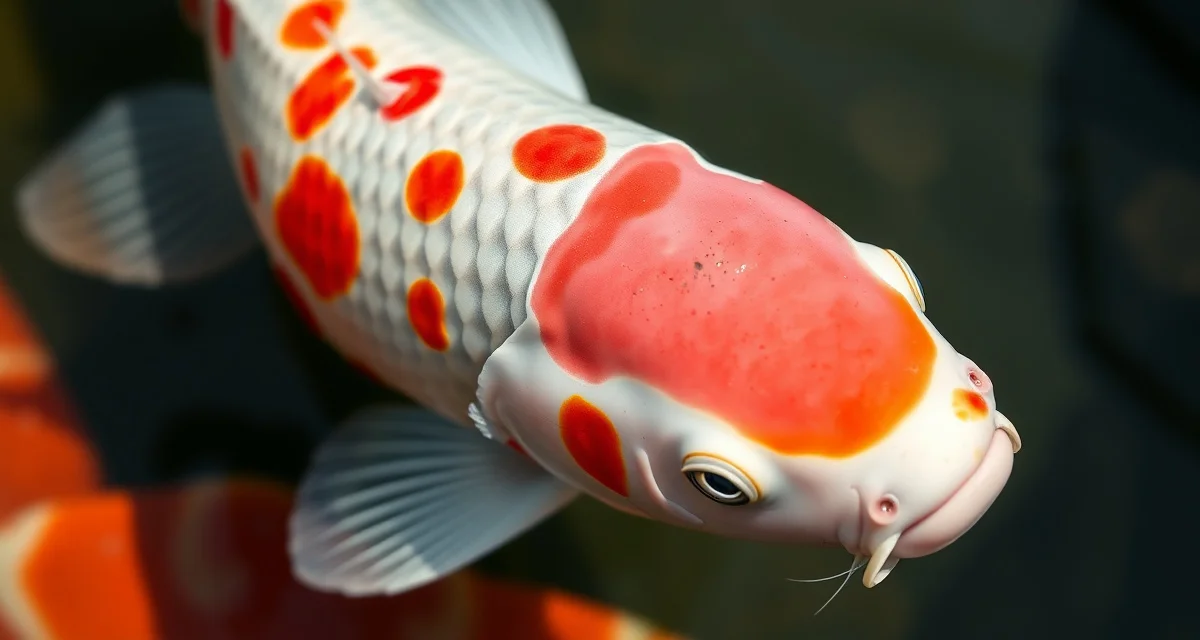
Red Spots on Koi: What They Mean
Aeromonas septicemia produces red hemorrhagic streaks that can be mistaken for wounds. The distinction matters because the treatment differs completely, and misdiagnosis costs time that a fish with bacterial septicemia doesn't have.
KoiQuanta's AI identification distinguishes bacterial hemorrhage from parasite attachment sites. No competitor guides through differential diagnosis for red spot presentations the way KoiQuanta does.
TL;DR
- The fish louse itself may be visible as a small oval-shaped creature on the skin surface (about 5-10mm, transparent or greenish).
- Tracking trends over time reveals issues before they become visible in fish behavior.
- KoiQuanta connects observations, water data, and treatment records in one searchable history.
- Early detection based on parameter trends reduces treatment costs and fish stress.
- Seasonal changes require adjusted monitoring schedules; automated reminders help maintain consistency.
The Main Causes of Red Spots
1. Aeromonas Hemorrhagic Septicemia
Appearance: Red or reddish-purple areas of hemorrhage beneath the scales and skin. These may appear as diffuse red patches, red streaking following blood vessels, or concentrated red areas. The skin surface is typically intact (not an open wound) at least in early stages.
Key distinguishing features:
- Hemorrhage beneath intact skin (not an open wound)
- Red streaking can follow blood vessels (visible as linear patterns)
- Multiple affected areas, not confined to one location
- Fish typically showing systemic signs: lethargy, reduced appetite, behavior changes
- Rapid progression over days
Treatment: Systemic antibiotic therapy is required. This is a bacterial septicemia and topical treatment alone is inadequate. Improve koi pond water quality tracker. Medicated food or injectable antibiotics (via vet) are the appropriate treatment pathways.
2. Parasite Attachment Sites
Appearance: Small, discrete circular red or reddish spots at parasite attachment locations. Fish louse (Argulus) and anchor worm (Lernaea) both leave characteristic attachment marks.
Fish louse (Argulus) attachment sites: Small reddish hemorrhagic spots, often scattered across the body. The fish louse itself may be visible as a small oval-shaped creature on the skin surface (about 5-10mm, transparent or greenish). Fish typically flash and scratch intensely.
Anchor worm (Lernaea) attachment sites: Reddened wound at the attachment point with the anchor worm's tail (white or green thread) visible emerging from the wound. Secondary bacterial infection of the attachment site is common.
Treatment: Physical removal of parasites (tweezers for anchor worm, tweezers or commercial organophosphate treatment for fish louse), followed by treatment of attachment sites with topical antiseptic.
3. Bacterial Ulcer Development (Aeromonas/Pseudomonas)
Appearance: Early bacterial ulcers often begin as reddened scale areas before the skin surface breaks. The red precedes the ulcer opening by days.
Key distinguishing features:
- Specific location on body (not generalized hemorrhage)
- Progresses from red area to open ulcer over days
- May have a slightly raised or tense appearance to the area
Treatment: Topical treatment once ulcers open. Pre-ulcer red areas may respond to immediate water quality improvement and topical antimicrobial treatment before progression.
4. Physical Injury
Appearance: Reddening associated with a specific physical injury event: heron strike, handling damage, netting abrasion. The pattern reflects the injury mechanism.
Key distinguishing features:
- Acute onset associated with a known event
- Irregular pattern reflecting the injury (not regular hemorrhage pattern)
- Single area of redness rather than generalized distribution
Treatment: Topical disinfection and wound care. Monitor for secondary bacterial infection development.
The Diagnostic Approach
Red spots with an intact skin surface and generalized distribution, in a fish that's behaviorally unwell, points strongly to bacterial septicemia. Investigate Aeromonas. Systemic treatment needed.
Discrete spots with a visible organism attached, in fish that are actively scratching, points to parasitic attachment. Treat for the specific parasite identified.
Redness in one specific area that's progressing toward skin breakdown points to early bacterial ulcer development. Topical treatment and water quality improvement.
Related Articles
- Koi Nodules and Cysts: What They Are and When to Act
- How to Test Koi Pond Water: Parameters, Frequency, and What Results Mean
- Koi Pond Equipment Maintenance Schedule: Prevent Failures Before They Kill Fish
FAQ
What is Red Spots on Koi: What They Mean?
Red Spots on Koi: What They Mean is a diagnostic guide that helps koi keepers identify the root cause of red spots or hemorrhagic patches on their fish. It covers the most common culprits—including Aeromonas hemorrhagic septicemia, fish lice (Argulus), and other parasite attachment sites—and explains how to distinguish between them. Misidentifying the cause leads to wrong treatment, so the guide focuses on the specific visual and contextual clues that point to each condition.
How much does Red Spots on Koi: What They Mean cost?
The guide itself is free to read on KoiQuanta. Treatment costs vary depending on diagnosis: bacterial septicemia typically requires antibacterial medications and water quality correction, while fish lice require antiparasitic treatments such as potassium permanganate or diflubenzuron. Catching problems early through regular monitoring significantly reduces treatment costs, as advanced infections require more aggressive and expensive interventions than early-stage ones.
How does Red Spots on Koi: What They Mean work?
The guide walks you through a differential diagnosis process: examining the appearance of red areas (diffuse patches vs. streaking vs. concentrated spots), checking for visible parasites like the oval-shaped fish louse (5–10mm, transparent or greenish), and correlating observations with water parameter data. KoiQuanta's AI identification tool can help distinguish bacterial hemorrhage from parasite attachment sites when visual inspection alone is inconclusive.
What are the benefits of Red Spots on Koi: What They Mean?
The primary benefit is accurate diagnosis before treatment, which saves time and fish lives. Aeromonas septicemia progresses rapidly, and delays caused by misdiagnosis can be fatal. Secondary benefits include building a searchable history of observations, water data, and treatment records in one place, spotting trends before visible symptoms appear, and receiving automated reminders to adjust monitoring schedules with seasonal changes.
Who needs Red Spots on Koi: What They Mean?
Any koi keeper who notices unexplained red marks, blotches, or streaks on their fish needs this information. It's especially relevant for pond owners who manage multiple fish, those experiencing recurring bacterial issues, or keepers who have recently introduced new fish—a common vector for fish lice. Hobbyists and serious breeders alike benefit from understanding the distinction between bacterial and parasitic red spot presentations.
How long does Red Spots on Koi: What They Mean take?
Diagnosing the cause of red spots should happen within 24–48 hours of first observation. Aeromonas septicemia in particular moves quickly, and waiting more than a couple of days before beginning appropriate treatment can significantly worsen outcomes. Water testing, visual inspection, and cross-referencing symptoms with the diagnostic guide can typically be completed in under an hour, giving you enough information to begin targeted treatment.
What should I look for when choosing Red Spots on Koi: What They Mean?
When evaluating a red spot presentation, prioritize these factors: whether the skin surface is intact or broken, whether streaking follows visible blood vessels, whether oval-shaped parasites are visible on the skin, current water quality parameters (especially temperature and dissolved oxygen), and recent changes to the pond such as new fish introductions. A guide or tool that walks through all these factors systematically—rather than just listing possibilities—provides the most actionable diagnosis.
Is Red Spots on Koi: What They Mean worth it?
Yes, understanding the difference between bacterial septicemia and parasitic red spots is genuinely high-stakes for koi health. Treating a bacterial infection with antiparasitic medication—or vice versa—wastes critical time and can worsen the fish's condition. The KoiQuanta approach of connecting symptom observations with water data and treatment history gives keepers a structured way to make faster, more accurate decisions rather than guessing based on appearance alone.
Sources
- Associated Koi Clubs of America (AKCA)
- Koi Organisation International (KOI)
- University of Florida IFAS Extension Aquaculture Program
- Fish Vet Group
- Water Quality Association