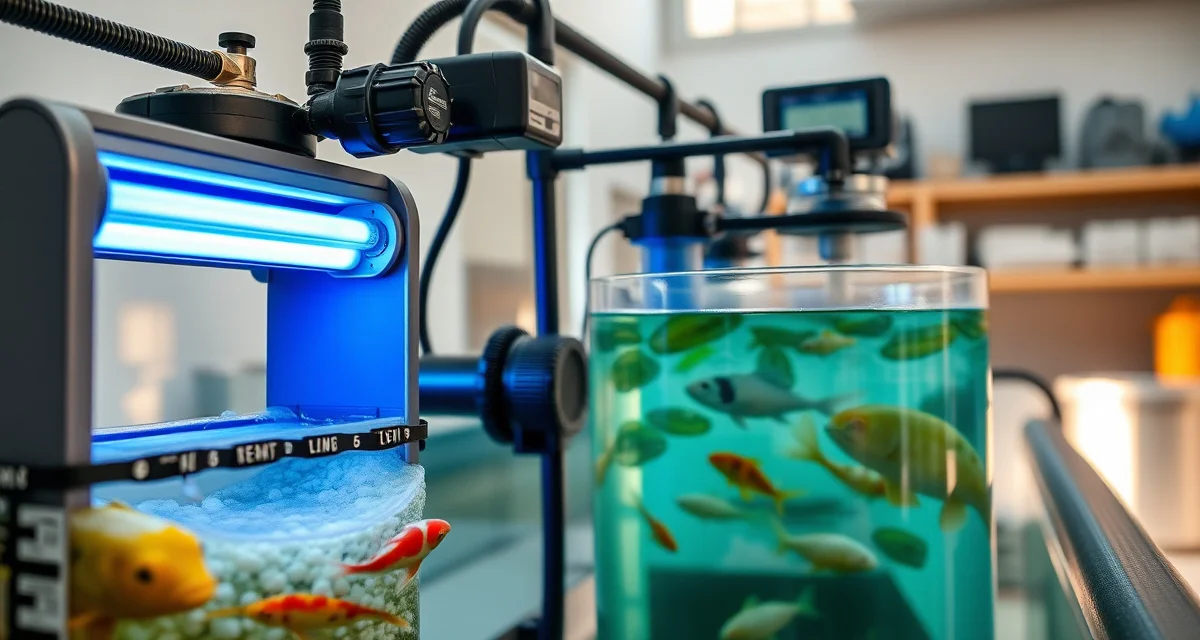
Koi Pond Equipment Maintenance Schedule: Prevent Failures Before They Kill Fish
UV sterilizer bulbs lose 40% of their germicidal output after 9,000 hours of use even if they are still lit. A UV bulb that appears to be working - glowing blue-white through the casing - may be providing almost no pathogen control at all. This is the nature of UV lamp degradation: germicidal output (measured at 254 nm) declines long before visible output does. If you're running a UV sterilizer as part of your pathogen control strategy, replacing the bulb on schedule rather than when it burns out is the only way to maintain actual effectiveness.
KoiQuanta's proactive equipment maintenance scheduler generates service reminders for pumps, UV bulbs, filter media, and air pump maintenance at manufacturer-recommended intervals.
TL;DR
- This is the nature of UV lamp degradation: germicidal output (measured at 254 nm) declines long before visible output does.
- For a UV running 24/7, that's approximately 375 days - effectively an annual replacement.
- Clean the sleeve every 3-6 months using a soft cloth and dilute white vinegar.
- Full pump replacement is typically necessary every 3-5 years for submersible pumps running continuously, though pumps in clean water with good maintenance can last longer.
- Germicidal output at 254 nm declines substantially after 9,000 hours even though visible light output continues - a bulb that appears lit may be providing little or no actual UV sterilization.
- A UV replacement bulb costs $20-80; the disease management consequences of running a failed UV sterilizer cost far more.
UV Sterilizer Maintenance
Bulb replacement: Replace UV bulbs annually or at 9,000 operating hours, whichever comes first. For a UV running 24/7, that's approximately 375 days - effectively an annual replacement. For UV units running only during daylight or on timers, calculate actual operating hours.
Quartz sleeve cleaning: The quartz sleeve surrounding the UV bulb accumulates mineral deposits (from hard water) and biofilm that reduce UV transmission to the water. Clean the sleeve every 3-6 months using a soft cloth and dilute white vinegar. Allow to dry completely before reassembly.
Flow rate check: UV effectiveness depends on adequate contact time between water and the UV field. Too-fast flow rates reduce contact time and limit effectiveness. Check flow rate annually and verify it's within the manufacturer's recommended range for your specific unit.
Ballast inspection: UV ballasts have a service life of typically 3-5 years. If your UV is on but you're experiencing unexplained green water algae issues despite correct flow rate and a fresh bulb, the ballast may be failing and not delivering full voltage to the bulb.
Pump Maintenance
Impeller cleaning: Koi pond pumps move water containing organic particles that accumulate on the impeller over time. A fouled impeller reduces flow rate, increases energy consumption, and eventually causes motor overheating. Clean the impeller quarterly - monthly during heavy algae season.
Seal and O-ring inspection: Every disassembly of a submersible pump is an opportunity to inspect the shaft seal and housing O-rings. Replace O-rings that show compression, cracking, or deformation. A failing seal causes reduced efficiency before it causes a failure.
Cable and connector inspection: Annual inspection of the power cable and any junction boxes for corrosion, rodent damage, or water intrusion. Outdoor electrical connections in a wet environment corrode faster than indoor connections.
Flow rate verification: Measure actual pump output annually and compare to the manufacturer's specification. A pump delivering significantly less than rated flow may have a worn impeller, partially blocked intake, or deteriorating motor - addressable before complete failure.
Biological Filter Media Maintenance
Filter sponges: Rinse filter sponges in removed pond water (never tap water, which contains chlorine that kills beneficial bacteria) when flow through the filter noticeably decreases. Frequency varies - lightly loaded ponds may need quarterly rinsing; heavily loaded ponds may need monthly attention.
Never clean all media at once. When cleaning biological filter media, clean only 30-40% of the total media at any session, allowing the remaining colony to repopulate cleaned media. Cleaning all media simultaneously destroys the bacterial colony and effectively re-cycles the pond.
Media replacement: Biological media (ceramic rings, plastic media) doesn't need regular replacement if maintained correctly. Replace media only when it shows physical degradation. Sponge media eventually compresses and loses porosity; replace when clean sponge no longer rebounds to original thickness.
Air Pump Maintenance
Diaphragm and air stone replacement: Air pump diaphragms fatigue over 12-18 months of continuous operation. Output declines gradually - a pump that "seems fine" may be delivering half its original airflow. Annual diaphragm replacement kits are inexpensive and restore original performance. Air stones accumulate mineral deposits; replace when output per stone is visibly reduced.
Annual output check: Hold your hand a few inches from each air stone outlet and note the pressure and volume. Compare to a new air stone. If there's significant reduction, replace the air stone. If a replaced air stone still shows reduced output, the pump diaphragm is due for replacement.
Seasonal Maintenance Points
Spring startup: After winter, inspect all equipment before turning on. Check cables, clean impellers, inspect UV sleeve and replace bulb if approaching annual replacement interval. Don't start feeding heavily until filter is back to full biological capacity.
Autumn preparation: Service all equipment before it needs to work through winter. Late autumn equipment failure is harder to deal with in cold weather. Replace any air pump diaphragms that are approaching their service interval - an air pump failure in January in a cold climate is an emergency.
Log all maintenance events in KoiQuanta's equipment service log. This record surfaces the maintenance history when you're troubleshooting an underperforming system and generates the reminders for upcoming service tasks. Your water quality tracker provides the parameter context that makes equipment performance problems visible - a UV failure often shows up as a green water trend before it shows up as a burned-out bulb.
Frequently Asked Questions
How often should I service my koi pond pump?
Clean the impeller quarterly - monthly during heavy summer algae or debris season. Inspect the shaft seal and O-rings whenever you disassemble the pump for impeller cleaning. Verify flow rate annually and compare to manufacturer specifications. Cable and outdoor electrical connections should be visually inspected annually for corrosion or damage. Full pump replacement is typically necessary every 3-5 years for submersible pumps running continuously, though pumps in clean water with good maintenance can last longer. The key indicator that a pump needs replacement (rather than just cleaning) is flow rate that doesn't recover to near-specification after cleaning.
When should I replace my UV sterilizer bulb?
Replace annually or at 9,000 operating hours, whichever comes first. For a UV running continuously, this means annual replacement regardless of whether the bulb appears to be functioning. Germicidal output at 254 nm declines substantially after 9,000 hours even though visible light output continues - a bulb that appears lit may be providing little or no actual UV sterilization. If you're unsure of a bulb's age (common with used equipment), replace it. A UV replacement bulb costs $20-80; the disease management consequences of running a failed UV sterilizer cost far more.
How do I know when my koi pond filter media needs replacing?
Biological filter media (ceramic rings, plastic biomedia) rarely needs replacement if maintained correctly - it can last a decade or more. Replace when media shows physical degradation: ceramic rings that crack or crumble, plastic media that becomes brittle and breaks. Filter sponges need replacement when they no longer return to original thickness after rinsing - compressed sponge has reduced surface area and reduced flow. The practical test: if cleaning sponge media in pond water and rinsing doesn't restore adequate flow through the filter, the sponge has reached end of life and should be replaced. Replace sponges in stages, never all at once.
What is Koi Pond Equipment Maintenance Schedule: Prevent Failures Before They Kill Fish?
A koi pond equipment maintenance schedule is a proactive system for servicing pumps, UV sterilizers, filter media, and air pumps at manufacturer-recommended intervals—before failures occur. Unlike reactive maintenance, it accounts for invisible degradation like UV bulb germicidal decline, which drops significantly after 9,000 hours even when the bulb still glows. The goal is preventing sudden equipment failures that can rapidly crash water quality and kill fish.
How much does Koi Pond Equipment Maintenance Schedule: Prevent Failures Before They Kill Fish cost?
Following a koi pond equipment maintenance schedule costs very little beyond the price of replacement parts: UV bulbs ($20–$60 annually), filter media, and occasional pump servicing. KoiQuanta's maintenance scheduler tool is free to use and generates service reminders automatically. The real cost of skipping maintenance is far higher—emergency vet calls, fish losses, and full system overhauls can run into hundreds or thousands of dollars.
How does Koi Pond Equipment Maintenance Schedule: Prevent Failures Before They Kill Fish work?
A koi pond maintenance schedule works by tracking the runtime and service intervals of each piece of equipment. UV bulbs are replaced annually (around every 9,000 hours for 24/7 operation), quartz sleeves cleaned every 3–6 months, and pumps serviced or replaced every 3–5 years. KoiQuanta's scheduler generates reminders based on these intervals, so you act on a calendar rather than waiting for visible signs of failure.
What are the benefits of Koi Pond Equipment Maintenance Schedule: Prevent Failures Before They Kill Fish?
The primary benefit is preventing silent equipment failures that kill fish before you notice anything is wrong. UV sterilizer output drops 40% after 9,000 hours while still appearing functional—meaning pathogens pass through unchecked. Scheduled maintenance also extends equipment lifespan, reduces emergency repair costs, maintains stable water quality year-round, and removes guesswork from pond management. Proactive care is consistently cheaper and less stressful than reactive crisis management.
Who needs Koi Pond Equipment Maintenance Schedule: Prevent Failures Before They Kill Fish?
Any koi keeper running filtration, UV sterilization, or aeration equipment needs a maintenance schedule. This is especially critical for pond owners with high fish stocking densities, valuable koi, or UV sterilizers used as a core pathogen control layer. If you rely on equipment to maintain water quality—and every pond owner does—you need scheduled servicing. Beginners and experienced hobbyists alike benefit from structured reminders rather than guesswork.
How long does Koi Pond Equipment Maintenance Schedule: Prevent Failures Before They Kill Fish take?
The actual hands-on maintenance tasks are quick: UV sleeve cleaning takes 15–30 minutes, bulb replacement under an hour, and filter media rinsing 30–60 minutes depending on system size. What takes time is the scheduling discipline—setting reminders and sticking to intervals. UV bulbs need annual replacement (roughly every 375 days at 24/7 operation). Pumps need inspection every 6–12 months and full replacement every 3–5 years.
What should I look for when choosing Koi Pond Equipment Maintenance Schedule: Prevent Failures Before They Kill Fish?
Look for a maintenance schedule that tracks each piece of equipment individually, accounts for actual runtime rather than just calendar dates, and aligns with manufacturer-recommended service intervals. It should cover UV bulbs, quartz sleeves, pump impellers, filter media, and air pump diaphragms. KoiQuanta's scheduler does this automatically. Avoid generic schedules that treat all equipment the same—a UV bulb running 24/7 degrades far faster than one used seasonally.
Is Koi Pond Equipment Maintenance Schedule: Prevent Failures Before They Kill Fish worth it?
Yes, unequivocally. A UV bulb that appears functional but has exceeded 9,000 hours of runtime provides almost no germicidal protection—you're running equipment that feels like a safeguard but isn't. Equipment failures rarely announce themselves before fish are already in distress. A structured maintenance schedule costs little, takes minimal time, and directly protects the health of fish that can represent significant financial and emotional investment.
Related Articles
- Koi Pond Power Outage Response: Protecting Fish During Electrical Failures
- What to Do When a Koi Dies: Removal, Testing, and Pond Protection
- Fall Koi Pond Preparation: Get Your Fish Ready for Winter
Sources
- Associated Koi Clubs of America (AKCA)
- Koi Organisation International (KOI)
- University of Florida IFAS Extension Aquaculture Program
- Fish Vet Group
- Water Quality Association