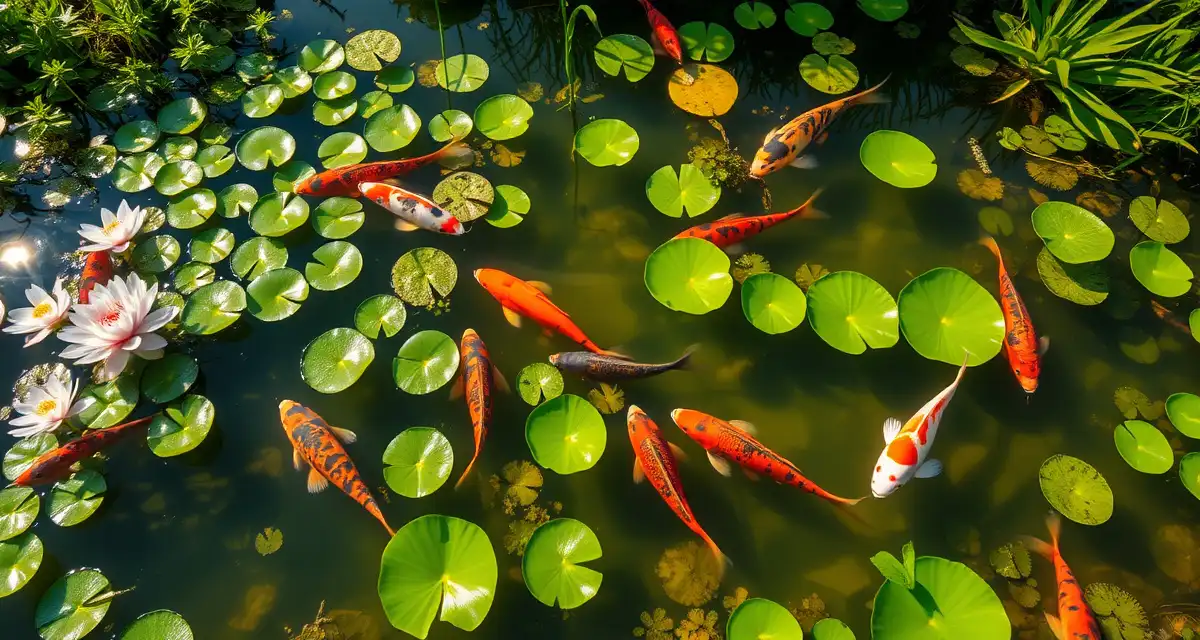
Koi Pond Plants: Compatible Species and Benefits
Established aquatic plants can remove up to 30% of nitrate from a koi pond naturally. That's a meaningful contribution to koi pond water quality tracker management, equivalent to an extra partial water change every week happening passively through the plant's biological processes.
Plants bring more than just nitrate removal. They provide physical cover that reduces koi stress, compete with problem algae for nutrients, add dissolved oxygen during daylight hours, and create the naturalistic environment where koi often thrive. The challenge is that koi and plants have a complicated relationship that requires some thought to manage well.
TL;DR
- During its growing season it's a nitrate sponge - the 30% nitrate reduction figure referenced above is largely achieved by water hyacinth at adequate stocking density.
- A well-established water hyacinth coverage of 30-50% of pond surface area can provide substantial nitrate reduction.
- KoiQuanta connects observations, water data, and treatment records in one searchable history.
- Early detection based on parameter trends reduces treatment costs and fish stress.
- Seasonal changes require adjusted monitoring schedules; automated reminders help maintain consistency.
The Koi-Plant Tension
Koi are omnivorous and opportunistic. They'll eat soft aquatic plants, uproot rooted ones while foraging along the bottom, and churn the water sufficiently to discourage the establishment of delicate species. A heavily stocked koi pond with no plant protection strategy will typically end up with no plants.
This doesn't mean plants are impossible in koi ponds. It means you need to choose species that koi find unpalatable, protect others with physical barriers, and position plants thoughtfully.
Plants That Survive Koi
Water hyacinth (Eichhornia crassipes) is the single most effective plant for nutrient removal in koi ponds and happens to be relatively resistant to koi grazing. Its dangling root system is the most productive nitrate-removal surface you can add to a koi pond. It grows rapidly in warm weather and dies back in cold climates (and is invasive in warm ones, so dispose of it responsibly). During its growing season it's a nitrate sponge - the 30% nitrate reduction figure referenced above is largely achieved by water hyacinth at adequate stocking density.
Water lettuce (Pistia stratiotes) works similarly as a floating plant with good nutrient uptake. Koi sometimes nibble the roots but rarely destroy it entirely. Like water hyacinth, it's invasive in frost-free regions.
Lotus (Nelumbo) is a tough, well-established plant that koi generally leave alone. The large, tall leaves shade pond sections effectively and the deep tuberous roots are difficult for koi to disturb. Lotus thrives in warm conditions and goes dormant in winter.
Iris (Iris pseudacorus and related species) planted in baskets or marginal shelves are largely ignored by koi once established. The tough root systems resist foraging, and iris is a reliable marginal plant that adds color without requiring intensive protection.
Cattails (Typha) are very similar to iris in terms of koi resistance. They grow vigorously and can spread aggressively, so containment in baskets is recommended.
Plants That Need Protection
Water lilies (Nymphaea) are desired by almost every koi pond owner, but koi will readily eat the pads and dig up the rhizomes. Protection strategies include:
- Deep planting baskets (at least 12 inches across, heavy soil with gravel cap) placed at depth where koi can't easily reach the basket lip
- Wire mesh cages over baskets to prevent rhizome excavation
- Positioning lilies in protected bays or behind underwater plant guards
Hornwort, elodea, and other submerged oxygenating plants are enthusiastically eaten by koi. If you want submerged vegetation, plant it in quantities that allow natural grazing pressure without elimination. Some keepers maintain a dedicated vegetable filter section separated by a mesh screen where oxygenating plants can grow undisturbed.
Do Koi Eat Pond Plants?
Yes, koi will eat most soft aquatic plants given the opportunity. They particularly target:
- Young shoots and emerging growth
- Submerged vegetation
- Floating plant roots
- Lily pads
Tougher, established plants with fibrous or toxic foliage are largely avoided. Koi that are well-fed and at appropriate stocking density tend to cause less plant damage than hungry, overcrowded fish.
Toxic Plants to Avoid
Some attractive garden plants that might end up near or in a koi pond are genuinely toxic:
- Iris leaves and roots are toxic if consumed in quantity (though koi typically don't eat established iris)
- Yellow flag iris (Iris pseudacorus) is more concerning than common iris
- Yew (Taxus) clippings falling into a pond are highly toxic
- Laburnum seeds or leaves are extremely toxic to fish
- Privet clippings are toxic
- Any plant treated with systemic pesticides near the pond represents a contamination risk
Keep any tree or shrub pruning away from pond water, and research any plant before adding it to the pond margin.
Bog Filter Integration
A bog filter - a planted gravel bed through which pond water is pumped - offers an elegant solution to the koi-plant conflict. Plants grow in the bog section protected from koi, providing maximum nutrient uptake, biological filtration, and oxygen production without being disturbed by foraging fish.
KoiQuanta's koi pond bog filter guide covers bog filter design and sizing in detail. A properly sized bog filter can handle a significant portion of your pond's biological filtration while providing the plant-related water quality benefits you want.
Related Articles
- Long-Term Salt Use in Koi Ponds: Benefits, Risks, and Best Practices
- Zeolite in Koi Ponds: Ammonia Removal Benefits and Limitations
FAQ
What is Koi Pond Plants: Compatible Species and Benefits?
Koi Pond Plants: Compatible Species and Benefits is a practical guide to selecting and managing aquatic plants that coexist successfully with koi. It covers which species survive koi's natural grazing behavior, how plants contribute to water quality through nitrate absorption, and how to achieve the right balance of coverage. The guide helps pond keepers create a more naturalistic, lower-maintenance environment by using plants as a biological filtration layer alongside mechanical and chemical filtration systems.
How much does Koi Pond Plants: Compatible Species and Benefits cost?
The information in Koi Pond Plants: Compatible Species and Benefits is freely available as an educational article on KoiQuanta. There is no purchase required to read the guide. KoiQuanta does offer tools such as a koi pond water quality tracker that complement the advice in the article, but accessing the plant compatibility and care content itself costs nothing beyond a visit to the site.
How does Koi Pond Plants: Compatible Species and Benefits work?
The guide works by explaining the biological relationship between koi and aquatic plants, then recommending species that offer real water quality benefits while tolerating koi activity. It outlines surface coverage targets, plant placement strategies, and how specific species like water hyacinth absorb nitrates. Readers learn to match plant selection to their pond size, stocking density, and season, creating a self-reinforcing system where plants and fish support a stable water environment.
What are the benefits of Koi Pond Plants: Compatible Species and Benefits?
Key benefits include natural nitrate reduction of up to 30%, reduced algae growth through nutrient competition, increased dissolved oxygen during daylight, and physical cover that lowers koi stress. Plants also create a more visually appealing, naturalistic pond. Used at 30–50% surface coverage, fast-growing species like water hyacinth can passively replicate the effect of a weekly partial water change, reducing the maintenance burden on the pond keeper.
Who needs Koi Pond Plants: Compatible Species and Benefits?
This guide is useful for koi keepers at any experience level who want to improve water quality naturally, reduce reliance on chemical treatments, or manage algae without aggressive intervention. It is especially relevant for ponds with moderate to high fish stocking densities where nitrate accumulation is a recurring issue. Hobbyists building a new pond and experienced keepers looking to optimize an established setup will both find practical, actionable guidance.
How long does Koi Pond Plants: Compatible Species and Benefits take?
Selecting and planting compatible species takes a single afternoon. However, realizing the full water quality benefits takes one to three growing seasons as plants establish, spread to effective coverage density, and root systems develop. Fast-growing floaters like water hyacinth begin contributing to nitrate uptake within weeks. Submerged and marginal plants take longer to reach beneficial biomass. Seasonal dieback in colder climates means benefits are most pronounced during spring through early autumn.
What should I look for when choosing Koi Pond Plants: Compatible Species and Benefits?
Look for species that tolerate koi grazing or grow fast enough to outpace it. Prioritize plants with strong nitrate uptake, such as water hyacinth and water lettuce for surface coverage, and hornwort or anacharis for submerged oxygenation. Consider your climate and whether plants will overwinter or need replacing. Avoid delicate ornamentals that koi will destroy. Aim for 30–50% surface coverage, and choose a mix of plant types to provide layered biological and physical benefits.
Is Koi Pond Plants: Compatible Species and Benefits worth it?
Yes, incorporating compatible aquatic plants is one of the most cost-effective improvements a koi pond keeper can make. Plants are inexpensive relative to mechanical filtration upgrades, require minimal ongoing investment, and deliver continuous passive benefits. The nitrate reduction alone can reduce water change frequency or chemical dosing costs. Combined with the stress-reducing cover and algae competition benefits, well-chosen plants meaningfully improve fish health outcomes and reduce the long-term cost of maintaining stable water parameters.
Sources
- Associated Koi Clubs of America (AKCA)
- Koi Organisation International (KOI)
- University of Florida IFAS Extension Aquaculture Program
- Fish Vet Group
- Water Quality Association