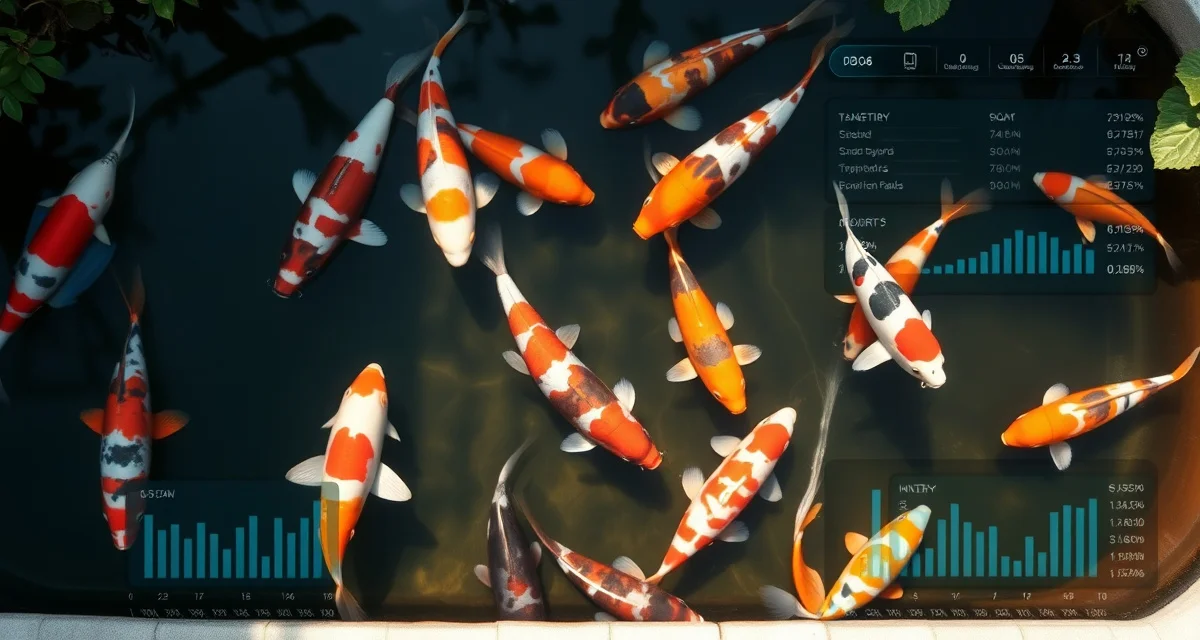
Koi Fish Inventory Management: Track Every Fish From Purchase to Sale
Managing a koi collection properly means knowing where each fish came from, what health events it has experienced, and what its current value is. Individual fish health records are required by some state regulations for koi sales above a threshold value, making per-fish tracking both a practical and compliance necessity.
Dealers tracking inventory in spreadsheets have no per-fish health history linked to their records. KoiQuanta links every health event, koi pond water quality tracker incident, and treatment to the specific fish it affected. That makes each fish's record a living document rather than a static entry in a table.
TL;DR
- A fish with 18 months of documented healthy observations and a completed koi quarantine program record is demonstrably more valuable than one without records.
- Tracking trends over time reveals issues before they become visible in fish behavior.
- KoiQuanta connects observations, water data, and treatment records in one searchable history.
- Early detection based on parameter trends reduces treatment costs and fish stress.
- Seasonal changes require adjusted monitoring schedules; automated reminders help maintain consistency.
What Per-Fish Tracking Covers
Each fish in KoiQuanta gets its own profile with:
- Identity fields: Variety, sub-variety, coloration, sex (if known), microchip or PIT tag number
- Acquisition data: Source name, purchase date, purchase price, import lot number (for dealers)
- Physical measurements: Length at purchase, current length (updated at each physical assessment)
- Location history: Which pond or quarantine tank the fish currently occupies, with transfer dates
- Photo gallery: Dated photos for visual health comparison over time
- Health event timeline: Every disease observation, treatment, and outcome linked chronologically
- Water quality context: The parameter readings from the fish's pond at the time of each health event
This level of detail is what separates professional koi management from hobbyist record keeping. A fish with a documented history is worth more than an identical fish without one.
Setting Up Your Fish Inventory
Start by entering fish from your current collection. You don't need complete information for every field initially. The minimum useful entry is:
- Variety name
- Approximate size in inches
- Source (dealer or breeder name)
- Approximate purchase date
From those four fields, KoiQuanta can calculate stocking density, generate appropriate feeding portion recommendations, and link any future health events to the correct fish.
As you gather more information, you can update fish profiles at any time. Adding a photo to each profile is particularly valuable for the koi disease treatment tracker feature, which uses photo comparison to assess lesion healing progress over time.
Linking Health Events to Individual Fish
When you log a health observation in KoiQuanta, you link it to one or more specific fish. This is the key difference from pond-level logging.
If three fish in your pond show clamped fins while the others look normal, you log that observation against those three fish specifically. Their individual records now show the event, the symptoms, and the date. If the same three fish show a similar presentation six months later, KoiQuanta surfaces that historical pattern automatically.
The koi dealer sales documentation feature exports this health timeline as a per-fish document that buyers can review before purchase. A fish with 18 months of documented healthy observations and a completed quarantine record is demonstrably more valuable than one without records.
Managing Fish Value and Purchase Price
KoiQuanta lets you record purchase price for each fish. This matters for several reasons:
Insurance documentation. If you have specialist koi insurance, insurers require documentation of fish value. Purchase price is your baseline, and KoiQuanta's records provide the timestamped documentation insurers need.
Collection value tracking. The dashboard shows total estimated collection value across all fish profiles. This updates as you add or remove fish.
Dealer margin calculation. For dealers, recording purchase price against sale price at disposal gives you actual margin data by fish, by variety, and by supplier. Over time, this shows you which varieties deliver the best margins and which suppliers provide the best value.
FAQ
What is Koi Fish Inventory Management: Track Every Fish From Purchase to Sale?
Koi fish inventory management is the practice of recording and tracking each individual fish from the moment of purchase through its entire life in your collection or dealership, including health events, water quality incidents, treatments, and current valuation. Rather than maintaining a simple list of fish, it creates a living record for every koi that supports compliance with state regulations, informs buying and selling decisions, and enables early detection of health trends before they become visible problems.
How much does Koi Fish Inventory Management: Track Every Fish From Purchase to Sale cost?
KoiQuanta offers per-fish inventory tracking as part of its platform, with pricing varying by plan tier and collection size. Unlike hiring staff to maintain manual spreadsheets or purchasing generic livestock management software, the cost reflects a purpose-built koi tool that links health records, water quality data, and treatment history in one place. Because documented fish command higher resale prices, many users find the platform pays for itself through improved sale values on high-grade koi.
How does Koi Fish Inventory Management: Track Every Fish From Purchase to Sale work?
You create an individual profile for each koi at purchase, logging source, variety, size, and purchase price. From that point, every health observation, water quality incident from your pond tracker, treatment administered, and quarantine milestone attaches directly to that fish's record. When you sell, the complete history transfers with the fish. KoiQuanta's search and filter tools let you pull up any fish's full timeline instantly, making compliance reporting and valuation assessments straightforward.
What are the benefits of Koi Fish Inventory Management: Track Every Fish From Purchase to Sale?
The primary benefits are compliance support, higher resale value, and earlier disease detection. Documented health histories satisfy state regulations for high-value koi sales. A fish with 18 months of clean observations and a completed quarantine record is demonstrably worth more to serious buyers than one without documentation. Trend analysis across water quality and health data surfaces problems before fish show behavioral symptoms, reducing treatment costs and stress on the collection overall.
Who needs Koi Fish Inventory Management: Track Every Fish From Purchase to Sale?
Koi dealers, serious hobbyists with valuable collections, and aquaculture operations benefit most. Dealers tracking inventory in spreadsheets have no way to link per-fish health history to their records, which creates compliance gaps and leaves money on the table at sale time. Hobbyists who breed or sell koi above state-regulated value thresholds may be legally required to maintain individual fish records. Anyone investing significantly in high-grade fish has a financial interest in documentation that protects and demonstrates that value.
How long does Koi Fish Inventory Management: Track Every Fish From Purchase to Sale take?
Initial setup takes a few hours to log your existing collection, longer if you have many fish or are importing historical records. Once profiles exist, ongoing tracking is incremental: a few minutes per observation, treatment, or water test entry. The time investment scales with collection size and monitoring frequency. Automated reminders for seasonal schedule adjustments help maintain consistency without requiring you to remember when monitoring protocols should shift, keeping records current without significant daily effort.
What should I look for when choosing Koi Fish Inventory Management: Track Every Fish From Purchase to Sale?
Look for software that links health events, water quality data, and treatment records directly to individual fish rather than storing them in separate unconnected logs. Compliance reporting features matter if you sell above state value thresholds. Search and filter capabilities should let you retrieve any fish's full history quickly. Automated monitoring reminders, quarantine program tracking, and the ability to generate exportable records for buyers are practical necessities for dealers. Generic livestock or aquarium tools rarely offer the koi-specific detail that justifies the tracking effort.
Is Koi Fish Inventory Management: Track Every Fish From Purchase to Sale worth it?
For anyone selling high-value koi or managing a collection where individual fish represent significant investment, yes. Documented fish sell for more because buyers can verify health history and quarantine compliance. Trend-based early detection reduces costly treatment interventions and losses. Regulatory compliance for high-value sales requires per-fish records in many states, making documentation a necessity rather than a choice. For casual hobbyists with a small pond of lower-value fish, the overhead may outweigh the benefit, but the threshold where tracking pays off is lower than most expect.
Sources
- Associated Koi Clubs of America (AKCA)
- Koi Organisation International (KOI)
- University of Florida IFAS Extension Aquaculture Program
- Fish Vet Group
- Water Quality Association