Spring Disease Risks in Koi Ponds: Why Fish Get Sick Every Year
Ulcer disease caused by Aeromonas bacteria kills more koi in March and April than any other month of the year in temperate climates. This isn't a coincidence or bad luck. It's a predictable consequence of the relationship between water temperature, koi immune function, and bacterial pathogen activity. Understanding why it happens is the first step toward preventing it.
KoiQuanta's spring disease prediction algorithm flags when water temperature enters the bacterial disease activation window in your specific pond. Most hobbyists are caught off-guard by spring disease every year because they lack this predictive monitoring.
TL;DR
- The danger zone is the transition period as water warms: 10-15°C (50-59°F): Bacterial pathogens like Aeromonas hydrophila and Pseudomonas species reactivate and begin reproducing rapidly.
- During the 10-18°C warming window, fish are facing increasingly active pathogens with increasingly inadequate defenses.
- By the time the ulcer is visible to casual observation, it may already be 1-2 weeks old at the tissue level.
- At 15-18°C, other fish in the pond begin showing similar lesions.
- The window to intervene is before step 4, during the early warming phase when infections are beginning but haven't yet caused visible lesions.
- When your pond first reaches 10°C in spring, spring disease risk period begins.
- Don't switch to high-protein summer diets before water is consistently above 15°C.
Why Spring Is the Most Dangerous Season
Winter koi are dormant. Their metabolism is suppressed, they're not feeding, and they're relatively stable as long as oxygen exchange is maintained and temperature stays cold. Their immune systems are operating at a fraction of their warm-weather capacity, and so are the pathogens in the water.
The danger zone is the transition period as water warms:
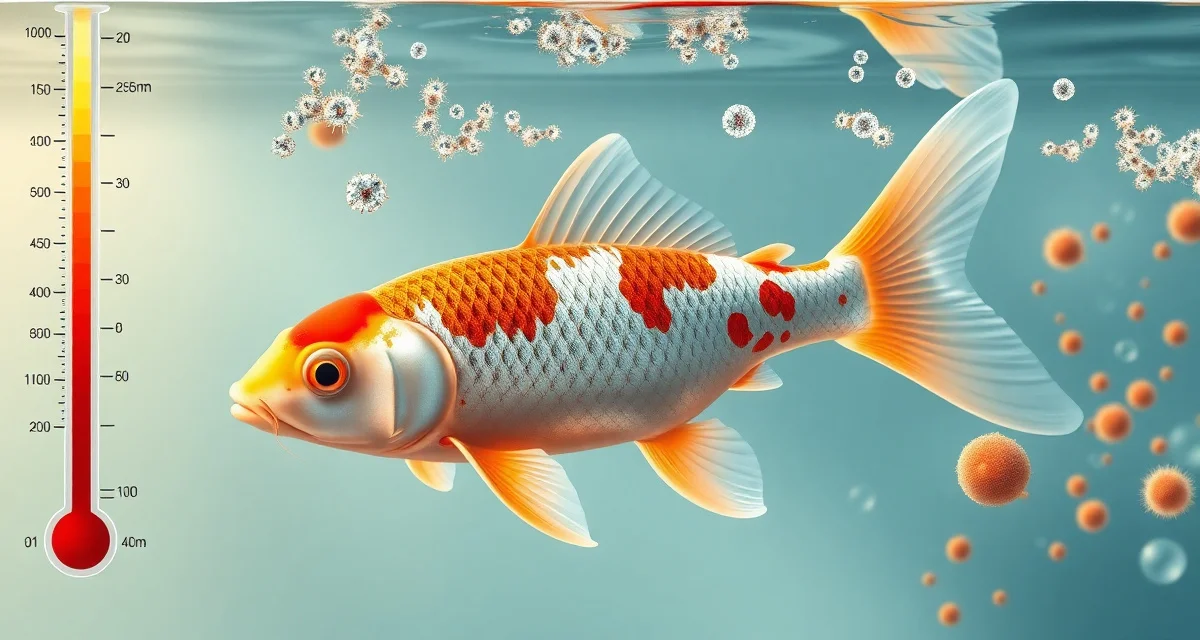
10-15°C (50-59°F): Bacterial pathogens like Aeromonas hydrophila and Pseudomonas species reactivate and begin reproducing rapidly. Parasite life cycles begin accelerating. Koi immune function, however, remains suppressed. It takes longer to warm up than pathogen metabolism does.
The immune lag: Koi immune response doesn't come fully online until water reaches 18-20°C or above and has been there for some time. During the 10-18°C warming window, fish are facing increasingly active pathogens with increasingly inadequate defenses.
This mismatch between reactivating pathogens and immunocompromised fish is the mechanism behind spring disease. It's predictable, and it's why the same ponds suffer the same disease events in the same temperature window every year.
The Spring Disease Sequence
In a pond without proactive monitoring, here's what typically happens:
- Water reaches 10°C. Aeromonas bacteria begin activating. Koi still appear normal.
- Water reaches 12-14°C. Bacteria are fully active and reproducing rapidly. Koi immune function is still suppressed. A fish with any minor wound or compromised skin area becomes infected.
- The infection progresses faster than the fish can mount an immune response. An ulcer develops.
- By the time the ulcer is visible to casual observation, it may already be 1-2 weeks old at the tissue level.
- At 15-18°C, other fish in the pond begin showing similar lesions. Secondary spread.
- The hobbyist treats aggressively. Recovery is possible but slow because fish are still not at full immune function.
The window to intervene is before step 4, during the early warming phase when infections are beginning but haven't yet caused visible lesions.
What to Watch For in Spring
Temperature monitoring is the trigger. When your pond first reaches 10°C in spring, spring disease risk period begins. Your monitoring frequency should increase.
Behavioral early warning signs:
- Fish that were swimming normally at 6°C now hanging near the bottom or at the surface at 12°C
- Appetite response that's slower or more hesitant than expected for the temperature
- Any fish isolating from the group (isolating fish are usually the first to show disease signs)
- Flashing or unusual posture
Physical inspection during spring:
- Run a close visual over every fish at least twice weekly during the warming period
- Look for any redness, scale lifting, or early ulcer formation, even 2-3mm erosion points
- Check fin edges for early fin rot or hemorrhage at fin bases
- Examine gill covers for any irregularity or discoloration
Skin scrape assessment: Many experienced koi keepers perform a prophylactic skin scrape (or have their vet do it) in early spring to assess parasite loads before they become problematic. Chilodonella, Costia, and flukes all reactivate as temperatures rise, and knowing your parasite baseline in early spring allows targeted treatment rather than reactive firefighting.
Spring Prophylactic Protocol
A proactive spring protocol typically includes:
Water quality stabilization: Check and if necessary correct alkalinity (KH), pH, and dissolved oxygen as soon as the pond warms enough for regular testing. A spring chemistry check after months of minimal monitoring often reveals alkalinity depletion that winter biological activity consumed.
Health assessment: At 12-14°C, conduct a thorough health check of the entire collection. Close visual observation, skin scrape from a representative sample, and weight checks for any fish that seem thin.
Praziquantel treatment: A scheduled Praziquantel treatment in spring is standard practice for many experienced keepers. Flukes have been reproducing in the pond all winter at low rates, and clearing them before their spring reproduction accelerates is significantly easier than chasing an established population.
Gradual feeding reintroduction: Begin feeding with a wheat germ-based formula when water reaches 10°C reliably. Increase frequency and protein content gradually as temperatures rise. Don't switch to high-protein summer diets before water is consistently above 15°C.
Wound treatment: Any fish with visible wounds from winter, however minor, should be treated proactively. Clean wounds are far more resistant to Aeromonas infection than untreated ones.
Your spring koi pond startup guide covers the physical management side of spring. KoiQuanta's spring disease prevention module (spring disease prevention) links temperature monitoring directly to escalating health checks.
Frequently Asked Questions
How do I prevent spring disease in my koi pond?
Prevention begins in winter by ensuring fish enter dormancy in good health with no unresolved wounds. As spring approaches, begin monitoring water temperature daily and increase observation frequency when it reaches 10°C. Conduct a thorough health check at 12-14°C - skin scrape assessment, close visual of every fish, weight checks for thin individuals. Begin feeding carefully with digestible wheat-germ food. Address any early signs of disease (redness, scale lifting, behavioral change) immediately rather than waiting for clear ulcer development. A scheduled Praziquantel treatment in early spring addresses fluke populations before they accelerate.
Why does my koi pond always have problems in spring?
The spring disease pattern is predictable and physiologically explained: Aeromonas and other bacterial pathogens reactivate and become virulent at 10-15°C, while koi immune function remains suppressed from winter dormancy until water reaches 18-20°C. This mismatch leaves fish vulnerable to bacterial infection during the warming window every year. If you're consistently seeing spring disease events, the solution is earlier intervention - monitoring more closely as temperatures rise, treating early lesions before they become serious, and using a proactive spring protocol rather than a reactive one. The disease is predictable; the management should be predictable too.
What temperature triggers spring koi disease outbreaks?
The 10-15°C (50-59°F) temperature range is when Aeromonas hydrophila and Pseudomonas bacterial diseases begin causing clinical illness in koi. At 10°C, these pathogens activate and begin reproducing. At 15°C, they're highly virulent. Koi immune function doesn't fully recover until water reaches 18-20°C and holds there for several weeks. The danger window is the warming period between 10°C and 18°C, which in temperate climates typically spans March through May depending on local weather patterns. KoiQuanta's spring disease prediction algorithm flags when your pond temperature enters this window based on your logged daily readings.
What is Spring Disease Risks in Koi Ponds: Why Fish Get Sick Every Year?
Spring disease risk in koi ponds refers to the annual surge in bacterial infections—primarily Aeromonas and Pseudomonas ulcers—that peaks in March and April in temperate climates. It's not random bad luck; it's a predictable biological event triggered when water temperatures enter the 10–15°C range. Bacteria reactivate and multiply rapidly at those temperatures while koi immune systems are still suppressed from winter, creating a dangerous imbalance that kills more koi than any other seasonal period.
How much does Spring Disease Risks in Koi Ponds: Why Fish Get Sick Every Year cost?
Understanding spring disease risks costs nothing—but ignoring them can cost you dearly. Treating a single koi with advanced ulcer disease can run $50–$200 or more in medications, vet consultations, and salt treatments. Losing a prized fish is irreplaceable. KoiQuanta's disease prediction monitoring is free to explore and alerts you before the danger window opens, making early prevention far cheaper than reactive treatment once visible symptoms appear.
How does Spring Disease Risks in Koi Ponds: Why Fish Get Sick Every Year work?
Spring disease follows a predictable sequence tied to water temperature. As ponds warm through 10–15°C, Aeromonas bacteria reactivate and begin multiplying rapidly. Koi immune function, still suppressed from winter dormancy, can't keep pace with the accelerating pathogen load. Bacteria breach the skin, often at minor wound sites, and establish deep tissue infections. By the time an ulcer is visible on the surface, the infection may already be 1–2 weeks old internally—making early temperature-based monitoring critical.
What are the benefits of Spring Disease Risks in Koi Ponds: Why Fish Get Sick Every Year?
Understanding spring disease risks gives koi keepers a predictive edge instead of a reactive one. Knowing the exact temperature window—10–18°C—lets you increase monitoring, prepare treatments in advance, and intervene before lesions appear. Early-stage bacterial infections respond dramatically better to treatment than advanced ulcers. You protect not just one fish but the whole pond, since once one fish shows lesions, others are typically already infected at the tissue level.
Who needs Spring Disease Risks in Koi Ponds: Why Fish Get Sick Every Year?
Any koi keeper in a temperate climate with a pond that drops below 10°C in winter faces this risk every spring without exception. Hobbyists with mixed-age ponds, fish that experienced any winter injuries, or ponds with higher organic loads are at elevated risk. New koi keepers are especially vulnerable because spring disease strikes before most expect trouble—fish appear active and healthy just days before visible ulcers emerge. If your pond warms gradually through spring, this information is directly relevant to you.
How long does Spring Disease Risks in Koi Ponds: Why Fish Get Sick Every Year take?
The critical biological window lasts roughly 3–6 weeks as water climbs from 10°C to 18°C. Within that window, the highest-risk phase is narrow—often just 1–2 weeks when bacteria are highly active but fish immunity hasn't yet recovered. Visible ulcers can develop from initial infection within 7–14 days. Once water consistently exceeds 18–20°C, koi immune function strengthens significantly and the acute risk subsides. Monitoring temperature daily during this transition period is the most valuable thing a keeper can do.
What should I look for when choosing Spring Disease Risks in Koi Ponds: Why Fish Get Sick Every Year?
When evaluating how to manage spring disease risk, look for temperature-triggered early warning rather than symptom-based detection—by the time you see an ulcer, you're already behind. Prioritize daily pond thermometer readings or automated monitoring through the 10–18°C window. Look for any behavioral changes: lethargy, flashing, clamped fins, or fish sitting near the surface. Also assess water quality, as high ammonia or low oxygen compound immune suppression. A predictive tool that flags your specific pond's danger window is far more valuable than general seasonal advice.
Is Spring Disease Risks in Koi Ponds: Why Fish Get Sick Every Year worth it?
Yes—understanding and acting on spring disease risks is absolutely worth it for any serious koi keeper. Ulcer disease is the leading cause of koi death in spring, and it's almost entirely preventable with timely intervention. The cost of awareness is minimal; the cost of complacency can be the loss of fish you've kept for years. Koi keepers who monitor water temperature proactively, prepare treatments in advance, and inspect fish closely during the 10–18°C window report dramatically lower spring losses than those who wait for visible symptoms.
Related Articles
- Summer Koi Disease Risks: Heat, Parasites, and Oxygen Crashes
- Koi Disease Screening Protocol: How to Inspect Every New Fish
Sources
- Associated Koi Clubs of America (AKCA)
- Koi Organisation International (KOI)
- University of Florida IFAS Extension Aquaculture Program
- Fish Vet Group
- Water Quality Association