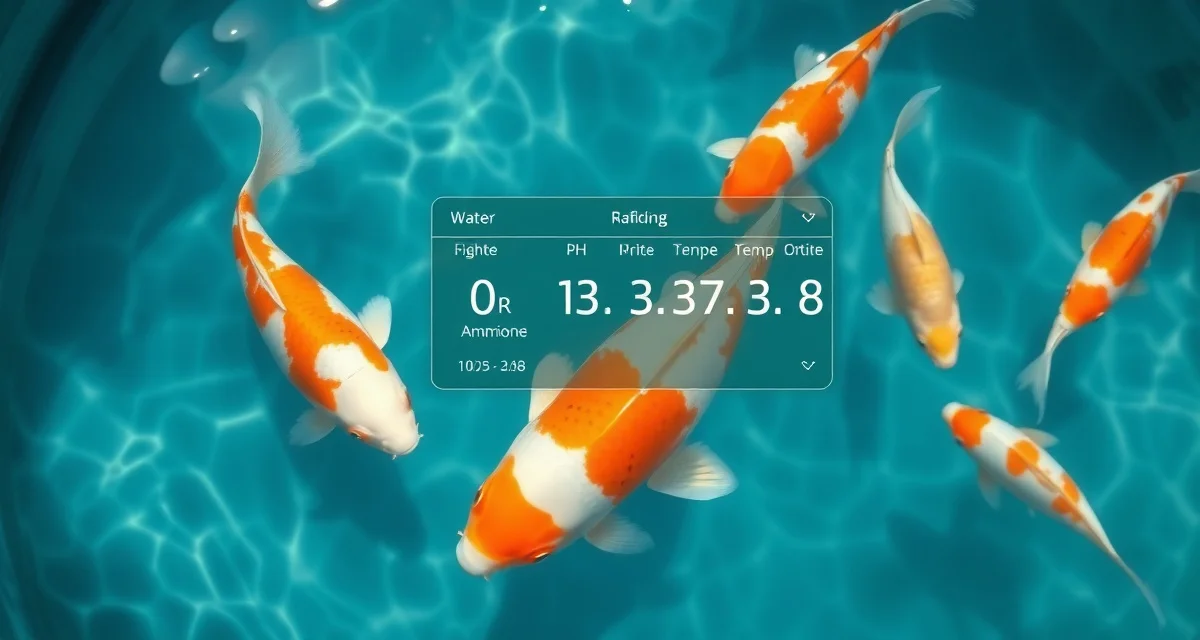
Water Parameter Logging: Why Records Matter for Koi Health
Ponds with consistent parameter logging resolve koi pond water quality tracker emergencies 60% faster than ponds without records. When something goes wrong, the difference between diagnosing the cause in 15 minutes and spending three days guessing is often whether you have historical data to compare against. A baseline matters. Trend data matters even more.
Most koi keepers test their water reactively -- when fish show symptoms -- and don't record results systematically. This section explains why that's a costly habit and how to build a logging practice that actually works.
TL;DR
- When something goes wrong, the difference between diagnosing the cause in 15 minutes and spending three days guessing is often whether you have historical data to compare against.
- Unlike ammonia and nitrite, nitrate isn't acutely toxic at typical pond levels, but high chronic nitrate (above 40-60 ppm) stresses fish over time.
- A pond with KH below 50 ppm is at risk of rapid pH swings.
- Temperature should always be logged alongside chemistry readings because temperature affects interpretation -- an ammonia reading of 0.25 ppm at 10°C is less urgent than the same reading at 22°C.
- Seasonal changes require adjusted monitoring schedules; automated reminders help maintain consistency.
What to Log
Ammonia (NH3/NH4+): The most critical parameter to track. In a healthy, cycled pond, ammonia should be at or near zero. A rising trend in ammonia readings before fish show symptoms gives you time to investigate. A sudden spike tells you something changed in the biological filter or stocking level.
Nitrite (NO2): Follows ammonia in the nitrogen cycle. Elevated nitrite indicates the filter is processing ammonia but incomplete nitrification to nitrate. Common after adding new fish, after medication that impacts biofilter bacteria, or during a cycle disruption.
Nitrate (NO3): The end product of the nitrogen cycle. Unlike ammonia and nitrite, nitrate isn't acutely toxic at typical pond levels, but high chronic nitrate (above 40-60 ppm) stresses fish over time. Rising nitrate trends tell you your water change schedule needs adjustment.
pH: The acidity/alkalinity of your pond water. Koi prefer 7.0-8.5. Log pH at the same time of day each time you test -- pH naturally rises through the day due to plant and algae photosynthesis and falls overnight. Comparing morning readings gives consistent baseline data. Declining pH trend over weeks tells you KH buffering is being depleted.
KH (carbonate hardness / alkalinity): KH is what buffers your pH against crashes. A pond with KH below 50 ppm is at risk of rapid pH swings. Logging KH alongside pH shows whether your buffer is stable or slowly depleting.
Temperature: Log water temperature every time you test. Temperature affects every biological process in your pond -- the nitrogen cycle speed, parasite lifecycle rates, fish immune function, and medication efficacy. Without temperature data, other readings are harder to interpret.
Dissolved oxygen: Not tested as frequently as the above, but oxygen logs are valuable during summer heat events, after medication treatment, and during any period when fish are showing surface crowding or gill flaring.
KoiQuanta auto-charts parameter history and flags developing trends before thresholds are crossed, turning raw numbers into a trend analysis you can actually act on.
How Often to Log
Weekly minimum: For a stable, established pond with no new fish additions and no current disease concerns, weekly testing and logging of ammonia, nitrite, nitrate, and pH is a baseline. You're looking for slow trends and catching problems before they escalate.
Daily during critical periods: When you add new fish, during any disease event, after medication treatment that may affect the biofilter, or during seasonal transitions (spring warm-up, autumn cooling), test and log daily. Daily data is what lets you catch a developing ammonia spike before it becomes a lethal emergency.
After water changes: Test and log ammonia and pH within a few hours of a significant water change. This confirms the change had the expected effect and doesn't reveal any unexpected problems (such as tap water pH dramatically different from your pond pH).
Seasonal testing: At the start of each season, test the full parameter suite including GH, KH, and dissolved oxygen. Seasonal baseline readings give you a comparison point throughout the season.
How to Log: Practical Approaches
Paper log: A dedicated waterproof or water-resistant notebook at the pond. Pros: always available, no battery or connectivity required. Cons: data doesn't trend automatically, information is hard to search or analyze over time.
Spreadsheet: A simple spreadsheet with columns for date, time, temperature, ammonia, nitrite, nitrate, pH, KH, and notes. Easy to graph over time. The limitation is that you have to enter data and graph it manually -- most people don't sustain this consistently.
KoiQuanta: Logs parameters against the pond profile, automatically charts trends, and flags readings that fall outside normal ranges. The system prompts you to test at appropriate intervals rather than relying on you to remember. For the full water chemistry context and what each parameter means for your pond, the koi water chemistry guide covers interpretation in detail.
What matters most is consistency. The best logging system is the one you'll actually use. Pick an approach and stick with it. Inconsistent records with gaps are considerably less useful than consistent records taken at the same time each week.
Reading Trends, Not Just Numbers
Single readings tell you the current state. Trends tell you where you're heading.
Slowly rising ammonia over weeks: Your biofilter may be stressed or your fish load has grown beyond filter capacity. Take action before this becomes an emergency.
Nitrate rising between water changes faster than before: Your fish are producing more waste (growth, increased feeding), or your water change volume or frequency needs to increase.
pH drifting down over months: KH is being consumed and your buffering is depleting. Supplement KH before pH instability becomes a problem.
pH stable for months, then sudden drop: Something disrupted your biofilter or rapidly increased acid-producing activity. Check for dead fish, increased fish load, or unusual feeding.
Ammonia spike following antibiotic treatment: The antibiotic killed biofilter bacteria. This is predictable and documented -- your records confirm what happened and guide the recovery process.
For the specific testing methodology and water testing kit selection, the koi water testing guide covers how to test accurately rather than just frequently.
Logging When Things Go Wrong
The most valuable use of a parameter log is after a disease event or water quality emergency. The historical data answers questions like:
- Was ammonia elevated in the week before fish started showing symptoms?
- Did pH drop around the time disease appeared?
- Was the temperature in the range for the parasite's lifecycle to be active?
- Did a water change precede the problem (suggesting a water quality issue with tap water)?
Without records, these questions can't be answered. With records, you can often pinpoint the cause of a problem in minutes and prevent the same sequence from repeating.
Frequently Asked Questions
How often should I log koi water parameters?
Weekly minimum for a stable established pond with no active issues -- test and log ammonia, nitrite, nitrate, and pH at minimum. Increase to daily testing during any active disease event, after adding new fish, after medication that impacts biofilter bacteria, and during spring and autumn seasonal transitions when water temperature and biological activity are changing rapidly. Test and log after any significant water change to confirm results. Consistency of timing matters -- testing at the same time of day gives more comparable data, particularly for pH which varies naturally through the day.
What water parameters should I track for koi?
The core parameters to track are ammonia, nitrite, nitrate, pH, KH (carbonate hardness), and temperature. These cover the nitrogen cycle, pH stability, and the environmental conditions that affect everything else. For a more complete picture, add GH (general hardness), dissolved oxygen during summer or treatment periods, and salinity if you run maintenance salt. Temperature should always be logged alongside chemistry readings because temperature affects interpretation -- an ammonia reading of 0.25 ppm at 10°C is less urgent than the same reading at 22°C.
Can I spot disease risk from water parameter trends?
Yes, and this is one of the most valuable uses of consistent logging. Gradually rising ammonia stresses fish immune function before it reaches acutely toxic levels -- fish become more susceptible to parasites and bacteria that are normally controlled. Declining KH and pH instability cause osmotic stress. High nitrate over extended periods is associated with increased disease susceptibility. Reviewing your logs when fish start showing symptoms often reveals a water quality trend that predates the visible signs by days or weeks, pointing to the underlying cause rather than just the disease presentation.
What is Water Parameter Logging: Why Records Matter for Koi Health?
Water parameter logging is the practice of systematically recording your koi pond's chemistry readings over time — including ammonia, nitrite, nitrate, pH, KH, temperature, and dissolved oxygen. Rather than testing only when problems arise, logged records create a historical baseline that lets you spot trends, catch early warning signs, and diagnose emergencies far faster. Ponds with consistent logging records resolve water quality emergencies 60% faster than those without documentation.
How much does Water Parameter Logging: Why Records Matter for Koi Health cost?
Water parameter logging itself costs nothing beyond the price of your test kits and a notebook or spreadsheet. Digital koi management apps range from free to around $10–$30 per month for premium features. Automated monitoring sensors carry a higher upfront cost but reduce manual effort. The real savings come from faster problem diagnosis — catching a pH crash or ammonia spike early prevents expensive fish losses and vet consultations.
How does Water Parameter Logging: Why Records Matter for Koi Health work?
You test your pond's key parameters — ammonia, nitrite, nitrate, pH, KH, temperature — at consistent intervals and record each result with a timestamp. Over weeks and months, these records reveal your pond's normal baseline ranges and seasonal trends. When fish show stress symptoms, you compare current readings against historical data to quickly identify what changed. Temperature should always be logged alongside chemistry because it affects how urgently the same reading needs to be addressed.
What are the benefits of Water Parameter Logging: Why Records Matter for Koi Health?
Logged records let you diagnose problems in minutes rather than days by providing a baseline to compare against. You can detect gradual shifts — like KH creeping below 50 ppm before a pH crash occurs — before fish are visibly affected. Trend data also reveals seasonal patterns, helping you adjust monitoring frequency appropriately. Long-term records are invaluable when consulting vets or koi dealers, giving them the full picture rather than a single snapshot reading.
Who needs Water Parameter Logging: Why Records Matter for Koi Health?
Any koi keeper with an established pond benefits, but systematic logging is especially important for ponds with high stocking density, koi valued at show or breeding quality, new setups still cycling, or ponds that have experienced previous water quality emergencies. Hobbyists who keep multiple ponds, or those in climates with pronounced seasonal swings, gain the most — seasonal transitions are when chemistry fluctuates most unpredictably and trend data becomes most critical.
How long does Water Parameter Logging: Why Records Matter for Koi Health take?
A single water test takes 10–20 minutes depending on parameters tested. Building a useful baseline requires consistent logging over several weeks to months before patterns become clear. Most keepers establish a routine of weekly tests during stable conditions and increase to daily or twice-daily testing during emergencies, temperature transitions, or after adding new fish. Once the habit is formed, the record-keeping itself adds only a few minutes per session.
What should I look for when choosing Water Parameter Logging: Why Records Matter for Koi Health?
Look for a logging method that makes consistency easy — whether that's a simple spreadsheet, a dedicated koi app, or a waterproof pond-side notebook. Prioritize tracking ammonia, nitrite, nitrate, pH, KH, and temperature at minimum. The best systems let you visualize trends over time rather than just storing raw numbers. If choosing software, confirm it allows notes alongside readings so you can log context like water changes, fish additions, or weather events.
Is Water Parameter Logging: Why Records Matter for Koi Health worth it?
Yes. The value of water parameter logging becomes obvious the first time something goes wrong. Without records, diagnosing a water quality problem means guessing — and guessing costs time, stress, and potentially fish. A single prevented emergency typically justifies months of logging effort. Beyond crisis response, trend data helps you run a consistently healthier pond by catching chronic issues like elevated nitrate or declining KH before they compound into something harder to fix.
Related Articles
Sources
- Associated Koi Clubs of America (AKCA)
- Koi Organisation International (KOI)
- University of Florida IFAS Extension Aquaculture Program
- Fish Vet Group
- Water Quality Association