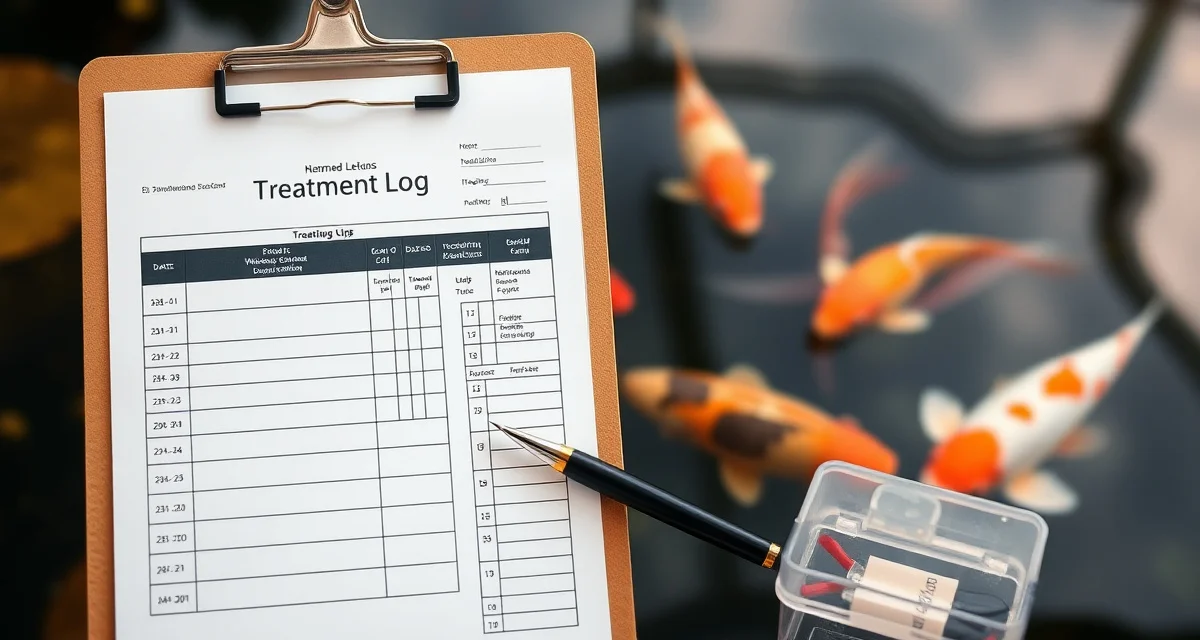
Koi Treatment Log Template: What to Record for Each Treatment
Dealers with complete treatment logs resolve drug selection disputes in minutes rather than days. When a customer returns with a sick fish and asks what treatment it received in koi quarantine program, or when you need to demonstrate to a veterinarian what you've already tried, a thorough treatment log is what separates professional operations from guesswork.
For hobbyists, the treatment log serves a different but equally important function: it's your personal database of what worked, what didn't, and what signs preceded which outcomes. Over years of keeping koi, that record becomes genuinely valuable.
TL;DR
- Be specific: "flashing" is more useful than "acting weird." "Visible white spot lesions on flanks, approximately 10-15 fish affected" is more useful still.
- Tracking trends over time reveals issues before they become visible in fish behavior.
- KoiQuanta connects observations, water data, and treatment records in one searchable history.
- Early detection based on parameter trends reduces treatment costs and fish stress.
- Seasonal changes require adjusted monitoring schedules; automated reminders help maintain consistency.
Why Treatment Logs Fail
Most koi keepers who attempt to track treatments use one of two methods: memory, or a general notebook where they jot notes when something feels important. Both fail for the same reason -- they don't capture what you'll need to know later.
When you're treating a sick fish, you know which drug you used and why. Three months later, when another fish shows similar symptoms, you probably don't remember the dose, the duration, or whether it worked. A treatment log built around specific fields captures exactly this information in a retrievable format.
KoiQuanta's treatment log includes drug name, dose, method, fish ID, and outcome fields, structured so that information is consistently captured regardless of what else is happening when you're treating.
The Essential Fields
Date and time started: Precise start date matters for calculating treatment duration and withdrawal periods. Don't log "week of" -- log the exact date.
Fish identification: Which fish was treated. For a single fish, this is easy -- the individual fish ID or a description. For pond-wide treatment, log all fish in the pond as affected. For a quarantine batch, log the batch identifier. You need to be able to link treatment records to specific fish records later.
Water parameters at treatment start: Temperature, pH, ammonia, and nitrite at the time treatment began. These affect treatment efficacy and help you evaluate whether parameters may have contributed to poor outcomes.
Volume of water being treated: Essential for dose calculation review. If a treatment doesn't work as expected, knowing the exact volume treated helps you verify the dose was correct.
Drug or product name: Full product name and active ingredient. Not just "malachite green" -- include the brand and the stated concentration in the product. Different products containing the same active ingredient can have different concentrations.
Dose administered: Exact amount added. Include units (mL, grams, etc.) and specify whether this is per liter, per gallon, or total volume. Calculate and record the dose in both the product volume and the active ingredient concentration -- this is what a veterinarian will want to see.
Treatment method: Bath treatment? Pond-wide? Topical application? Short dip vs. prolonged immersion? How the treatment was administered affects interpretation.
Duration: Planned and actual duration. Some treatments are terminated early due to fish stress. Record both.
Symptoms prompting treatment: What did you observe that led to this treatment? Be specific: "flashing" is more useful than "acting weird." "Visible white spot lesions on flanks, approximately 10-15 fish affected" is more useful still. Your observation at treatment start is the baseline you'll measure improvement against.
Outcome fields:
- Date symptoms resolved (or didn't)
- Mortality during treatment (number and timing)
- Fish response to treatment (improved, unchanged, deteriorated)
- Notes on any adverse reactions
Retreatment or follow-up: If additional treatments were required, link them to this record. A sequence of treatment attempts is more informative than isolated treatment records.
What to Log After Treatment Ends
Discharge date or return to main pond: When did the fish leave quarantine or rejoin the display pond?
Final health status: Describe the fish's condition at discharge. "Resolved, no visible lesions" vs. "Improved but low-grade fin erosion persisting" vs. "Deteriorated, euthanized" are all outcomes that matter for future decision-making.
What you'd do differently: A brief reflection while the treatment is fresh. Did the dose feel too conservative? Did you wish you had a different medication? Would you start treatment earlier next time? This note-to-self is often the most valuable part of a treatment log over time.
Field-by-Field Template
Here is the template structure for each treatment entry:
Date started:
Date ended:
Fish ID / batch:
Fish size (approximate):

Tank/pond:
Water volume (gallons):

Water parameters at start:
  - Temperature:
  - Ammonia:
  - Nitrite:
  - pH:
  - KH:

Symptoms observed (be specific):

Drug/product name:
Active ingredient and concentration in product:
Dose used:
Dose calculation:
Treatment method:
Duration (planned vs. actual):

UV sterilizer off? Y/N
Biofilter bypass? Y/N
Aeration maximized? Y/N

Outcome:
  - Symptoms resolved: Y/N (date if yes)
  - Mortality during treatment: (number)
  - Fish condition at end:

Follow-up treatment required: Y/N
Notes for future reference:
Drug-Specific Fields
Some treatments require additional documentation beyond the baseline template.
For antibiotics: Note the antibiotic class (oxytetracycline vs. erythromycin vs. trimethoprim/sulfa), route of administration (bath vs. feed-based), and whether a sensitivity test informed the choice. Withdrawal period if fish are food fish (note: koi are typically ornamental, but document anyway).
For formalin treatments: Document that oxygen monitoring was in place, the treatment temperature (formalin toxicity increases above 25°C), and whether the treatment was terminated early.
For copper sulfate: Document GH and KH at the time of dosing, the hardness-corrected dose calculation, and copper test readings during treatment. Copper dosing errors are potentially lethal and having the calculation documented protects you.
For malachite green: Document the UV sterilizer status (UV degrades malachite green rapidly) and any jurisdiction compliance notes for your records.
Connecting Treatment Records to Fish Records
Treatment logs are most valuable when they're linked to the fish's complete health history. A fish that's had recurring fin rot should have treatment records for every episode, linked to the individual fish record. Reviewing the full history shows whether treatments are working, whether there's a recurrence pattern, and whether the underlying cause (water quality, chronic stress) is being addressed.
For dealers, linking treatment records to batch records also allows you to track which supplier's fish required the most intervention -- useful data for evaluating sourcing relationships.
Frequently Asked Questions
What should I include in a koi treatment log?
At minimum: the date, which fish were treated, which drug was used (full name and concentration), the dose administered, the water volume treated, the water parameters at treatment start (especially temperature and pH, which affect efficacy), the symptoms that prompted treatment, the duration, and the outcome. Optional but valuable: dose calculation details, adverse reactions observed, and a note on what you'd do differently. The goal is to capture enough that you could hand the record to a veterinarian and they could evaluate what was done and why.
How do I track which fish received which treatment?
Individual fish identification is the key -- each fish should have a unique identifier, whether that's a name, a tag number, or a descriptive identifier (variety, year acquired, distinctive marking). Treatments are then linked to the fish ID in the record. For pond-wide treatments where all fish are affected, log the pond or tank identifier and note "all fish affected." In quarantine, batch identifiers let you track treatments across a group. KoiQuanta links treatment records to individual fish profiles, so the treatment history is part of the fish record and visible whenever you look at that fish.
Can I export my koi treatment records in KoiQuanta?
Yes. KoiQuanta's treatment records can be exported for sharing with veterinarians, for inclusion in quarantine certificates provided to customers, and for your own backup and analysis. The export format is structured to be readable by anyone reviewing the record, not just KoiQuanta users. This makes records useful in contexts outside the software -- when working with a vet, when presenting compliance documentation, or when transferring fish to a new owner with a health history.
What is Koi Treatment Log Template: What to Record for Each Treatment?
A koi treatment log template is a structured record-keeping system that documents every aspect of fish health interventions—medications used, dosages, water parameters, fish symptoms, and outcomes. It serves as a personal database for hobbyists and a professional reference for dealers. Rather than relying on memory, the template captures precise observations like 'visible white spot lesions on 10-15 fish' instead of vague notes, making it useful when consulting veterinarians or revisiting past disease events.
How much does Koi Treatment Log Template: What to Record for Each Treatment cost?
A basic koi treatment log template costs nothing—a spreadsheet or notebook works fine. KoiQuanta offers a digital platform that connects observations, water data, and treatment records in one searchable history, with pricing varying by plan. The real cost of not keeping records is higher: missed disease patterns, repeated medication mistakes, and fish losses that a proper log could have prevented. Most keepers find even a free structured template pays for itself quickly.
How does Koi Treatment Log Template: What to Record for Each Treatment work?
A treatment log works by capturing consistent, timestamped data at each stage of a health event: pre-treatment symptoms and water parameters, medications administered with exact dosages and dates, fish response during treatment, and final outcomes. Over time, these entries build a searchable history. When a disease recurs, you compare against past records. When a vet asks what you've tried, you have specifics. Trend tracking also flags parameter shifts before fish show visible stress.
What are the benefits of Koi Treatment Log Template: What to Record for Each Treatment?
Treatment logs reveal patterns invisible to casual observation—which medications work for your specific pond, what water conditions precede disease outbreaks, and whether a current illness matches a past event. For dealers, complete logs resolve drug selection disputes quickly and demonstrate professional credibility. For hobbyists, years of records become genuinely valuable: you learn your pond's seasonal rhythms, reduce repeat medication costs, and catch emerging issues earlier when intervention is cheaper and less stressful for fish.
Who needs Koi Treatment Log Template: What to Record for Each Treatment?
Anyone keeping koi benefits from treatment logs, but they're essential for dealers managing quarantine programs, breeders tracking genetic health lines, and hobbyists with established ponds who've experienced disease events. If you've ever asked 'what did I treat that fish with last spring?' or had a vet request your treatment history, you need a log. Koi keepers who lose fish to recurring, preventable conditions almost always lack the records needed to identify the underlying pattern.
How long does Koi Treatment Log Template: What to Record for Each Treatment take?
Setting up a template takes under an hour. Filling in an entry during an active treatment takes 5-10 minutes per observation session. The time investment is front-loaded: once your template is structured and your baseline parameters are recorded, ongoing entries are quick. The time saved when a disease recurs—or when you need to brief a veterinarian—far exceeds the recording effort. Automated reminders in platforms like KoiQuanta help maintain consistency without requiring you to remember.
What should I look for when choosing Koi Treatment Log Template: What to Record for Each Treatment?
Look for a template that captures water parameters alongside treatment data, not just medication names and dates. Symptom fields should prompt specific language—affected fish count, lesion location, behavior changes—rather than accepting vague descriptions. Version tracking matters: you need to know which dose followed which observation. Digital systems that make records searchable and allow trend visualization over seasons are worth prioritizing. The best template is one detailed enough to be useful but simple enough that you'll actually fill it in consistently.
Is Koi Treatment Log Template: What to Record for Each Treatment worth it?
Yes, for any keeper who has lost fish to a disease they couldn't identify, repeated a treatment that previously failed, or struggled to explain a fish's history to a veterinarian. The log's value compounds over time—early entries feel routine, but after two or three disease cycles you have a reference that meaningfully improves decisions. Dealers who maintain complete records operate faster and more credibly. Hobbyists who track trends catch problems earlier, reducing both fish losses and medication costs.
Related Articles
- How to Use Formalin on Koi Safely: Doses, Risks, and Monitoring
- Koi Cloudy Eye: Causes, Treatment, and When to Worry
- How to Treat Fish Louse (Argulus) on Koi: Complete Protocol
Sources
- Associated Koi Clubs of America (AKCA)
- Koi Organisation International (KOI)
- University of Florida IFAS Extension Aquaculture Program
- Fish Vet Group
- Water Quality Association