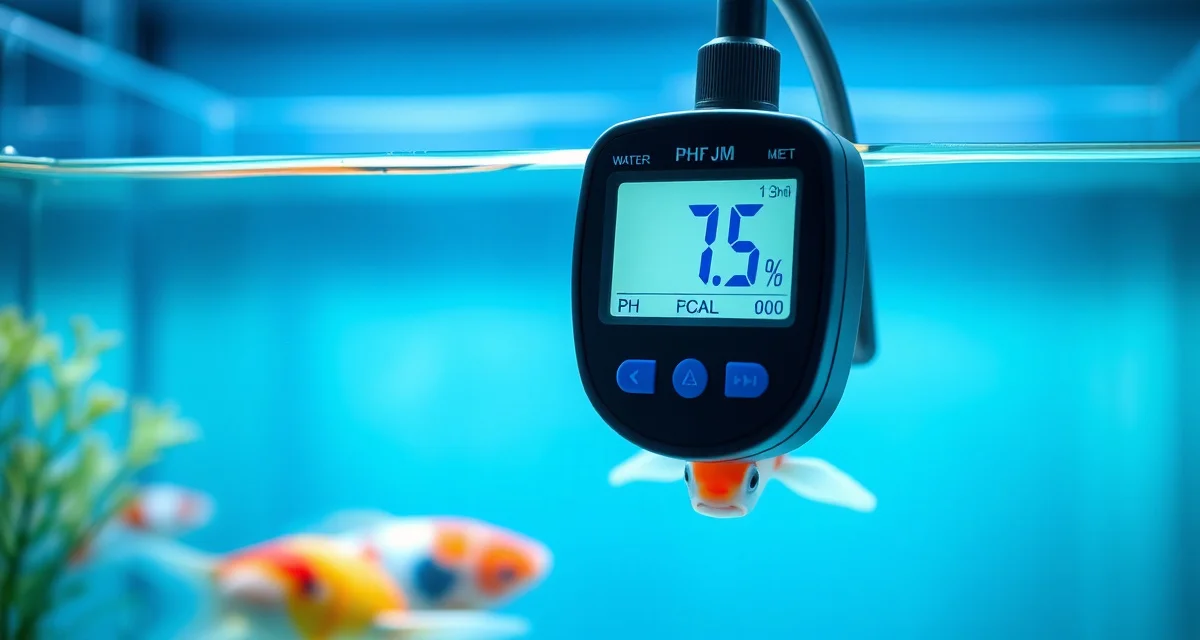
Maintaining pH Stability in a Koi Quarantine Tank
Antibiotic efficacy can be halved when pH falls outside the 7.0-8.0 therapeutic range. This is a clinically meaningful interaction -- you're running an antibiotic course, paying attention to dose and duration, but your treatment is underperforming because the pH in your quarantine tank has drifted to 6.5. The antibiotic may not be achieving the concentrations in fish tissue that you calculated, and treatment failure follows despite a technically correct protocol.
KoiQuanta tracks pH in quarantine and alerts when levels may reduce treatment efficacy.
TL;DR
- This is a clinically meaningful interaction -- you're running an antibiotic course, paying attention to dose and duration, but your treatment is underperforming because the pH in your quarantine tank has drifted to 6.5.
- Biological filtration and fish respiration produce CO2 and organic acids that consume carbonate alkalinity over time.
- When KH runs low (below 80 ppm), the buffer is exhausted and pH can drop rapidly.
- Quarantine starts with adequate KH (80-120 ppm) 2.
- Daily acid production gradually depletes KH 3.
- At 40-60 ppm KH, the buffer is marginal -- small acid loads cause noticeable pH drops 4.
- Below 40 ppm KH, pH crashes can occur within hours 5.
Why pH Is More Unstable in Quarantine Tanks
Quarantine tanks are inherently less stable pH environments than established ponds:
Small water volume: A 150-gallon quarantine tank has 20x less buffering volume than a 3,000-gallon pond. The same amount of acid production (from fish respiration and biological filtration) causes a much larger pH drop in a small volume.
Low KH from tap water: Your quarantine tank water chemistry reflects your tap water. If you're in a soft-water area, your KH may be too low to buffer effectively from the start.
Biological activity: As the quarantine tank's biofilter establishes, nitrification produces acid as a byproduct. In a small tank, this acid production relative to buffer capacity is much higher than in an established pond.
Antibiotic treatment effects: Some antibiotics affect the biofilter, which in turn affects the balance of acid-producing processes. The resulting shift in biological activity can alter pH dynamics in ways that are hard to predict without monitoring.
Reduced plant buffering: Established ponds often have aquatic plants that participate in CO2/pH cycling. Quarantine tanks don't have this natural buffering from photosynthesis.
Why Does pH Drop in My Koi Quarantine Tank?
The primary mechanism is KH depletion. Carbonate hardness (KH) is your water's buffer against pH change. Biological filtration and fish respiration produce CO2 and organic acids that consume carbonate alkalinity over time. When KH runs low (below 80 ppm), the buffer is exhausted and pH can drop rapidly.
In a quarantine tank, this KH depletion can happen faster than you expect because:
- Small water volume depletes faster
- Daily feeding (even at reduced rate) and fish respiration continuously generate acid
- Unless you're actively monitoring and supplementing KH, it will gradually drop
The typical progression:
- Quarantine starts with adequate KH (80-120 ppm)
- Daily acid production gradually depletes KH
- At 40-60 ppm KH, the buffer is marginal -- small acid loads cause noticeable pH drops
- Below 40 ppm KH, pH crashes can occur within hours
- Morning pH crash -- overnight CO2 accumulation without photosynthesis pushes pH down when KH can't compensate
Preventing pH Crashes in Quarantine
Test KH alongside pH on your regular quarantine testing schedule. If KH drops below 80 ppm, supplement immediately before the problem escalates.
Supplement KH proactively: Add sodium bicarbonate (baking soda) to maintain KH above 80-100 ppm. For a 150-gallon quarantine tank, 1/2 to 1 teaspoon added slowly raises KH by approximately 5-10 ppm. Add gradually, not all at once -- rapid pH changes are as harmful as low pH.
Crushed coral in the filter: A mesh bag of crushed coral or limestone chips in your filter slowly dissolves and provides continuous KH supplementation. The dissolution rate increases as pH drops, creating a self-regulating buffer. This is the most maintenance-free approach.
Don't change large water volumes at once during quarantine. Large water changes can introduce significantly different pH water from the tap, causing rapid shifts. If your tap water pH differs from your quarantine tank by more than 0.5 units, dilute with smaller, more frequent water changes rather than one large change.
Does pH Affect How Well Koi Medications Work?
Yes, for several medication types:
Antibiotics: Many antibiotics (particularly aminoglycosides and tetracyclines) show reduced efficacy at pH below 7.0. Some are most active in the 7.5-8.0 range. Oxytetracycline effectiveness is also affected by pH -- more ionized (less absorbable) at lower pH.
Formalin: More reactive and faster-acting at lower pH. At pH below 6.5, formalin's reactivity increases and it may become more irritating to fish. At higher pH, it's more stable but potentially less effective.
Malachite green: Activity is pH-dependent. Most active in the 6.5-7.5 range, becoming less effective at higher pH values.
Salt: Not pH-sensitive. Salt's osmotic effects are consistent across the pH range relevant to koi keeping.
Praziquantel: Generally not notably pH-sensitive within the koi pond pH range.
For the pH management framework in the main pond, see the koi pH guide. For quarantine tank setup parameters including pH baseline, see the koi quarantine tank setup guide.
Correcting pH in a Quarantine Tank
If pH has dropped below 7.0:
First, add KH buffer (sodium bicarbonate) to restore carbonate hardness. Use 1/2-1 teaspoon per 100 gallons, wait 30-60 minutes, then test again. Repeat as needed to bring KH above 80 ppm.
Don't raise pH directly with chemicals until KH is restored -- without KH buffer, any direct pH adjustment will just crash again. Raising KH raises pH naturally and sustainably.
Rate of pH correction: Raise pH no faster than 0.5 units per 24 hours. Rapid pH increases are as stressful to fish as rapid decreases.
If pH is high (above 8.5):
High pH is less common in quarantine tanks but can occur with some tap water sources. Aerate vigorously to drive off excess CO2 (the most common cause of high pH in some water types). Add a commercial pH reducer cautiously if aeration alone doesn't help, following manufacturer guidance for fish-safe products.
Frequently Asked Questions
Why does pH drop in my koi quarantine tank?
KH (carbonate hardness) depletion is the usual cause. Biological filtration and fish respiration produce CO2 and organic acids that gradually consume carbonate alkalinity. In a small quarantine tank, this depletion happens faster than in a large established pond because the same acid production depletes a much smaller water volume. When KH falls below about 40-60 ppm, the buffer is effectively exhausted and pH can crash rapidly, sometimes by 1-2 units overnight. Test KH alongside pH in quarantine and supplement with sodium bicarbonate when KH drops below 80 ppm.
How do I stabilize pH during koi treatment?
Maintain KH at 80-120 ppm through sodium bicarbonate additions or crushed coral in the filter. Test pH and KH together every 1-2 days during treatment. Crushed coral in a filter mesh bag provides continuous self-regulating KH supplementation -- as pH drops, dissolution rate increases, automatically providing buffer. Avoid large single water changes that can introduce sudden pH shifts; use smaller, more frequent water changes with temperature-matched, dechlorinated water instead.
Does pH affect how well koi medications work?
Yes. pH below 7.0 reduces the efficacy of many antibiotics, particularly tetracyclines and aminoglycosides. Some antibiotics are most active in the 7.5-8.0 range -- running a quarantine tank at pH 6.5 can effectively halve your antibiotic's therapeutic impact despite correct dosing. Formalin and malachite green also show pH-dependent activity changes. Salt is not significantly pH-sensitive. Maintaining quarantine pH in the 7.2-8.0 range ensures your medications are working at their intended effectiveness.
What is Maintaining pH Stability in a Koi Quarantine Tank?
Maintaining pH stability in a koi quarantine tank means keeping water pH consistently between 7.0 and 8.0 during the period when new or sick fish are isolated. Quarantine tanks are especially vulnerable to pH swings because biological filtration, fish respiration, and antibiotic treatments all produce acids that deplete carbonate alkalinity (KH). Stable pH ensures medications work as intended and fish are not stressed by acidic conditions during an already vulnerable period.
How much does Maintaining pH Stability in a Koi Quarantine Tank cost?
Maintaining pH stability in a quarantine tank costs very little. Sodium bicarbonate (baking soda) or crushed coral to raise KH costs a few dollars. A reliable KH test kit runs $10–20, and a digital pH meter $20–50. The real cost of not maintaining pH is wasted antibiotic treatments — courses that can cost $50–200 or more — and fish losses that could have been prevented with a few cents worth of buffer.
How does Maintaining pH Stability in a Koi Quarantine Tank work?
pH stability is maintained by monitoring and supporting carbonate alkalinity (KH). Biological filtration and fish respiration continuously produce CO2 and organic acids that consume KH over time. When KH drops below 80 ppm, buffering capacity weakens and pH can fall rapidly. The process involves testing KH and pH daily, dosing sodium bicarbonate or adding crushed coral to keep KH in the 80–120 ppm range, and adjusting water changes to remove accumulated acids before they overwhelm the buffer.
What are the benefits of Maintaining pH Stability in a Koi Quarantine Tank?
Stable pH in a quarantine tank directly protects antibiotic efficacy. When pH falls below 7.0, some antibiotics lose up to half their therapeutic potency, meaning fish receive subtherapeutic doses even when dosed correctly. Beyond treatment, stable pH reduces osmotic stress on already-compromised fish, supports gill function, and prevents secondary crashes that can prove fatal. Catching pH drift early — before KH is exhausted — prevents the rapid crashes that can kill fish within hours.
Who needs Maintaining pH Stability in a Koi Quarantine Tank?
Anyone keeping koi needs to understand quarantine pH stability, but it is most critical for hobbyists running antibiotic or antifungal treatments, those who purchase fish from dealers or auctions, and pond keepers who isolate sick fish from the main pond. Soft-water regions where tap water naturally has low KH are at highest risk. If you are spending money on medications and losing fish despite following dosing instructions, unstable quarantine pH is a likely culprit worth investigating immediately.
How long does Maintaining pH Stability in a Koi Quarantine Tank take?
pH drift in a quarantine tank is not a one-time event — it is a continuous process. KH is depleted daily by acid production from fish metabolism and biological filtration. In a typical quarantine setup, KH can fall from a safe 100 ppm to a dangerous level below 40 ppm within 3–7 days without intervention. Daily testing is the minimum standard during an active treatment course. Once KH drops below 40 ppm, pH crashes can occur within hours, not days.
What should I look for when choosing Maintaining pH Stability in a Koi Quarantine Tank?
When managing quarantine pH stability, prioritize KH testing over pH testing alone — KH is the early warning signal before pH actually drops. Look for test kits that measure both KH and pH accurately in the 6.5–8.5 range. A digital pH pen is more reliable than liquid test kits for daily use. For buffers, choose sodium bicarbonate for fast correction or crushed coral for slow passive buffering. If using a monitoring platform like KoiQuanta, look for one that tracks KH trends and alerts before pH falls into the danger zone.
Is Maintaining pH Stability in a Koi Quarantine Tank worth it?
Yes. Antibiotic treatments for koi are expensive, and a pH crash can halve their effectiveness — turning a correctly dosed, correctly timed treatment course into a failed one. The cost of a KH test kit and a bag of sodium bicarbonate is negligible compared to the cost of repeat antibiotic courses or losing a valuable fish. For anyone running quarantine properly, pH monitoring is not optional maintenance — it is a core part of ensuring treatments actually work and fish survive.
Related Articles
Sources
- Associated Koi Clubs of America (AKCA)
- Koi Organisation International (KOI)
- University of Florida IFAS Extension Aquaculture Program
- Fish Vet Group
- Water Quality Association