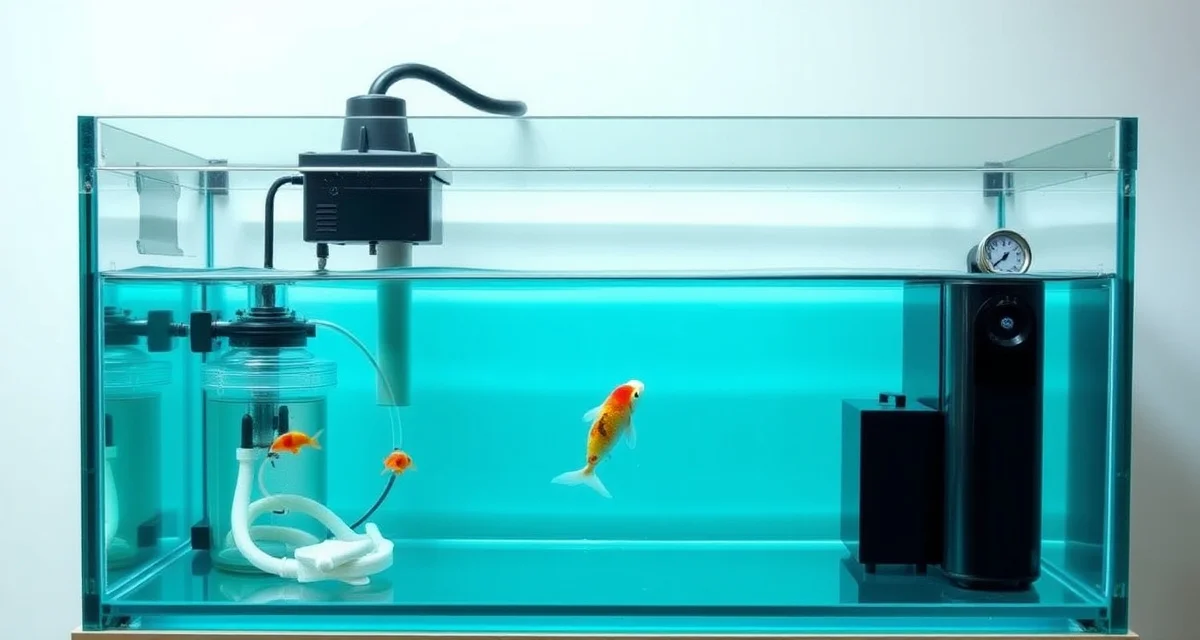
How to Set Up a Koi Quarantine System: Tank, Filter, and Protocol
A properly cycled quarantine filter prevents the ammonia spikes that stress and kill new koi before disease even becomes a concern. The filter isn't optional. It's the part most hobbyists get wrong, and it's the most important piece of the setup.
This guide walks you through building a functional quarantine system from scratch: tank size, filtration, aeration, heating, water preparation, and the protocol to run from day one. Paper checklists are static and lose context; KoiQuanta's setup wizard walks you through quarantine system configuration and pre-populates your protocols based on your specific setup.
TL;DR
- A 24-inch koi needs 240 gallons of quarantine water to avoid severe crowding stress.
- What size tank do I need to quarantine a 24-inch koi?
- Minimum 300–500 gallons for a single fish of that size, with solid filtration and aeration.
- An ammonia spike in an uncycled quarantine tank can kill or severely stress new fish within 72 hours, before disease has a chance to declare itself.
- Run a large sponge filter or a box filter in your display pond for 3–4 weeks before you need the quarantine tank.
- These products sharply reduce cycling time but typically can't handle full fish load from day one; test ammonia and nitrite daily for the first 2 weeks.
- A 24-inch koi requires a quarantine tank of at minimum 300–500 gallons for a single fish.
Step 1: Choose Your Quarantine Tank
Size
Size your quarantine tank based on the largest fish you'll be quarantining, not the smallest.
General sizing guide:
- Koi up to 10 inches: 100–150 gallons minimum
- Koi up to 18 inches: 200–300 gallons minimum
- Koi 18–24 inches: 300–500 gallons minimum
- Koi over 24 inches: 500+ gallons (see individual fish calculation below)
For large or jumbo koi: Aim for 10 gallons per inch of fish length, minimum. A 24-inch koi needs 240 gallons of quarantine water to avoid severe crowding stress.
What size tank do I need to quarantine a 24-inch koi? Minimum 300–500 gallons for a single fish of that size, with solid filtration and aeration. Smaller tanks can work if filtration is strong and water changes are frequent, but the stress on a large fish in a small volume compromises the immune function you're trying to evaluate.
Tank Options
- Stock tanks (rubbermaid, polyethylene): Economical, durable, easy to disinfect between uses
- IBC totes (275–330 gallons): Excellent for larger fish; free or low-cost second-hand
- Purpose-built fibreglass quarantine tanks: Best option but higher cost
- Large food-grade plastic containers: Work well for small koi
The quarantine tank does not need to be attractive. It needs to be functional, easy to clean, and large enough.
Step 2: Set Up Filtration (Most Important Step)
The single most common quarantine failure is an uncycled or inadequately sized filter. An ammonia spike in an uncycled quarantine tank can kill or severely stress new fish within 72 hours, before disease has a chance to declare itself.
Option A: Pre-Cycle a Sponge Filter in Your Display Pond
This is the best method. Run a large sponge filter or a box filter in your display pond for 3–4 weeks before you need the quarantine tank. The filter media will become colonised with nitrifying bacteria from your established pond.
When fish arrive, move the pre-cycled filter to the quarantine tank. You have immediately active biological filtration.
Why this works: The bacteria in your display pond media immediately start processing ammonia in the quarantine tank. You skip the cycling period entirely.
Option B: Bottled Bacteria Products
Commercial nitrifying bacteria products (Seachem Stability, Dr. Tim's Aquatics One and Only) can seed a filter rapidly. Use at the maximum recommended dose for the first week. These products sharply reduce cycling time but typically can't handle full fish load from day one; test ammonia and nitrite daily for the first 2 weeks.
Option C: Shared Mature Media
Take a handful of mature biological media from your display pond filter and add it to the quarantine filter. This transfers active bacteria and considerably accelerates cycling.
Biosecurity note: Moving media from display pond to quarantine tank means any pathogen in your display pond can theoretically transfer. If your display pond is healthy and established, this risk is minimal in practice.
Filter Sizing
Filter the quarantine tank at the same rate you'd filter a display pond of the same volume: minimum full-volume turnover every 1–2 hours. Koi in quarantine are under stress and may be producing more waste than usual. If anything, over-filter the quarantine tank.
Step 3: Aeration
Quarantine tanks are typically smaller volumes with higher fish density. Oxygen demand is elevated.
Minimum: One air stone per 100 gallons of quarantine volume.
Recommended: Two or more air stones, or a combination of an air stone and surface agitation from a return flow.
Does my quarantine tank need a heater? In most climates, yes. Temperature stability is important for two reasons: it reduces stress on fish that are already stressed from transport, and it keeps conditions in the 20–24°C range where pathogens declare themselves during the observation period. Wild temperature swings are stressful and can trigger suppressed infections.
Step 4: Heating
Target temperature for quarantine: 20–24°C (68–75°F).
At this temperature range:
- Koi immune function is active (unlike cold water, where immunity is suppressed)
- Common pathogens like Ich, Costia, and gill flukes complete their lifecycle fast enough to become visible within the 30-day window
- KHV, the most feared koi disease, becomes active within the 18–26°C window and will manifest during quarantine
Heater sizing: 75–100 watts per 100 gallons is a general guideline. In a cold environment or large tank, use two smaller heaters rather than one large one; if one fails, the other maintains some temperature rather than the tank crashing to ambient.
Always use a separate thermometer to verify heater accuracy. Heater thermostat calibration drifts over time.
Step 5: Cover and Security
Koi in quarantine are stressed and jump. A distressed koi can clear the edge of a stock tank with very little warning. Always cover the quarantine tank with a net or solid lid.
Also secure against predators. A quarantine tank in a shed or garage is exposed to different predator risks than a display pond. Cats, raccoons, and herons all pose risks to an uncovered quarantine tank.
Step 6: Water Preparation
Fill the quarantine tank with treated tap water. Use a dechlorinator (Seachem Prime or similar) at the recommended dose to neutralise chlorine and chloramine before adding fish.
Check the baseline water parameters before any fish go in:
- pH: should be 7.2–8.2
- Temperature: at target (20–24°C)
- KH: above 80 ppm (buffer if necessary before adding fish)
- Ammonia and nitrite: 0 ppm (if filter is established)
Add salt to 0.1% immediately (before fish arrive). This reduces osmotic stress on arrival.
Step 7: KoiQuanta Quarantine Setup
How do I cycle a quarantine tank quickly? The fastest method is transferring active sponge filter media from your display pond and using bottled bacteria products simultaneously. But the second critical step is setting up your quarantine tracking before the fish arrive.
In KoiQuanta, the interactive setup wizard configures your quarantine protocol based on your tank size, fish count, and local water chemistry. You enter:
- Tank volume
- Fish count and approximate sizes
- Target quarantine duration
- Your local water source parameters
KoiQuanta pre-populates your salt dose, daily monitoring schedule, observation checkpoint dates, and treatment protocols. When the fish arrive, you're not starting from scratch; you have a pre-built workflow ready to execute.
Your Quarantine Startup Checklist
Before fish arrive:
- [ ] Tank sized for fish being quarantined
- [ ] Filter established and cycling (or pre-cycled media installed)
- [ ] Aeration running with adequate air stones
- [ ] Heater set to 22°C and verified with external thermometer
- [ ] Tank covered
- [ ] Water treated with dechlorinator
- [ ] Water parameters tested: pH 7.2–8.2, KH 80+ ppm, ammonia 0 ppm, nitrite 0 ppm
- [ ] Salt added to 0.1%
- [ ] KoiQuanta quarantine lot created with target protocol
On arrival day:
- [ ] Float transport bags for temperature equalisation (15–20 minutes)
- [ ] Add fish; do not pour transport water into quarantine tank (disease risk)
- [ ] Log arrival in KoiQuanta
- [ ] Do not feed for 24 hours
What size tank do I need to quarantine a 24-inch koi?
A 24-inch koi requires a quarantine tank of at minimum 300–500 gallons for a single fish. The guideline of 10 gallons per inch of fish puts a 24-inch koi at 240 gallons minimum, but add buffer for stress reduction and koi pond water quality tracker stability. A 24-inch koi in a 200-gallon tank will be stressed by crowding, which suppresses immune function and complicates disease assessment. If you regularly source large koi, a dedicated 400–500 gallon quarantine system is a worthwhile investment.
Does my quarantine tank need a heater?
Yes, in most climates. Maintaining quarantine temperature at 20–24°C is important for three reasons: it keeps koi immune function active, it allows common pathogens to complete their lifecycle and become visible within the 30-day window, and it keeps KHV within its activation temperature range so it will manifest if present. A bare quarantine tank at ambient winter temperature (10–15°C in many climates) will suppress pathogen expression and give you a false-clear result.
How do I cycle a quarantine tank quickly?
The fastest method is transferring a pre-cycled sponge filter from your display pond: a sponge filter that's been running in your main pond for 3–4 weeks carries enough nitrifying bacteria to handle quarantine tank ammonia load from day one. If you can't pre-cycle, use commercial nitrifying bacteria products at maximum dose and test ammonia and nitrite daily for the first two weeks, performing water changes if ammonia rises above 0.25 ppm. Combining both methods (pre-cycled media + bottled bacteria) gives you the fastest and most reliable result.
Related Articles
FAQ
What is How to Set Up a Koi Quarantine System: Tank, Filter, and Protocol?
A koi quarantine system is a dedicated temporary tank with filtration, aeration, and heating used to isolate new or sick fish before introducing them to your main pond. It includes a cycled biological filter to control ammonia, a heating element to stabilize temperature, and a structured observation protocol. The system lets you catch disease, parasites, or stress responses in a controlled environment before they can spread to your established collection.
How much does How to Set Up a Koi Quarantine System: Tank, Filter, and Protocol cost?
The core components—a stock tank, sponge filter, air pump, and heater—typically cost $150–$400 depending on size and brand. A 300-gallon stock tank runs $80–$150. Filtration and aeration add another $50–$100. Medications for a standard quarantine protocol cost $50–$150 more. There is no recurring fee for the system itself, though consumables like salt, test kits, and treatments are ongoing costs you should budget for.
How does How to Set Up a Koi Quarantine System: Tank, Filter, and Protocol work?
New fish are placed in the quarantine tank for 4–6 weeks. The cycled biological filter converts toxic ammonia from fish waste into less harmful nitrate. Daily water tests track ammonia, nitrite, nitrate, and pH. You observe fish for behavioral changes, lesions, or parasites. Preventive treatments such as salt, antiparasitics, or antibiotics may be applied. Only fish that complete the full protocol without incident are transferred to the display pond.
What are the benefits of How to Set Up a Koi Quarantine System: Tank, Filter, and Protocol?
Quarantine prevents introducing pathogens, parasites, and stress-compromised fish into your established pond. It gives new arrivals time to recover from transport, stabilize their immune response, and acclimate to your water parameters before facing competition. A proper quarantine has saved entire collections from ich, flukes, and bacterial infections that arrive invisibly on new fish. It also lets you treat disease in a controlled volume of water rather than medicating an entire pond.
Who needs How to Set Up a Koi Quarantine System: Tank, Filter, and Protocol?
Any koi keeper who acquires new fish needs a quarantine system—from beginners buying their first pond fish to experienced collectors importing from Japan. It is equally essential when returning fish from shows, treating sick fish isolated from the main pond, or receiving fish from trades. If you have an established pond with fish you care about, quarantine is non-negotiable. The risk of skipping it grows with every fish you already own.
How long does How to Set Up a Koi Quarantine System: Tank, Filter, and Protocol take?
A full quarantine protocol runs a minimum of 4 weeks, with 6 weeks recommended for imported or high-value fish. The first two weeks are the most critical: ammonia and nitrite must be tested daily in a newly cycled system. Clinical observation continues throughout. Some treatments require multiple dose cycles spanning 10–14 days. Factor in 3–4 weeks of pre-cycling your filter in the display pond before you even receive new fish.
What should I look for when choosing How to Set Up a Koi Quarantine System: Tank, Filter, and Protocol?
Prioritize tank volume first—minimum 300 gallons for fish up to 24 inches. Choose a filter you can pre-cycle in your main pond: large sponge filters and box filters work well. Confirm your heater can hold 72–76°F reliably. Look for a setup that is easy to drain, clean, and disinfect between uses. Avoid under-sizing the tank to save cost; crowding during quarantine defeats the purpose by adding stress that suppresses immune function.
Is How to Set Up a Koi Quarantine System: Tank, Filter, and Protocol worth it?
Yes, without question. A single disease outbreak introduced by an unquarantined fish can kill fish worth thousands of dollars and years of collection-building in days. The cost of a basic quarantine setup is a fraction of what you stand to lose. Beyond finances, watching established fish die from a preventable pathogen is avoidable. Quarantine is the highest-return investment in koi keeping, and experienced hobbyists universally consider it standard practice rather than optional.
Sources
- Associated Koi Clubs of America (AKCA)
- Koi Organisation International (KOI)
- University of Florida IFAS Extension Aquaculture Program
- Fish Vet Group
- Water Quality Association
Start Your Quarantine System Right
The quarantine tank setup guide covers advanced filtration options and multi-pond dealer setups. The 30-day koi quarantine program in KoiQuanta manages the full protocol once your system is running.
Try KoiQuanta free and set up your quarantine protocol before your next fish arrive.