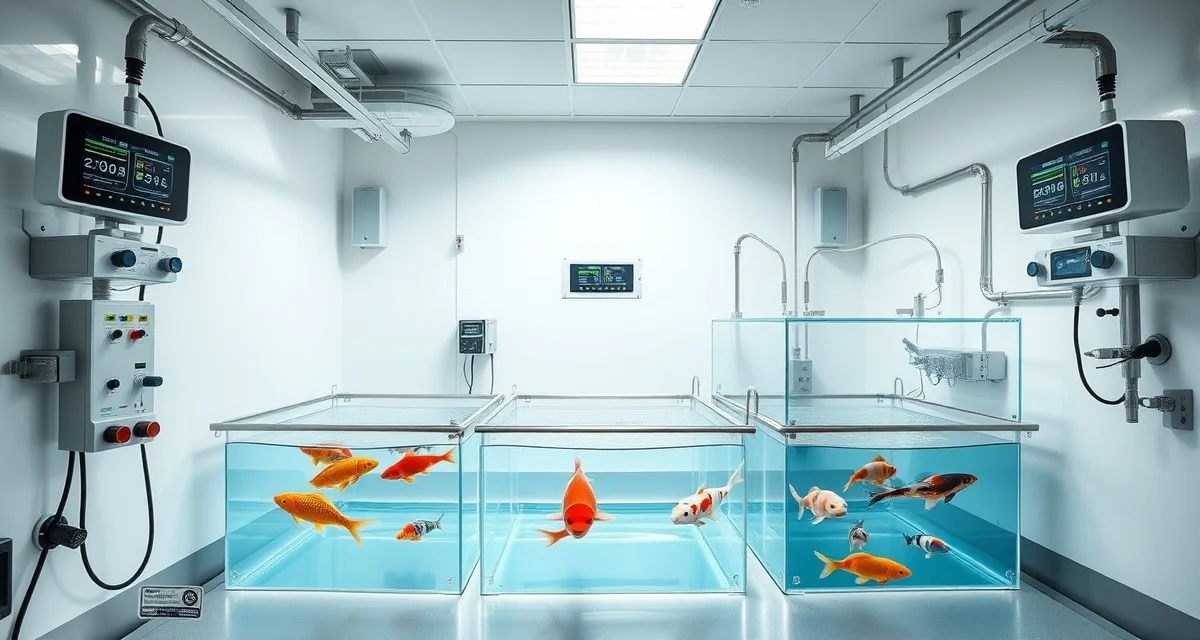
Japanese Koi Import Quarantine: USDA Requirements and Domestic Protocol
Importing koi from Japan is the highest-risk acquisition you'll make as a dealer or serious collector. Not because Japanese koi are unhealthy - often they're the cleanest, best-managed fish you'll buy - but because international shipping is brutally hard on fish, USDA requirements add handling and delay, and the biosecurity stakes are highest when you're introducing fish that have never been in US water systems.
Getting the import quarantine right isn't optional. Here's the full process.
TL;DR
- stressed breathing - Feeding response (offer food on day 2) - Any signs of physical damage from transport ### Days 3-7: Prophylactic Salt and Parasite Treatment Begin salt at 0.1% on day 3, building to 0.3% by day 5.
- At 65-68°F, you're holding the fish in the KHV expression window continuously.
- A negative PCR result at day 21 combined with 42 days of clean observation is the most defensible clearance you can give a customer.
- Forty-two days minimum, maintained at 65-68°F for continuous KHV observation.
- The 42-day window accounts for KHV incubation time, multiple parasite lifecycle windows, and the reality that Japanese fish have been through extended shipping stress.
- PCR testing at day 14-21 is standard for any high-value import batch.
USDA APHIS Requirements for Koi Import
Health Certificates
Koi imported from Japan require a health certificate issued by Japan's Ministry of Agriculture, Forestry and Fisheries (MAFF) or an accredited Japanese fish health official. The certificate must accompany the shipment and declare the fish free from regulated diseases.
The diseases of primary concern to USDA APHIS for carp imports:
- Koi herpesvirus (KHV / CyHV-3)
- Spring viremia of carp (SVC)
- Viral hemorrhagic septicemia (VHS)
Some of these may require specific testing documentation attached to the health certificate. Requirements change - check with a licensed customs broker who handles aquaculture imports or contact USDA APHIS directly before your shipment.
Port of Entry Inspection
All imported koi must enter through designated USDA APHIS ports of entry. At inspection, APHIS officials can:
- Examine documentation
- Physically inspect fish
- Collect samples for laboratory testing
- Detain or quarantine shipments pending test results
- Reject entry and require return or destruction
Delays at port are common. Build this into your logistics and make sure your receiving quarantine facility is ready before the fish arrive.
Import Permits
Depending on the quantity, species, and origin, you may need an import permit from USDA APHIS ahead of the shipment. Contact APHIS Animal Care or use the ePermits system to determine your requirements. Attempting to import without required permits can result in confiscation.
State-Level Requirements
Some states have additional requirements beyond federal USDA rules. California, for instance, has specific aquaculture permit requirements. Check your state department of fish and wildlife before importing.
Working With a Reputable Japanese Supplier
The best defense against import disease problems is starting with a supplier who has rigorous on-farm health management.
When evaluating Japanese breeders:
- Ask for their fish health management documentation
- Ask specifically about KHV history at the farm
- Request PCR testing results from their last export batch
- Understand their pre-export quarantine protocol
Premium breeders like Sakai Fish Farm, Dainichi, Marudo, Shinoda, and Omosako have established health management systems and long export histories. Lesser-known farms vary widely.
Many US importers buy at the Nagaoka, Saitama, or All Japan Koi Shows. These auction events concentrate fish from hundreds of breeders - great for selection, but higher biosecurity risk than purchasing directly from a single farm. Factor this into your quarantine planning.
Import Quarantine Protocol at Your Facility
Day 1: Arrival
Your quarantine tanks should have been established and at temperature (65-68°F) for 48-72 hours before fish arrive.
On arrival:
- Record arrival time, number of fish, varieties, and estimated sizes
- Check the bag water: temperature, pH, and if possible, ammonia
- Float bags to equalize temperature (20 minutes minimum)
- Transfer fish with nets - do not add bag water to your system
- Complete weight and size estimates if you have a record-keeping protocol
- Photograph each fish within 24 hours of arrival for ID purposes
Initial observation immediately after transfer: breathing rate, orientation, any visible lesions or parasites, stress coloration.
Days 1-3: No Treatment
Observe only. Transport stress is significant and you need a baseline before any chemical treatment. Watch for:
- Normal vs. stressed breathing
- Feeding response (offer food on day 2)
- Any signs of physical damage from transport
Days 3-7: Prophylactic Salt and Parasite Treatment
Begin salt at 0.1% on day 3, building to 0.3% by day 5. Japanese fish are often coming from softer-water environments than US ponds - build salt concentration slowly.
Start praziquantel on day 5 (2.5-5 ppm). Flukes are nearly universal in newly imported fish, even from excellent farms. A single prophylactic praziquantel course is standard practice for all Japanese imports.
Days 8-42: Observation and KHV Watch
The 42-day quarantine window for Japanese imports is about KHV. At 65-68°F, you're holding the fish in the KHV expression window continuously. If any fish is going to develop KHV, you want it to happen in quarantine, not in your display pond.
Clinical KHV signs: respiratory distress, gill necrosis, lethargy, anorexia, sunken eyes. KHV in a group of fish at peak expression temperature progresses fast - multiple fish declining simultaneously is a red flag.
If you suspect KHV: stop all water movement between quarantine and any other system. Contact your state veterinarian. Get PCR testing done. Don't attempt to treat - there is no effective treatment for KHV.
PCR Testing Decision
KHV PCR testing at $35-50 per fish is standard practice for:
- High-value fish (any fish worth more than $500)
- Large import batches where you can't afford to test every fish individually (test a representative sample)
- Fish destined for ponds with established collections
PCR testing is most useful at 14-21 days into quarantine, after the fish have been at observation temperature long enough to develop detectable viral loads if infected.
A negative PCR result at day 21 combined with 42 days of clean observation is the most defensible clearance you can give a customer.
Second Praziquantel Dose
Day 17-21: second praziquantel dose to catch the second fluke generation. Same dose as the first.
Discharge
After 42 days with clean observations, completed parasite treatment, and (ideally) negative PCR results, you can prepare buyer documentation and authorize discharge.
Import Records for Compliance and Buyer Documentation
Keep the following in your permanent records:
- USDA APHIS entry documentation
- Japanese health certificate
- Import permit (if required)
- Your domestic quarantine records (daily observations, treatments, parameters)
- PCR test results
- Discharge authorization
KoiQuanta generates a complete quarantine summary from your daily records. Combined with the import documentation, this is the buyer pack that separates a serious import dealer from someone who just has fish arrive and puts them in a tank.
Related Articles
- Koi Dealer New Arrivals Protocol: From Delivery to Quarantine
- Moving Koi from Quarantine to Display Pond: Protocol
- Japanese Koi Import Documentation: Complete Guide
FAQ
What documentation do I need to import koi from Japan?
You need a USDA APHIS-compliant health certificate from Japan's MAFF, appropriate import permits if required, and entry through a designated port of inspection. At entry, APHIS may inspect fish and collect samples for disease testing. Beyond federal requirements, check your state's aquaculture import rules - California, Florida, and other states have additional requirements.
How long do I quarantine Japanese koi imports?
Forty-two days minimum, maintained at 65-68°F for continuous KHV observation. This is not the place to shortcut. The 42-day window accounts for KHV incubation time, multiple parasite lifecycle windows, and the reality that Japanese fish have been through extended shipping stress. PCR testing at day 14-21 is standard for any high-value import batch.
What are the biggest disease risks with Japanese koi imports?
KHV is the primary concern - it's present in Japanese koi populations and can be latent in apparently healthy fish. Monogenean flukes (Gyrodactylus and Dactylogyrus) are almost universal in newly imported fish and require standard praziquantel treatment. Aeromonas bacterial infections can flare under transport stress. Spring viremia of carp (SVC) is a reportable disease that occasionally appears in imports, though less common than KHV.
What is Japanese Koi Import Quarantine: USDA Requirements and Domestic Protocol?
Japanese koi import quarantine is the mandatory isolation and health monitoring process required when bringing koi from Japan into the United States. It combines USDA APHIS regulatory compliance with a domestic biosecurity protocol designed to detect diseases like KHV (Koi Herpesvirus) before fish enter US water systems. The standard domestic protocol runs a minimum of 42 days at 65-68°F, covering parasite treatment, PCR testing, and full observation before fish can be sold or moved.
How much does Japanese Koi Import Quarantine: USDA Requirements and Domestic Protocol cost?
There is no fixed fee for the quarantine protocol itself, but costs include facility setup or rental, USDA import permits and inspection fees, PCR testing (typically per batch), salt and medication for prophylactic treatment, and 42+ days of housing and water management. For dealers importing high-value Japanese koi, total quarantine costs per batch can range from several hundred to several thousand dollars depending on fish volume and testing requirements.
How does Japanese Koi Import Quarantine: USDA Requirements and Domestic Protocol work?
The process begins with USDA APHIS permit approval before shipment, followed by inspection at the port of entry. Once cleared, fish enter a dedicated quarantine system held at 65-68°F — the KHV expression window. Salt treatment begins day 3, building to 0.3% by day 5. PCR testing is conducted at days 14-21. Fish are monitored daily for breathing, feeding response, and physical condition. A clean 42-day observation period is required before fish are cleared.
What are the benefits of Japanese Koi Import Quarantine: USDA Requirements and Domestic Protocol?
Proper import quarantine protects your existing collection from introduced pathogens, satisfies USDA legal requirements, and gives customers a defensible health clearance. Running fish through a full 42-day protocol at the correct temperature — combined with a negative PCR result — is the most credible assurance you can provide. It also reduces financial risk: catching a disease outbreak in quarantine is far less damaging than discovering it after fish have been sold or mixed with established ponds.
Who needs Japanese Koi Import Quarantine: USDA Requirements and Domestic Protocol?
Any dealer or serious collector importing koi directly from Japan needs to follow this protocol. It is legally required for commercial importers under USDA APHIS rules and strongly recommended for private collectors receiving international shipments. Anyone introducing Japanese koi into an existing collection — even a single fish — should quarantine before mixing. Given the biosecurity stakes and the stress fish endure during international shipping, this protocol is not optional for responsible koi keeping at any level.
Sources
- Associated Koi Clubs of America (AKCA)
- Koi Organisation International (KOI)
- University of Florida IFAS Extension Aquaculture Program
- Fish Vet Group
- Water Quality Association