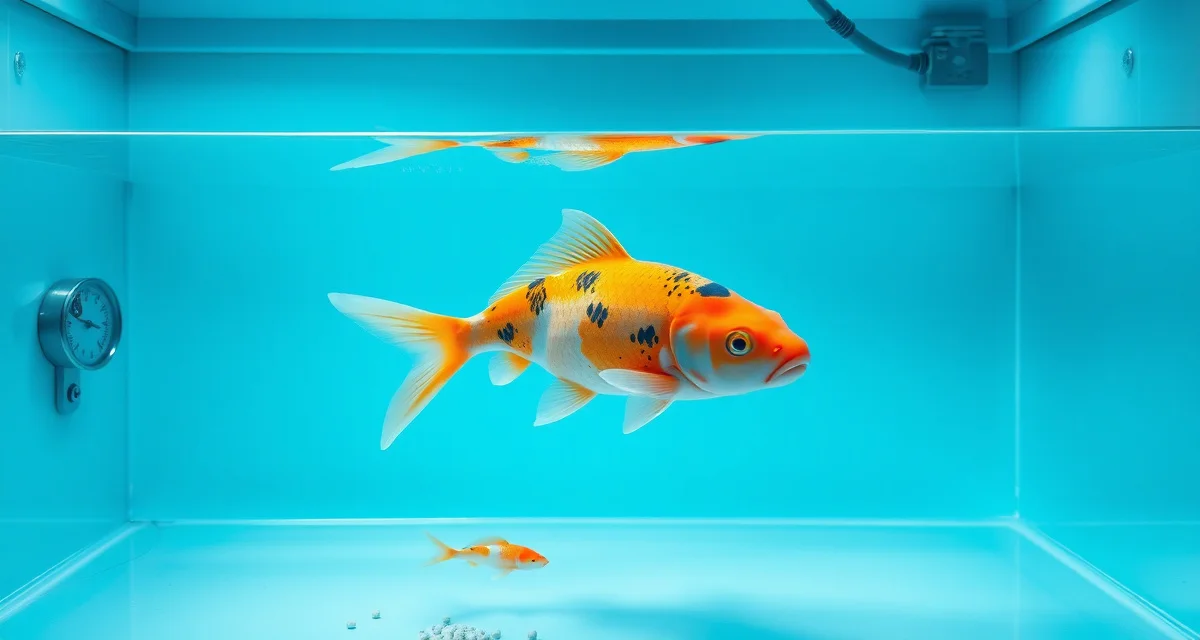
Feeding Koi During Quarantine
The feeding question comes up constantly with new fish. "Should I feed them? How much? What kind?" And the most important follow-up: "They're not eating - is that a problem?"
Yes. It's usually a problem.
Reduced appetite is one of the earliest, most reliable signs of stress or disease in koi. By the time you see visible symptoms - lesions, fin clamping, surface-gasping - you've already missed days of warning signs. Appetite tells you what's happening before anything else does.
Feeding during quarantine isn't just about nutrition. It's a daily health check you're running with every meal.
TL;DR
- Their oxygen levels drop, CO2 rises, ammonia accumulates.
- Feeding stressed fish causes two problems: 1.
- Uneaten food rots in the quarantine tank, spikes ammonia, and stresses fish further 2.
- Offer a small amount of food on hour 48 and watch what happens.
- In a display pond, koi eat aggressively and you size meals to what they can consume in 5 minutes.
- Start with half the normal ration on day 2–3 post-arrival and increase based on what you observe.
- If food is sitting uneaten after 5 minutes, remove it immediately.
The First 48 Hours: Don't Feed
When new fish arrive - especially after an international shipment - don't offer food for the first 24 to 48 hours.
Here's why: shipping is profoundly stressful. Fish in transit bags have been in declining koi pond water quality tracker for hours. Their oxygen levels drop, CO2 rises, ammonia accumulates. When they arrive, they're in a physiological stress state even if they look healthy. Their digestive systems aren't running normally.
Feeding stressed fish causes two problems:
- Uneaten food rots in the quarantine tank, spikes ammonia, and stresses fish further
- Fish that eat but can't properly digest food develop additional internal stress
Instead, acclimate the fish to the quarantine tank temperature and chemistry. Run the air. Let them decompress. Offer a small amount of food on hour 48 and watch what happens.
Feeding Behavior as a Diagnostic Tool
Before I trained myself to track feeding daily in KoiQuanta, I'd sometimes not notice a fish had stopped eating for three or four days. By then, it was already showing other signs. Now feeding behavior is the first thing I check every morning.
Normal quarantine feeding behavior:
- Fish approach food actively within 1–2 minutes of it hitting the water
- Food is consumed within 5 minutes
- No fish consistently hanging back or hiding during feeding
Early warning signs:
- One or two fish not approaching food when others do
- Fish approaching but spitting food out
- Significantly reduced enthusiasm - taking 10+ minutes to finish a meal they'd normally finish in 2
- Complete refusal
Any of these warrants closer inspection - behavior, respiration, visible symptoms, parameter test. Don't wait.
What to Feed in Quarantine
Wheat germ-based diet. Lower protein, highly digestible, and appropriate for fish that may be stressed or in cooler quarantine temperatures (65–68°F). Wheat germ-based foods reduce the waste load in the tank, which helps maintain water quality in a system without a strong biofilter.
Avoid:
- High-protein growth feeds (more waste, higher ammonia production)
- Color-enhancing foods (the astaxanthin and spirulina don't help a stressed or sick fish)
- Medicated feed unless specifically prescribed - uncontrolled antibiotic delivery through feed promotes resistance
For fish actively undergoing antibiotic treatment: some vets prescribe medicated pellets. This only makes sense if the fish is eating reliably - a fish that's not eating won't receive a therapeutic dose through food.
How Much to Feed
Small amounts. Very small amounts compared to what you'd feed display pond fish.
In a display pond, koi eat aggressively and you size meals to what they can consume in 5 minutes. In quarantine, that rule still applies - but quarantine fish often eat less than display pond fish at the same temperature.
Start with half the normal ration on day 2–3 post-arrival and increase based on what you observe. If food is sitting uneaten after 5 minutes, remove it immediately. Every uneaten pellet is ammonia in the making.
During active antibiotic treatment, reduce feeding further - some protocols call for withholding food for 24 hours around each antibiotic dose to avoid drug-food interactions that reduce absorption.
Water Temperature and Feeding
Koi digestive systems are temperature-dependent. Below 50°F (10°C), don't feed - the fish can't digest food properly. Between 50–60°F (10–15°C), feed every 2–3 days with wheat germ. Between 60–68°F (15–20°C), once-daily small meals are appropriate. Above 68°F, twice daily is fine.
Most quarantine protocols target 65–68°F for KHV-risk fish, which puts you in once-daily territory. The digestive system is working, but not at peak efficiency. Don't push large meals.
Feeding and the Biofilter-Ammonia Problem
In quarantine tanks without established biological filtration - which is most quarantine tanks - uneaten food is the fastest path to an ammonia spike.
This is why feeding discipline in quarantine is stricter than in your display pond. In the pond, a few extra pellets get picked up by snails, filter-feeders, or decompose slowly in a large-volume system. In a 200-gallon quarantine tank, three uneaten pellets sitting overnight can measurably move your ammonia.
Feed small. Remove anything uneaten. Test ammonia daily.
Withholding Food During Treatment
There are specific situations where you should withhold food:
- During formalin treatments: Formalin in the water column, fish not digesting normally, high metabolic stress. Skip feeding on treatment day.
- During potassium permanganate dips: No feeding the day of treatment.
- Fish showing no appetite: Don't force-feed. Offering food a sick fish won't eat just pollutes the water.
- First 24 hours after transport: Already covered above.
- Water temperature below 50°F: Digestion has essentially stopped.
For salt treatment and praziquantel, normal feeding continues unless fish are refusing food.
Related Articles
- Water Changes During Koi Quarantine: Frequency, Volume, and Technique
- Salt Treatment During Koi Quarantine: Doses, Timing, and Safety
FAQ
What is Feeding Koi During Quarantine?
Feeding koi during quarantine is the practice of carefully managing food intake for newly arrived or isolated koi fish. Unlike routine pond feeding, quarantine feeding prioritizes health monitoring over nutrition. Each meal becomes a behavioral observation — you're watching for appetite changes that signal stress or disease. The first 48 hours typically involve no feeding at all, followed by gradual reintroduction of small rations as the fish settle and stabilize in their new environment.
How much does Feeding Koi During Quarantine cost?
Feeding koi during quarantine has no direct monetary cost beyond your normal fish food expenses. However, getting it wrong is expensive — overfeeding causes ammonia spikes that stress fish and can trigger disease outbreaks requiring medication. The real cost of poor quarantine feeding is lost fish. Quality quarantine-appropriate foods like wheat germ pellets or easily digestible formulas may cost slightly more but are worth it for vulnerable new arrivals.
How does Feeding Koi During Quarantine work?
Quarantine feeding works by starting with a complete fast for the first 24–48 hours after arrival. On day two or three, offer a small amount — roughly half your normal ration — and observe closely. If fish eat eagerly and nothing remains after five minutes, appetite is good. If food sits uneaten, remove it immediately to prevent ammonia buildup. Gradually increase portions only as fish demonstrate consistent, confident feeding behavior over several days.
What are the benefits of Feeding Koi During Quarantine?
Proper quarantine feeding provides two key benefits: it protects water quality and gives you an early disease warning system. By feeding small amounts and removing uneaten food, you prevent ammonia spikes that compound stress. More importantly, appetite is one of the first indicators of illness — a koi refusing food often signals a problem days before visible symptoms appear. This daily feeding ritual lets you catch health issues early when intervention is most effective.
Who needs Feeding Koi During Quarantine?
Anyone introducing new koi to an existing collection needs to understand quarantine feeding. This applies to hobbyists buying fish from dealers, breeders receiving imports, and pond owners rescuing or rehoming fish. If you're running a quarantine tank — which you should be for any new arrival — feeding protocol matters. Even experienced koi keepers can lose fish by reverting to normal feeding schedules too quickly with stressed or recently shipped specimens.
How long does Feeding Koi During Quarantine take?
The quarantine feeding adjustment period typically lasts two to four weeks, mirroring the full quarantine duration. The first 48 hours involve no feeding. Days two through seven use half-rations with close observation. By week two, healthy fish showing strong appetite can gradually return to normal feeding amounts. However, if fish remain shy feeders or show other stress signs, extend the cautious approach. Never rush back to full rations based on a calendar — let the fish's behavior guide you.
What should I look for when choosing Feeding Koi During Quarantine?
When managing quarantine feeding, watch for three things: appetite consistency, water quality response, and food type suitability. Choose highly digestible, low-waste pellets rather than high-protein growth formulas — stressed fish can't process rich food efficiently. Monitor ammonia and nitrite after each feeding. Select a pellet size appropriate to the fish's mouth. Avoid treats or variety during quarantine — simple, consistent food reduces variables and makes behavioral changes easier to detect and interpret.
Is Feeding Koi During Quarantine worth it?
Yes — disciplined quarantine feeding is absolutely worth the effort. Skipping the initial fast or overfeeding stressed fish risks ammonia spikes, secondary infections, and potentially losing expensive fish entirely. The cost in attention is minimal: a small daily feeding, a five-minute observation, immediate removal of uneaten food. The payoff is fish that transition smoothly into your pond and an early warning system that catches illness before it spreads to your existing collection.
Sources
- Associated Koi Clubs of America (AKCA)
- Koi Organisation International (KOI)
- University of Florida IFAS Extension Aquaculture Program
- Fish Vet Group
- Water Quality Association