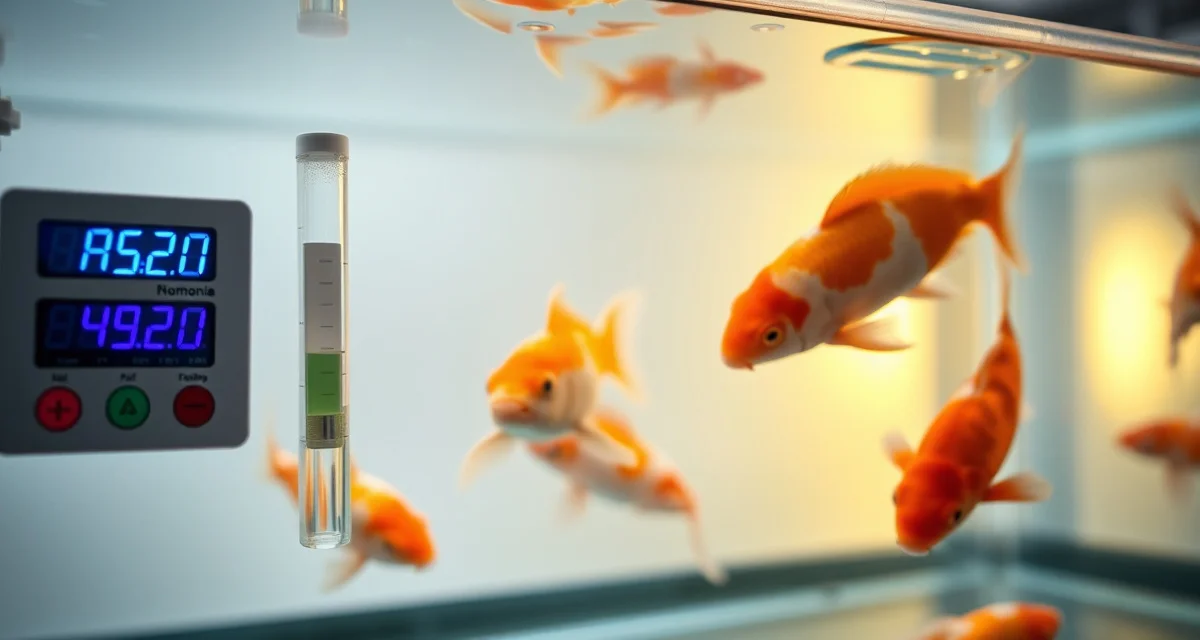
Managing Ammonia Spikes During Koi Quarantine
Antibiotics that kill beneficial bacteria can cause ammonia to spike to lethal levels within 24 hours. This is a quarantine-specific hazard that catches people off guard: you start an antibiotic course to treat a sick fish, and the medication kills the beneficial bacteria in your quarantine tank filter, which causes ammonia to spike catastrophically. The antibiotic that was meant to save your fish creates a new emergency.
KoiQuanta flags antibiotic start dates as high-risk for ammonia spike monitoring, prompting daily testing as soon as you log an antibiotic treatment in a quarantine tank.
TL;DR
- The same ammonia production rate has a more dramatic concentration effect in 100 gallons than in 3,000 gallons.
- Test ammonia daily during antibiotic treatment, do partial water changes when ammonia rises above 0.25 mg/L, add zeolite as emergency backup.
- The biofilter will recover after the antibiotic course ends -- usually 1-2 weeks for full restoration.
- Do a 30-50% water change to remove antibiotic residue from the water column 2.
- Tim's One and Only or similar) to help recolonize the biofilter 3.
- Add a small amount of seeded media from your main pond filter if available 4.
- Resume daily ammonia testing for 1-2 weeks until ammonia consistently reads zero 5.
Why Ammonia Spikes Happen in Quarantine
Several quarantine-specific factors make ammonia management more challenging than in established ponds:
New or partially established biofilter: Quarantine tanks frequently have smaller bacterial populations than established ponds. A smaller bacterial colony has less capacity to handle the same ammonia load.
Antibiotic treatment: Many antibiotics effective against fish pathogens also kill the beneficial bacteria (Nitrosomonas and Nitrospira) in your biofilter. The bacteria are sensitive to the same compounds that kill pathogens. This is one of the most common causes of quarantine ammonia crises.
High-stress fish producing more ammonia: Sick and stressed koi produce more cortisol and metabolic waste, including more ammonia per unit of body mass, than healthy fish. A sick fish in a quarantine tank is producing a higher ammonia load than a healthy fish of equivalent size.
Small water volume: Quarantine tanks are typically much smaller than display ponds. The same ammonia production rate has a more dramatic concentration effect in 100 gallons than in 3,000 gallons.
Uneaten food from sick fish: Fish that are off-feed in quarantine may reject food that then decomposes and contributes to ammonia.
Prevention: Testing Before Spikes Happen
The only way to catch ammonia spikes early enough to prevent fish loss is daily testing during high-risk periods.
Daily testing is required during:
- The first 7-10 days of any new quarantine setup (biofilter may not be fully established)
- Any antibiotic treatment course, starting the day before treatment begins
- The first week after any medication is added to the quarantine tank
- Any time a fish shows stress signs regardless of other factors
Test at the same time each day -- ammonia levels can vary through the day, and consistency helps you track trends accurately.
What to Do When Ammonia Spikes During Koi Treatment
The moment you detect ammonia above 0.25 mg/L in a quarantine tank, act:
Immediate partial water change: A 25-30% water change reduces ammonia concentration immediately. Use dechlorinated water at the same temperature as the quarantine tank. This is the fastest intervention.
Add zeolite: Zeolite (natural clinoptilolite) adsorbs ammonia from water. Add a bag of zeolite to the filter or directly to the quarantine tank for emergency ammonia control. Note: zeolite is depleted over time and needs to be recharged or replaced. Don't rely on it as your only management strategy.
Use Prime or similar detoxifier: Seachem Prime and similar products temporarily detoxify ammonia to a less toxic form for 24-48 hours while you address the root cause. This is a holding action, not a solution -- you still need to address why ammonia is rising.
Does treating koi cause ammonia to rise? Yes, particularly with antibiotics. Antibiotics damage the biofilter bacteria that convert ammonia to nitrite. Tetracyclines, metronidazole, and many other commonly used fish antibiotics are bactericidal to biofilter bacteria at treatment concentrations. Plan for ammonia monitoring and potential supplemental support from the start of any antibiotic course.
Reduce feeding or stop feeding: Food is the primary ammonia input from the fish side. Stopping or reducing feeding immediately when ammonia spikes reduces the source load.
Managing Antibiotic Treatment with Biofilter Protection
You have three practical approaches to antibiotic treatment in a quarantine tank:
Option 1: Accept biofilter disruption and manage with water changes. Most practical for most situations. Test ammonia daily during antibiotic treatment, do partial water changes when ammonia rises above 0.25 mg/L, add zeolite as emergency backup. The biofilter will recover after the antibiotic course ends -- usually 1-2 weeks for full restoration.
Option 2: Bypass the biofilter during treatment. If your quarantine tank design allows it, remove biological media from the flow path during antibiotic treatment and run only mechanical filtration and aeration. This protects your bacteria from antibiotic exposure. The trade-off is that you lose biological filtration during treatment, making daily water changes more important.
Option 3: Use antibiotic-medicated food rather than water treatment. For some bacterial infections, delivering antibiotics through medicated food rather than as a water treatment reduces the antibiotic concentration in the water column and thus reduces biofilter impact. This isn't always possible (fish not eating, or the infection requires water column treatment), but when it is possible, it's worth considering.
For the complete bacterial quarantine protocol context, see the bacterial quarantine protocol guide. The broader ammonia management framework for koi is covered in the koi ammonia guide.
Recovering the Biofilter After Antibiotics
After completing an antibiotic course:
- Do a 30-50% water change to remove antibiotic residue from the water column
- Add bacterial supplement (Dr. Tim's One and Only or similar) to help recolonize the biofilter
- Add a small amount of seeded media from your main pond filter if available
- Resume daily ammonia testing for 1-2 weeks until ammonia consistently reads zero
- Feed conservatively during recovery to reduce ammonia input while bacteria reestablish
The biofilter typically recovers in 1-3 weeks depending on how much disruption occurred.
Frequently Asked Questions
How do I prevent ammonia spikes in a quarantine tank?
Test ammonia daily during high-risk periods: new quarantine setups, any antibiotic treatment course, and the first week after adding any medication. Keep zeolite and a water change supply ready. Use seeded filter media from your established pond to maximize biofilter capacity in the quarantine tank. Feed conservatively and remove uneaten food promptly. If running antibiotics, consider bypassing biological filter media to protect bacteria from antibiotic exposure, and manage with daily water changes instead.
What do I do when ammonia spikes during koi treatment?
Immediately do a 25-30% partial water change with dechlorinated, temperature-matched water. Add zeolite to the quarantine tank for emergency ammonia adsorption. Add Prime or a similar temporary detoxifier to reduce ammonia toxicity for 24-48 hours while you address the root cause. Reduce or stop feeding to cut the ammonia source. Test again 4-6 hours after your water change to assess whether the spike is continuing or whether the single water change was sufficient. KoiQuanta flags antibiotic start dates for daily ammonia monitoring to catch spikes before they become lethal.
Does treating koi cause ammonia to rise?
Yes, particularly with antibiotic treatments. Many antibiotics are bactericidal to the beneficial bacteria in your quarantine tank biofilter at treatment concentrations. When biofilter bacteria are killed or suppressed, ammonia conversion stops and levels rise rapidly. The spike can occur within 24-48 hours of starting antibiotic treatment and can reach toxic levels before the next scheduled test. This is why daily ammonia testing is essential from the first day of any antibiotic course, and why having a management plan ready before starting treatment matters.
What is Managing Ammonia Spikes During Koi Quarantine?
Managing ammonia spikes during koi quarantine refers to the process of monitoring and controlling toxic ammonia buildup that occurs when antibiotics kill beneficial bacteria in a quarantine tank's biofilter. Unlike a main pond, quarantine tanks hold far less water, so ammonia concentrates rapidly—reaching lethal levels within 24 hours of starting antibiotic treatment. Proper management involves daily testing, partial water changes, and biofilter recovery protocols to keep fish safe throughout treatment.
How much does Managing Ammonia Spikes During Koi Quarantine cost?
Managing ammonia spikes during koi quarantine costs nothing beyond basic supplies you likely already own: an ammonia test kit (around $10–20), dechlorinated water for partial changes, and optional products like zeolite ($10–15) or bottled beneficial bacteria such as Tim's One and Only ($15–25). These are modest investments compared to the cost of losing a valuable koi to ammonia poisoning during what was supposed to be a routine treatment.
How does Managing Ammonia Spikes During Koi Quarantine work?
When antibiotics are introduced to a quarantine tank, they destroy the beneficial bacteria colonies living in the biofilter. Without those bacteria, ammonia produced by the fish accumulates unchecked. You manage this by testing ammonia daily, performing 25–50% water changes when levels exceed 0.25 mg/L, adding zeolite as an emergency ammonia absorber, and dosing bottled beneficial bacteria to help the biofilter recolonize. After the antibiotic course ends, the biofilter typically restores itself within one to two weeks.
What are the benefits of Managing Ammonia Spikes During Koi Quarantine?
The core benefit is keeping your fish alive through treatment. Antibiotics can cure bacterial infections, but without ammonia management, the medication itself creates a new lethal threat. Proactive monitoring prevents a cascade failure where a sick fish survives the disease only to die from ammonia toxicity. Additional benefits include a faster biofilter recovery post-treatment, reduced stress on the fish, and cleaner water that supports immune function during the healing process.
Who needs Managing Ammonia Spikes During Koi Quarantine?
Any koi keeper who uses antibiotics in a quarantine tank needs to manage ammonia spikes. This is especially critical for breeders, hobbyists with high-value fish, and anyone treating disease outbreaks. Beginners are particularly at risk because the connection between antibiotic use and biofilter collapse is not obvious. If you have ever started a treatment course and lost a fish days later for seemingly no reason, ammonia toxicity from filter disruption may have been the cause.
How long does Managing Ammonia Spikes During Koi Quarantine take?
Active ammonia monitoring begins the same day you start antibiotic treatment and continues daily throughout the course. Once antibiotics are stopped, testing should continue for one to two weeks until ammonia consistently reads zero—indicating the biofilter has recovered. A 30–50% water change after the final antibiotic dose helps clear residue. Total active management typically spans two to four weeks depending on the treatment protocol and how quickly beneficial bacteria reestablish.
What should I look for when choosing Managing Ammonia Spikes During Koi Quarantine?
Look for a reliable liquid-based ammonia test kit rather than strips, which are less accurate. For biofilter recovery, choose an established bottled bacteria product like Tim's One and Only. If your main pond is healthy, seeded filter media is the fastest recolonization option. Zeolite is useful as emergency backup but must be recharged or replaced regularly. Avoid overdosing beneficial bacteria products—follow label rates and retest ammonia rather than guessing the filter has recovered.
Is Managing Ammonia Spikes During Koi Quarantine worth it?
Yes. The cost of losing a koi—financially and emotionally—far outweighs the effort of daily ammonia testing and a few water changes. Ammonia spikes during antibiotic treatment are predictable and preventable once you understand the mechanism. Skipping monitoring is the primary reason fish die during quarantine treatment, not treatment failure. For anyone keeping koi seriously, managing ammonia during antibiotic courses is one of the highest-return habits you can build into your quarantine protocol.
Related Articles
Sources
- Associated Koi Clubs of America (AKCA)
- Koi Organisation International (KOI)
- University of Florida IFAS Extension Aquaculture Program
- Fish Vet Group
- Water Quality Association