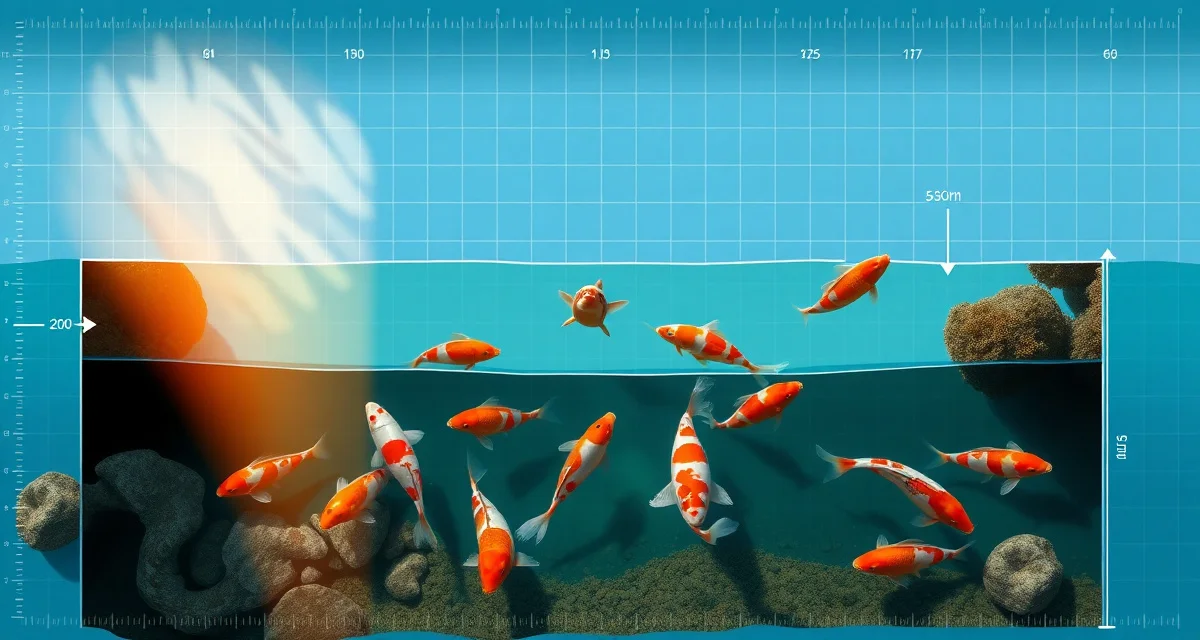
Koi Pond Size: Minimum and Recommended Dimensions
The absolute minimum for koi is 1,000 gallons -- most experts recommend 3,000+ for long-term health. This isn't arbitrary. Koi grow throughout their lives, can reach 60-90cm in length, and require stable water chemistry that's nearly impossible to maintain in small volumes. What works for a 20cm tosai in a 500-gallon pond becomes a welfare problem when that fish reaches 50cm two years later.
Plan for the fish you'll have in five years, not the fish you have today.
TL;DR
- Koi grow throughout their lives, can reach 60-90cm in length, and require stable water chemistry that's nearly impossible to maintain in small volumes.
- What works for a 20cm tosai in a 500-gallon pond becomes a welfare problem when that fish reaches 50cm two years later.
- Fish produce waste continuously -- ammonia, CO2, and organic compounds.
- You also have more buffer against sudden events -- a filter malfunction, a feeding excess, or a warm-weather oxygen drop is much more dangerous in 500 gallons than in 3,000 gallons.
- For a meaningful koi collection of 5-8 fish intended to grow to adult size, plan 3,000-5,000 gallons.
- Shallow ponds (under 75cm) routinely experience temperature swings that stress fish and have almost no thermal buffer.
- Surface area drives natural oxygenation -- a pond with 50% more surface area handles the same fish load more easily than a deep but narrow one.
Why Volume Matters for Water Quality
The primary reason pond size affects fish health is dilution. Fish produce waste continuously -- ammonia, CO2, and organic compounds. In a small volume, these build up faster than your filter can process them, leading to chronic low-grade koi pond water quality tracker stress that suppresses immune function and increases disease susceptibility.
In a larger volume, the same number of fish produce the same waste, but it's diluted across more water. Your filter has more time to process it before concentrations reach stressful levels. You also have more buffer against sudden events -- a filter malfunction, a feeding excess, or a warm-weather oxygen drop is much more dangerous in 500 gallons than in 3,000 gallons.
KoiQuanta's pond profile stores dimensions for stocking and dose calculations, so every calculation in the system uses your actual pond volume rather than a rough guess.
Minimum Recommended Dimensions
Volume: 1,000 gallons absolute minimum per fish load guidelines, but this is genuinely the floor -- not a comfortable working target. For a meaningful koi collection of 5-8 fish intended to grow to adult size, plan 3,000-5,000 gallons.
Depth: Minimum 1 meter (approximately 3 feet), with 1.5 meters preferred. Depth provides thermal mass (the deeper the pond, the more stable temperature swings), protection from predators (herons particularly), and refuge for fish from surface UV exposure and temperature extremes. Shallow ponds (under 75cm) routinely experience temperature swings that stress fish and have almost no thermal buffer.
Surface area: Wide ponds are better than deep narrow ponds for oxygen exchange. Surface area drives natural oxygenation -- a pond with 50% more surface area handles the same fish load more easily than a deep but narrow one.
Shape: Avoid sharp corners and extremely irregular shapes. These create dead zones where water circulation stagnates, organic waste accumulates, and filtration effectiveness drops. Oval, round, and rectangular ponds with gently curved corners circulate best.
Calculating How Many Koi Your Pond Can Support
The traditional rule of thumb (1 inch of fish per 10 gallons) was designed for tropical fish in aquariums and doesn't apply to koi. Koi produce far more waste per inch of body length than smaller fish, and they grow continuously.
A more practical guideline for koi: 250-500 gallons of water per fish, assuming adult fish reaching 50-70cm. At the lower end of that range (250 gallons per fish), your filtration needs to be excellent and water changes need to be frequent. At 500 gallons per fish, you have more buffer.
For example:
- 3,000-gallon pond: 6-12 adult koi comfortably, depending on filtration quality and management effort
- 5,000-gallon pond: 10-20 adult koi
- 10,000-gallon pond: 20-40 adult koi with good filtration
These aren't hard limits -- they're planning numbers. You can push them with excellent filtration, frequent water changes, and good monitoring. You can also underperform them with poor filtration or overfeeding.
For precise stocking calculations based on your pond's actual volume and filtration capacity, the koi stocking density calculator in KoiQuanta uses your entered pond and filter specs to give you a realistic target stocking range.
Does Depth Count Toward Capacity?
Yes and no. Total volume counts toward dilution capacity -- a deeper pond holds more water and provides more buffer. But depth alone doesn't compensate for a pond that's too small in surface area relative to fish load. Surface area determines oxygen exchange, which becomes the limiting factor for fish density before volume often does.
Think of it this way: a 5-foot-deep pond with only 8 feet of diameter might hold 1,000 gallons, but its surface oxygen exchange is limiting for a group of large koi. Compare that to a pond 20x10 feet at 4 feet deep -- more volume, dramatically more surface area, much better oxygen capacity.
For more detail on the complete setup planning process, the koi pond setup guide covers design elements holistically including filtration sizing, which has to be matched to pond volume for the calculations to work correctly.
Building for Growth: Plan Ahead
When deciding on pond size, think about the largest fish you want to keep in 5-10 years. If you're buying tosai (first-year koi) now, they're small. If they're from quality bloodlines, those fish could reach 60-80cm in the right conditions. A 3,000-gallon pond that feels comfortable with 10 small koi today may be overcrowded in 5 years.
This is the planning mistake most new koi keepers make -- building for today's stock rather than for growth. The cost difference between a 2,000-gallon and a 4,000-gallon pond at build time is less than the cost and disruption of rebuilding or adding capacity later.
Frequently Asked Questions
What is the minimum pond size for koi?
The functional minimum is 1,000 gallons, but this is genuinely too small for multiple adult koi long-term. A 1,000-gallon pond can keep a small number of koi (2-3 fish) if filtration is excellent and management is diligent, but it provides very little buffer against water quality problems. Most experienced koi keepers recommend 3,000 gallons as a comfortable practical minimum for a modest collection of growing fish.
How many koi can I have in a 3,000-gallon pond?
Plan for 6-12 adult koi at average size (50-60cm) in a 3,000-gallon pond with good filtration. At the lower end, management is easier and fish have more room. At the higher end, filtration needs to be properly sized and water changes frequent. If you're starting with smaller fish that will grow, stock lighter than the maximum to leave room for growth. KoiQuanta's stocking density calculator uses your pond volume and filtration specs to give a more precise recommendation.
Does pond depth count toward koi capacity?
Yes -- total volume matters because it dilutes fish waste. A deeper pond holds more water per unit of surface area, which gives more buffer. However, depth alone doesn't compensate for insufficient surface area, which limits oxygen exchange and becomes a constraint at high fish densities. Aim for at least 1 meter of depth for thermal stability and predator protection, but don't sacrifice surface area to get extra depth in a constrained space.
What is Koi Pond Size: Minimum and Recommended Dimensions?
Koi pond sizing refers to the minimum and recommended water volume, depth, and surface area required to keep koi healthy long-term. The absolute minimum is 1,000 gallons, but most experts recommend 3,000+ gallons. Koi grow throughout their lives, reaching 60-90cm, and need stable water chemistry that small volumes simply cannot sustain. Proper sizing accounts for the adult fish you'll have in five years, not the small tosai you start with.
How much does Koi Pond Size: Minimum and Recommended Dimensions cost?
Pond sizing itself is a planning decision, not a product — there's no purchase price. However, larger ponds cost more to build, ranging from a few hundred dollars for a DIY liner pond to tens of thousands for a professionally installed system. The real cost of undersizing is ongoing: poor water quality, stressed fish, higher filtration expenses, and potentially having to rebuild entirely as your fish grow.
How does Koi Pond Size: Minimum and Recommended Dimensions work?
Larger water volumes dilute waste — ammonia, CO2, and organic compounds produced continuously by fish. A bigger pond means slower, more manageable spikes in water chemistry, more thermal mass to buffer temperature swings, and greater oxygen capacity through surface area. The math is straightforward: more gallons per fish means more stable conditions, less filtration strain, and a wider safety margin against events like filter failures or warm-weather oxygen drops.
What are the benefits of Koi Pond Size: Minimum and Recommended Dimensions?
Proper pond sizing delivers stable water chemistry, healthier and faster-growing fish, and a larger buffer against system failures. Fish in appropriately sized ponds show less stress, stronger immune response, and better color. Surface area supports natural oxygenation, while depth — ideally over 75cm — prevents dangerous temperature swings. For keepers aiming for a meaningful collection of 5-8 adult koi, a well-sized pond is the single biggest factor in long-term success.
Who needs Koi Pond Size: Minimum and Recommended Dimensions?
Anyone keeping koi needs to understand pond sizing — from first-time hobbyists planning a backyard pond to experienced keepers upgrading their system. It's especially critical if you plan to grow tosai to adult size, keep multiple fish, or live in a climate with warm summers. Undersized ponds are one of the most common causes of chronic koi health problems, making this knowledge essential before any construction or stocking decisions.
How long does Koi Pond Size: Minimum and Recommended Dimensions take?
Pond construction timelines vary — a DIY pond can be completed in a weekend, while a professionally installed system may take weeks. But sizing is a permanent decision: the volume you build is what you live with. Koi can reach adult size within 3-5 years under good conditions, which is why planning for your five-year fish load matters from day one. Retrofitting a pond to be larger is expensive and disruptive.
What should I look for when choosing Koi Pond Size: Minimum and Recommended Dimensions?
Prioritize volume first — 3,000 gallons minimum for a serious collection, 5,000+ for 5-8 fish grown to adult size. Depth should exceed 75cm to avoid thermal stress. Surface area matters as much as depth: a wide, shallow pond oxygenates more naturally than a deep, narrow one. Ensure filtration is rated for your actual fish load, not just pond volume. Avoid building to minimum specs — buffers against stocking mistakes and system failures are invaluable.
Is Koi Pond Size: Minimum and Recommended Dimensions worth it?
Yes. Undersized ponds are the leading cause of chronic water quality problems, stunted growth, and preventable fish loss in koi keeping. The incremental cost of building larger upfront is far less than rebuilding, relocating fish, or managing persistent health issues. For keepers who want fish that reach their genetic potential — in size, color, and longevity — getting pond size right from the start is the highest-return decision you can make.
Related Articles
Sources
- Associated Koi Clubs of America (AKCA)
- Koi Organisation International (KOI)
- University of Florida IFAS Extension Aquaculture Program
- Fish Vet Group
- Water Quality Association