Koi Pond Bead Filter: Sizing, Cleaning, and Maintenance
Over-backwashing a bead filter removes beneficial bacteria, causing temporary ammonia spikes. This is the most common bead filter management error, and it's counterintuitive -- you'd expect more cleaning to mean better filtration. Understanding why this happens requires understanding how bead filters work.
KoiQuanta's filter maintenance log tracks backwash events against subsequent parameter readings, so you can see whether your backwash frequency is appropriate or whether over-washing is affecting your ammonia levels.
TL;DR
- The collective surface area of millions of small beads is substantial -- a 2-3 cubic foot bead filter can have hundreds of square feet of biological surface area.
- A filter rated for a 2,000-gallon pond with moderate stocking is a reasonable choice for a 1,000-1,500 gallon pond with koi at typical stocking density.
- Check the return flow before backwash so you have a baseline for comparison 2.
- Activate the backwash cycle per your filter's design (most use a rotary valve or multiport valve) 3.
- Backwash until the discharge water runs reasonably clear -- not crystal clear, just without heavy brown sludge 4.
- Monitor ammonia closely for 1-2 weeks after completing antibiotic treatments.
- A filter rated for 2,000 gallons at light stocking is more appropriate for a 1,000-1,500 gallon koi pond.
How Bead Filters Work
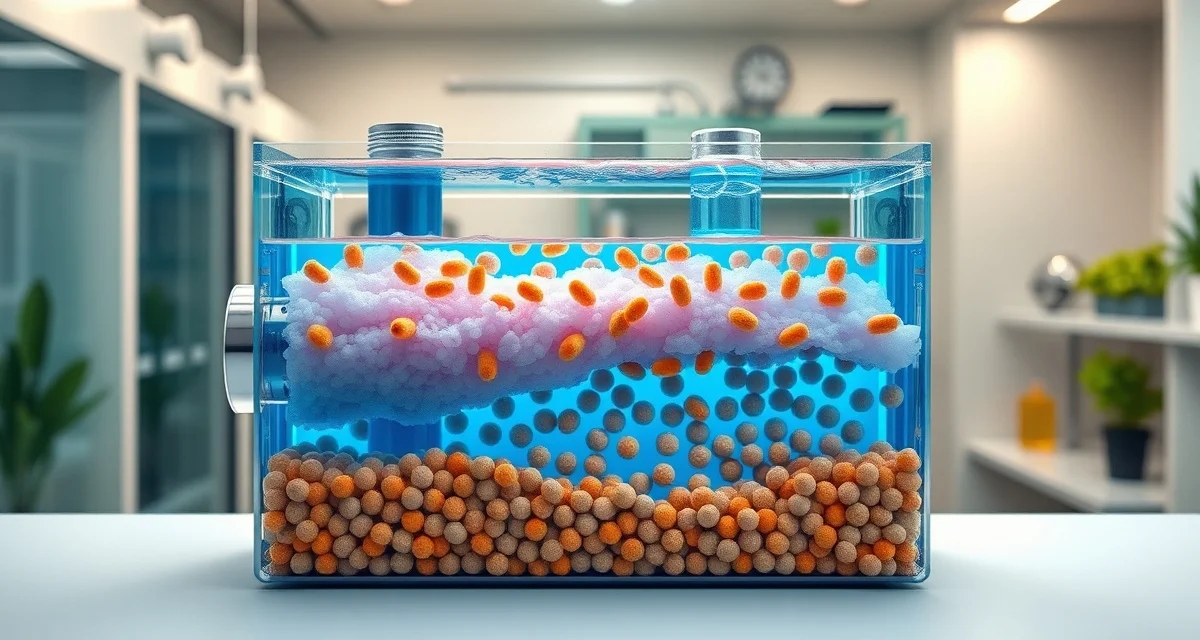
A bead filter contains thousands of small plastic beads (typically polyethylene, about 3-5mm diameter) that function simultaneously as mechanical and biological filter media.
Mechanical filtration: As pond water flows through the bead bed, solid particles are captured between the beads. The bead bed acts as a physical screen, trapping fine particles that other mechanical filters miss.
Biological filtration: The surface of each bead provides colonization area for nitrifying bacteria. The collective surface area of millions of small beads is substantial -- a 2-3 cubic foot bead filter can have hundreds of square feet of biological surface area.
The interaction: This is where bead filter management gets interesting. The solid particles trapped in the bead bed don't just sit there -- they provide additional surface area for bacteria. The biological community in a bead filter lives partly on the beads and partly in the accumulated organic material between them. When you backwash, you flush out that organic material along with the solids -- and with it, some of the bacterial population.
This is why backwash frequency matters. Too infrequent, and solids accumulate to the point where flow is restricted and oxygen can't penetrate the bed. Too frequent, and you repeatedly disrupt the bacterial population, causing cycling instability.
Types of Bead Filters
Pressurized bead filters: The most common design for koi ponds. The filter operates under pressure, with pond water pumped through the bead bed. These can be positioned at any height relative to the pond. Most incorporate a backwash mechanism (rotary valve or multiport valve) for easy cleaning.
Fluidized bead filters: A variation where the beads are constantly in motion, suspended in the water flow. Excellent biological surface area and self-cleaning properties, but generally less effective at mechanical filtration than static bed pressurized designs.
In-pond bead filters: Some designs are submerged in the pond itself. Less common for koi ponds, where external filtration is preferred for maintenance access.
Sizing a Bead Filter
Manufacturers rate bead filters for maximum fish load (usually expressed in pounds of fish or gallons of pond volume). These ratings are guidelines based on moderate stocking density and normal feeding levels. Koi keepers tend to have higher stocking densities than manufacturer ratings assume -- size up.
General guideline: Size the bead filter for 1.5-2x your actual fish load vs. the manufacturer's stated maximum. A filter rated for a 2,000-gallon pond with moderate stocking is a reasonable choice for a 1,000-1,500 gallon pond with koi at typical stocking density.
Flow rate compatibility: The bead filter needs to be compatible with your pump's flow rate. Each pressurized bead filter has a maximum recommended flow rate -- exceeding it pushes particles through the bead bed instead of trapping them. Check that your pump's actual flow at operating head (not maximum flow) falls within the filter's operating range.
Parallel installation: For larger ponds, installing two smaller bead filters in parallel (each handling half the flow) gives you redundancy and lets you backwash one while the other remains fully operational -- eliminating the period of reduced filtration during backwash.
Backwash Frequency and Technique
How often to backwash: The right frequency is when the filter needs it, not on a fixed schedule. Signs that backwash is needed:
- Reduced flow from the return to the pond (bead bed becoming compacted with solids)
- Elevated pressure reading if your filter has a pressure gauge
- Rising ammonia or nitrite (less common as a first sign, but follows prolonged clogging)
In practice, most koi keepers backwash their bead filters every 3-7 days in peak feeding season and less frequently in winter when fish are fed less or not at all. Heavy feeding increases the frequency.
Backwash technique:
- Check the return flow before backwash so you have a baseline for comparison
- Activate the backwash cycle per your filter's design (most use a rotary valve or multiport valve)
- Backwash until the discharge water runs reasonably clear -- not crystal clear, just without heavy brown sludge
- Return to filtration mode
- Note the date in your maintenance log
What you want to achieve: Remove the accumulated solids that are restricting flow, but not completely purge all organic material from the bead bed. A well-maintained bead filter that's backwashed appropriately will run clear water within a few minutes of backwash -- meaning you've removed the day's solid accumulation but left the established biological community relatively intact.
After backwash: Ammonia or nitrite may rise slightly in the hours after a backwash as the disturbed bacterial population re-establishes. This is normal and usually temporary. If you see significant ammonia spikes consistently after every backwash, you're either backwashing too frequently or too aggressively.
Effect on Biological Filtration
A bead filter that's backwashed properly maintains a stable, effective biological community. Problems arise at the extremes:
Under-maintenance: Solids accumulate to the point where flow is restricted. The bead bed becomes anaerobic (oxygen-depleted) in areas, which favors different (and less useful) bacterial populations and can produce hydrogen sulfide. Fish may show signs of water quality decline.
Over-maintenance: Frequent or thorough backwashing continuously disrupts bacterial populations. The filter never develops full biological capacity. Ammonia and nitrite are chronically slightly elevated.
After medication: Many antibiotics and some antiparasitic treatments inhibit or kill nitrifying bacteria. After antibiotic treatment passes through your bead filter, biological activity may be reduced. Monitor ammonia closely for 1-2 weeks after completing antibiotic treatments. For the nitrite context and what to do when nitrification is disrupted, the koi nitrite guide covers recovery from biofilter damage.
For the overall filtration system context, the koi pond filtration guide covers how a bead filter fits into a complete filtration system design.
Frequently Asked Questions
How do I size a bead filter for my koi pond?
Use the manufacturer's stated capacity as a starting point, then size up to 1.5-2x that capacity for koi ponds with normal-to-heavy stocking. A filter rated for 2,000 gallons at light stocking is more appropriate for a 1,000-1,500 gallon koi pond. Also verify that your pump's actual flow rate at operating head falls within the filter's recommended operating range -- too much flow reduces mechanical filtration effectiveness. When in doubt, a larger filter backwashed appropriately outperforms a correctly-sized filter that's pushed to its limits.
How often should I backwash my koi bead filter?
Backwash when the filter needs it, not on a rigid schedule. The primary trigger is reduced return flow from the pond -- the bead bed is restricting flow. In active feeding season with normal stocking density, this typically means every 3-7 days. In winter with reduced or no feeding, much less frequently. Track your backwash dates and note any parameter changes afterward. If ammonia rises noticeably after every backwash, you may be backwashing too frequently or too aggressively, disrupting bacteria faster than they can recover.
Can a bead filter be the only filtration for koi?
A pressurized bead filter can function as both mechanical and biological filtration in one unit, so technically yes -- but it's not ideal as the sole filtration for a pond with significant stocking. Bead filters are excellent biological filters and reasonable mechanical filters, but they don't have the solids-removal capacity of a dedicated drum filter or vortex chamber for heavily stocked ponds. They also require regular backwash, during which filtration is reduced. Using a bead filter as the primary biological filter after a drum filter or settling chamber for mechanical filtration is a more effective system than using a bead filter alone in a heavily stocked pond.
What is Koi Pond Bead Filter: Sizing, Cleaning, and Maintenance?
A koi pond bead filter is a pressurized biological and mechanical filtration system that uses millions of small plastic beads to trap waste and cultivate beneficial bacteria. Proper sizing ensures the filter handles your pond volume and fish load, while correct cleaning (backwashing) removes accumulated solids without stripping too much beneficial bacteria. Maintenance involves monitoring flow rates, backwash frequency, and water parameters like ammonia to keep the filter performing optimally year-round.
How much does Koi Pond Bead Filter: Sizing, Cleaning, and Maintenance cost?
Bead filter costs vary widely based on capacity. Entry-level units for ponds under 1,500 gallons typically run $150–$400, while larger units rated for 3,000–5,000 gallons can cost $500–$1,200 or more. Premium models with automated backwash valves sit at the higher end. Factor in plumbing, a suitable pump, and ongoing electricity costs. Buying slightly oversized saves money long-term by reducing backwash frequency and extending filter media life.
How does Koi Pond Bead Filter: Sizing, Cleaning, and Maintenance work?
Pond water flows into the pressurized bead filter chamber, where plastic beads mechanically trap suspended solids and provide surface area for beneficial nitrifying bacteria. These bacteria convert toxic ammonia from fish waste into less harmful nitrite and then nitrate. When flow slows due to clogging, you backwash by reversing or agitating the beads, flushing trapped solids out through a discharge line while retaining enough bacteria to maintain the nitrogen cycle.
What are the benefits of Koi Pond Bead Filter: Sizing, Cleaning, and Maintenance?
Bead filters offer compact, efficient biological and mechanical filtration in one pressurized unit. They handle high fish loads better than many passive systems, require relatively infrequent maintenance, and are easy to backwash without disassembling the filter. Their pressurized design allows flexible placement — including below pond water level — and the dense bead bed supports large populations of nitrifying bacteria, stabilizing water chemistry and reducing ammonia spikes in well-stocked koi ponds.
Who needs Koi Pond Bead Filter: Sizing, Cleaning, and Maintenance?
Any koi keeper with a moderately to heavily stocked pond benefits from a bead filter. They are especially valuable for hobbyists who want reliable biological filtration without daily maintenance, ponds with koi over 12 inches, or setups where space limits larger gravity-fed systems. If you keep more than one koi per 250–500 gallons, or feed heavily for growth, a bead filter provides the biological capacity needed to maintain safe ammonia and nitrite levels.
How long does Koi Pond Bead Filter: Sizing, Cleaning, and Maintenance take?
Backwashing a bead filter takes 5–15 minutes per session, depending on filter size and how clogged the beads are. Most keepers backwash every 1–4 weeks during the active feeding season. A full seasonal deep-clean — including inspecting valves, seals, and media — takes 1–2 hours annually. After completing antibiotic treatments, monitor ammonia closely for 1–2 weeks, as medications can reduce bacterial colonies and temporarily slow the filter's biological processing.
What should I look for when choosing Koi Pond Bead Filter: Sizing, Cleaning, and Maintenance?
Look for a filter rated at least 1.5–2x your actual pond volume to account for koi stocking density. For example, a filter rated for 2,000 gallons is appropriate for a 1,000–1,500 gallon koi pond. Check valve quality — rotary and multiport valves should operate smoothly. Prioritize models with clear backwash discharge so you can judge cleaning progress. Consider automation options if you prefer hands-off maintenance, and confirm the filter's flow rate matches your pump output.
Is Koi Pond Bead Filter: Sizing, Cleaning, and Maintenance worth it?
For serious koi keepers, a properly sized bead filter is one of the best investments you can make. It combines mechanical and biological filtration, withstands high stocking densities, and requires far less frequent intervention than many alternatives. The main risk — over-backwashing and crashing ammonia levels — is easily avoided by washing only when flow drops and stopping once discharge clears. Tools like KoiQuanta's maintenance log help you dial in the right frequency for your specific setup.
Related Articles
Sources
- Associated Koi Clubs of America (AKCA)
- Koi Organisation International (KOI)
- University of Florida IFAS Extension Aquaculture Program
- Fish Vet Group
- Water Quality Association