KoiQuanta vs. Generic Aquarium Apps: Why Koi Need Purpose-Built Software
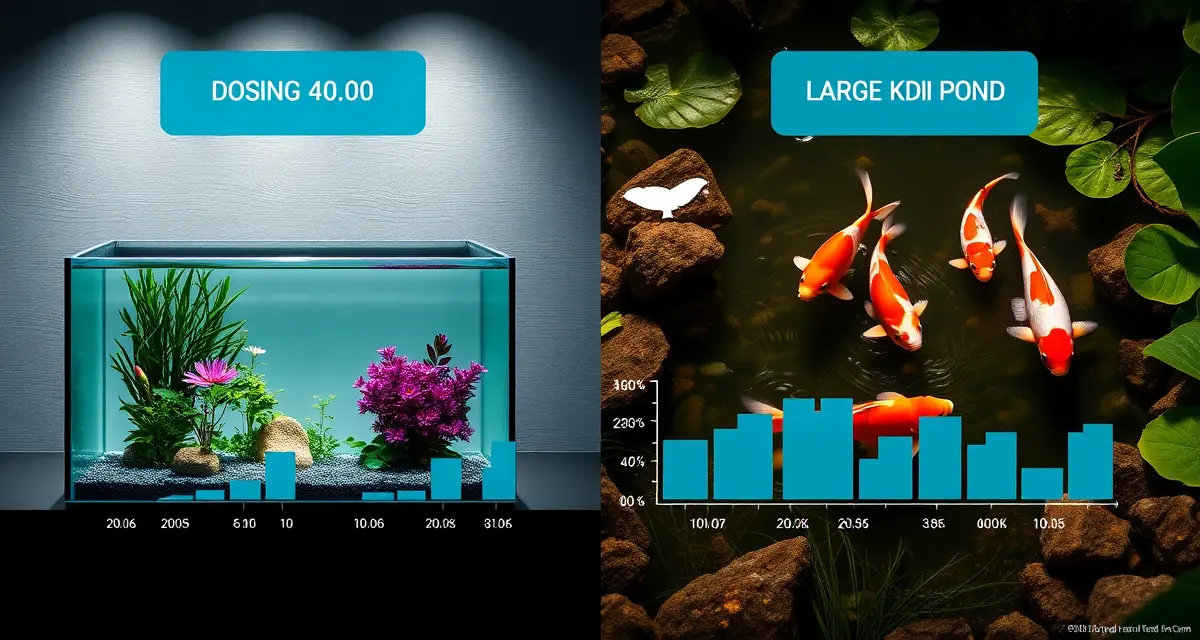
Generic aquarium apps calculate doses for 10-gallon tanks. Koi ponds are 1,000 to 10,000 gallons and require completely different dose mathematics. Scale-appropriate dosing comparison shows how generic aquarium app dose calculations produce dangerous errors when applied to pond-scale koi management.
This isn't just a numbers issue. Generic aquarium apps are designed for a fundamentally different management context: heated indoor tanks with stable temperatures, tropical fish species, and small water volumes. Koi ponds are outdoor, seasonal, large-volume systems managed around completely different biological cycles.
TL;DR
- Generic Aquarium Apps: Why Koi Need Purpose-Built Software Generic aquarium apps calculate doses for 10-gallon tanks.
- Koi ponds are 1,000 to 10,000 gallons and require completely different dose mathematics.
- Apply the same per-gallon dose rate to a 3,000-gallon koi pond with different temperature, different hardness, and different pH, and you get an incorrect therapeutic dose.
- The best koi management software 2026 evaluation confirms that purpose-built tools outperform generic alternatives specifically on the koi-relevant features.
- Generic aquarium apps calculate doses for 10-gallon tanks using tropical fish parameters.
- Koi ponds are 100 to 1,000 times larger with different chemistry, seasonal variation, and koi-specific disease risks.
Why Scale Matters So Much
The difference between a 20-gallon aquarium and a 2,000-gallon koi pond isn't just a factor of 100. The management principles are different at that scale.
In a 20-gallon aquarium:
- A 50% water change is 10 gallons, done in minutes
- A treatment dose is a fraction of a teaspoon
- Temperature is controlled by a heater set to 78°F year-round
- Ammonia spikes are corrected within hours
- The entire system is small enough to observe every fish at every feeding
In a 2,000-gallon koi pond:
- A 25% water change is 500 gallons, requiring hours and planning
- A praziquantel treatment dose is measured in grams with significant margin for error
- Temperature follows outdoor seasons from 35°F to 85°F over a year
- Ammonia spikes in winter take much longer to correct due to slowed biological activity
- Individual fish observation requires active effort and sometimes netting
Aquarium apps built for the first context give wrong answers in the second context. Not approximations. Wrong answers.
The Dose Calculation Problem Is Serious
A tropical fish app recommends treatment doses in "drops per gallon" or "ml per 10 gallons." These dose rates are calibrated for the target parasite or bacterium in tank conditions: stable temperature, moderate hardness, predictable pH.
Apply the same per-gallon dose rate to a 3,000-gallon koi pond with different temperature, different hardness, and different pH, and you get an incorrect therapeutic dose. It might be too low to be effective, or it might be high enough to harm fish if the water chemistry affects the medication's behavior differently than the app assumes.
Aquarium apps designed for tropical fish tanks have no protocols for koi-specific diseases including KHV, SVCV, or koi herpesvirus management. These are notifiable diseases with specific regulatory requirements that no tropical fish app addresses.
The koi health tracking app comparison demonstrates this dosing gap across several major aquarium apps. In every case tested, pond-scale application of aquarium app dose recommendations produced measurable errors.
What Aquarium Apps Get Wrong for Koi
Temperature management. Aquarium apps have temperature tracking designed for stable tropical temperatures. Koi pond temperature management involves understanding how temperature affects immune function across a 50-degree seasonal range, how cold water changes medication efficacy, and how to adjust feeding, observation frequency, and treatment timing as seasons change. This seasonal dimension simply isn't in aquarium app logic.
Filtration differences. Indoor aquariums use sponge filters, hang-on-back filters, and canister filters running continuously. Koi pond filtration involves drum filters, moving bed bioreactors, trickle towers, and UV sterilizers working at pond-scale flow rates. The maintenance schedules, performance indicators, and koi pond water quality tracker effects are completely different.
Stocking density calculation. Aquarium apps calculate stocking based on "inch of fish per gallon" rules designed for tropical fish species of fixed maximum size. Koi grow to 24-36 inches. A koi pond stocking calculation that uses tropical fish density rules will produce dangerous overstocking within a few years as fish grow.
Seasonal management. Koi management changes fundamentally with season. Spring brings disease vulnerability as immune function recovers from winter depression. Summer brings oxygen stress as temperatures peak. Autumn requires pre-winter health preparation. Winter requires near-cessation of feeding and reduced observation frequency for dormant fish. Aquarium apps have no seasonal management framework.
Disease protocols. Koi-specific diseases - koi herpesvirus, spring viremia of carp, koi sleepy disease, gill flukes specific to cyprinids - have no equivalent in tropical fish management. Aquarium apps' disease identification tools are calibrated for neon tetras and bettas, not for the specific pathogens that threaten koi.
KoiQuanta's Pond-Specific Design
KoiQuanta was built around koi pond reality from the ground up:
- Volume entry in gallons with support for irregular pond shapes using the built-in calculator
- Seasonal parameter ranges adjusted for outdoor pond conditions in your climate zone
- Temperature-adjusted dose calculation for the medications commonly used in koi management
- Quarantine protocol management specific to 4-6 week koi quarantine with koi disease observation checklists
- KHV and SVCV protocols with regulatory notification guidance
- Outdoor pond seasonal workflows for spring startup, summer monitoring, autumn preparation, and winter dormancy
- Pond-scale alert thresholds appropriate for the water volumes and fish sizes involved
Every feature in KoiQuanta reflects the reality of managing koi specifically. The best koi management software 2026 evaluation confirms that purpose-built tools outperform generic alternatives specifically on the koi-relevant features.
Common Aquarium Apps Compared
Popular aquarium apps like Aquarium Note, Fishkeeper, and AqLogbook are excellent tools for what they're designed for: managing aquariums. They have good communities, decent parameter logging, and useful reminders. If you keep a tropical freshwater or reef aquarium, these are reasonable tools.
For koi ponds:
| Capability | Generic Aquarium Apps | KoiQuanta |
|---|---|---|
| Pond-scale volume support | Limited or absent | Full |
| Koi-specific dose calculation | No | Yes |
| Seasonal management protocols | No | Yes |
| Quarantine protocol tracking | No | Yes |
| KHV/SVCV disease protocols | No | Yes |
| Outdoor temperature management | No | Yes |
| Dealer compliance export | No | Yes |
| Japanese koi variety support | Limited | Full |
Frequently Asked Questions
Can I use a tropical fish app for my koi pond?
You can use one to log water parameters and track observations, but its dose calculations, disease identification, and management recommendations won't be appropriate for pond-scale koi management. Generic aquarium apps calculate doses for 10-gallon tanks using tropical fish parameters. Koi ponds are 100 to 1,000 times larger with different chemistry, seasonal variation, and koi-specific disease risks. Using aquarium app dose recommendations for pond-scale treatment produces inaccurate results that can mean treatment failure or fish harm.
What features do koi ponds need that aquarium apps don't have?
Koi ponds need: pond-scale dose calculation with temperature adjustment, seasonal management protocols across a 50-degree temperature range, quarantine protocol management specific to koi quarantine duration and observation requirements, koi herpesvirus and spring viremia disease protocols with regulatory guidance, outdoor environmental management features, and dealer compliance documentation for import lot management. None of these exist in apps designed for tropical aquariums, because the target use case is fundamentally different.
Are there any aquarium apps that work for koi ponds?
No general aquarium app handles koi pond management adequately because the scale, seasonal dynamics, and disease context are too different from aquarium keeping. The closest alternatives to KoiQuanta for koi management are KoiControl and KoiLogic, which are purpose-built for koi but have different feature sets and pricing. KoiQuanta is distinguished by its quarantine protocol management, compliance documentation, and dealer-tier features that support commercial koi operations. Any app you consider should be evaluated specifically for koi pond use cases, not general aquarium capabilities.
What is KoiQuanta vs. Generic Aquarium Apps: Why Koi Need Purpose-Built Software?
KoiQuanta is a purpose-built koi pond management platform designed specifically for the unique demands of large-scale outdoor koi keeping. Unlike generic aquarium apps built around 10-gallon tropical tanks, KoiQuanta handles pond volumes of 1,000 to 10,000 gallons, seasonal water temperature swings, and koi-specific biological cycles. The article explores why this distinction matters and why applying generic app logic to koi ponds produces dangerous dosing errors.
How much does KoiQuanta vs. Generic Aquarium Apps: Why Koi Need Purpose-Built Software cost?
KoiQuanta offers tiered pricing tailored to hobbyists and professional koi keepers. While exact pricing should be confirmed on the KoiQuanta website, purpose-built koi software typically costs more than generic aquarium apps but delivers significantly greater value by preventing costly dosing mistakes, fish loss, and treatment failures that can easily exceed the software cost many times over.
How does KoiQuanta vs. Generic Aquarium Apps: Why Koi Need Purpose-Built Software work?
KoiQuanta works by taking your pond's specific parameters — volume, temperature, pH, and hardness — and running dose calculations scaled appropriately for pond-sized systems. Rather than applying per-gallon rates designed for small tropical tanks, it uses koi-specific algorithms that account for outdoor seasonal variation, large water volumes, and the physiological differences of koi compared to common aquarium fish.
What are the benefits of KoiQuanta vs. Generic Aquarium Apps: Why Koi Need Purpose-Built Software?
Purpose-built koi software delivers accurate therapeutic dosing at pond scale, reduces the risk of under- or over-treating fish, and tracks seasonal health patterns that generic apps ignore entirely. KoiQuanta also accounts for temperature-dependent biological cycles critical to koi health management, giving keepers confidence that their treatment decisions are grounded in koi-relevant science rather than tropical tank defaults.
Who needs KoiQuanta vs. Generic Aquarium Apps: Why Koi Need Purpose-Built Software?
Any koi keeper managing a pond of 1,000 gallons or more will benefit from purpose-built software. This includes backyard hobbyists with mid-size ponds, serious enthusiasts with high-value koi collections, and professional pond managers. Anyone who has tried applying generic aquarium app dose recommendations to a large koi pond and found the results confusing or inconsistent is exactly the audience this software is built for.
How long does KoiQuanta vs. Generic Aquarium Apps: Why Koi Need Purpose-Built Software take?
Setup is straightforward — entering your pond parameters typically takes minutes. Ongoing use integrates into your regular pond management routine, with dose calculations available on demand. The time investment is minimal compared to the time lost troubleshooting treatment failures caused by generic app miscalculations. Most keepers report that purpose-built software saves significant time across a full season of pond management.
What should I look for when choosing KoiQuanta vs. Generic Aquarium Apps: Why Koi Need Purpose-Built Software?
Look for software that performs dose calculations scaled to your actual pond volume, accounts for water temperature and chemistry variables specific to outdoor koi ponds, and tracks seasonal health trends. Koi-specific treatment libraries, parameter logging, and alerts built around koi biological cycles are key differentiators. Avoid tools that simply scale up aquarium dosing formulas without accounting for the fundamentally different management context of outdoor ponds.
Is KoiQuanta vs. Generic Aquarium Apps: Why Koi Need Purpose-Built Software worth it?
For any serious koi keeper, yes. The cost of a single treatment error on a pond full of valuable koi — whether from under-dosing that fails to resolve disease or over-dosing that stresses fish — can far exceed the price of purpose-built software. KoiQuanta's koi-specific dose mathematics, validated against real pond conditions, make it a practical investment in fish health and keeper confidence.
Related Articles
Sources
- Associated Koi Clubs of America (AKCA)
- Koi Organisation International (KOI)
- University of Florida IFAS Extension Aquaculture Program
- Fish Vet Group
- Water Quality Association