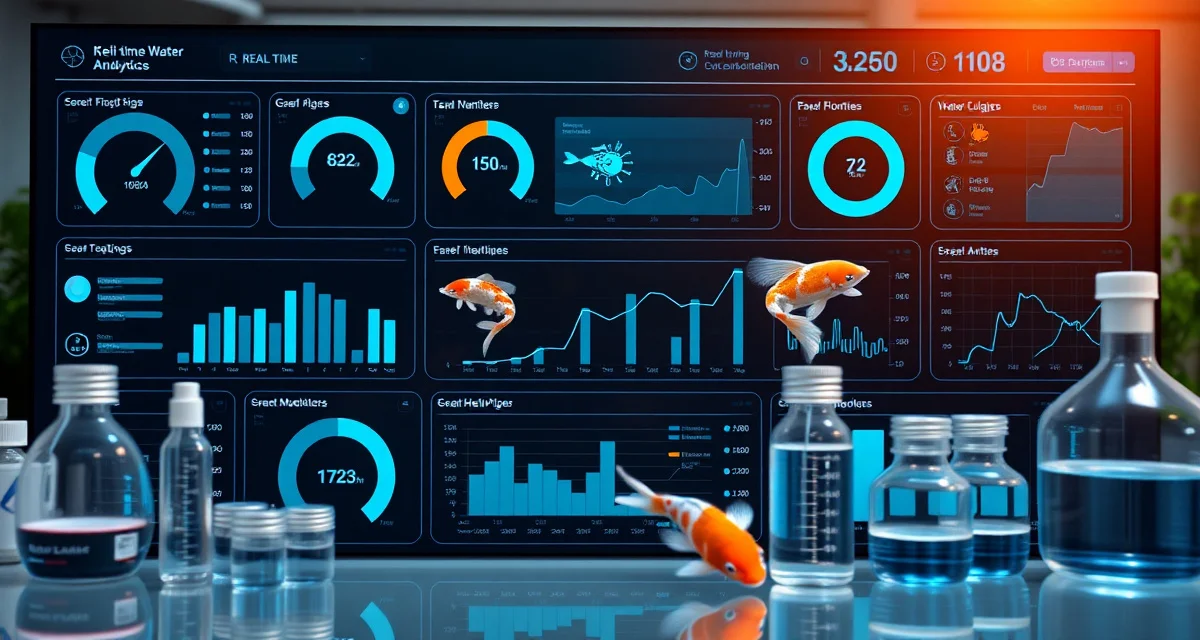
KoiQuanta API: Integrate Koi Health Data With Your Systems
Koi dealers who integrate health data with their business systems reduce compliance reporting time by an additional 60% beyond KoiQuanta's baseline automation. This represents the efficiency ceiling for dealers who want to go further than the standard KoiQuanta workflow. When koi quarantine program completion data flows automatically into your inventory system, and treatment cost data flows automatically into your accounting software, and compliance documentation is generated automatically at lot clearance, the manual coordination between these functions - which previously required hours of staff time - is eliminated entirely.
KoiQuanta's REST API with webhook support lets advanced dealers push data to accounting, inventory, and compliance management systems in real time.
TL;DR
- Consistent water quality monitoring is the most effective way to prevent problems with koiquanta api.
- Tracking trends over time reveals issues before they become visible in fish behavior.
- KoiQuanta connects observations, water data, and treatment records in one searchable history.
- Early detection based on parameter trends reduces treatment costs and fish stress.
- Seasonal changes require adjusted monitoring schedules; automated reminders help maintain consistency.
Who the API Is For
The API is designed for:
Technology-forward dealers who want deeper integration between KoiQuanta and their existing business systems. If you're running QuickBooks, custom inventory software, or a CRM for buyer management, the API lets you connect KoiQuanta data to those systems without manual data transfer.
Developers building on KoiQuanta data who want to create custom dashboards, automated reports, or specialized tools that pull from KoiQuanta's data model.
Operations with custom compliance workflows where standard KoiQuanta exports need to be transformed, combined with data from other sources, or submitted to systems that don't accept standard file formats.
Multi-location dealers who want to aggregate data from KoiQuanta across locations into a centralized reporting system.
If you're a hobbyist or a smaller dealer using KoiQuanta's standard features, the API adds nothing to your workflow. It's an integration layer for users who have specific systems they want to connect.
What the API Provides
The KoiQuanta REST API exposes the following data resources:
Pond and facility data: Pond profiles with volume, filtration configuration, equipment records, and parameter target settings. Useful for building custom dashboards or populating other systems with facility data.
Water quality records: All logged parameter readings with timestamps. This data can be pulled into custom reporting tools, IoT platforms, or business intelligence systems.
Fish and lot records: Fish profiles, lot records including provenance information, quarantine timelines, and compliance status. Lot data is particularly valuable for dealers integrating with inventory management systems - when a lot completes quarantine, an API webhook can trigger an inventory update automatically.
Treatment and medication records: Full treatment log data including product, dose, water volume, dates, and clinical context. Connects to billing or cost-tracking systems.
Compliance documentation: Trigger compliance document generation and retrieve the resulting documents for submission to external systems.
Alerts and events: Access to the alert log for integration with external monitoring or notification systems.
Webhook Support
Webhooks allow KoiQuanta to push data to your systems in real time when specific events occur, rather than requiring your system to poll the API periodically.
Supported webhook triggers include:
- Lot quarantine completion
- Treatment initiation or completion
- Parameter out-of-range alert
- Fish health event logged
- Compliance document generated
- Equipment maintenance due
For a dealer whose lot completion triggers an inventory update and a buyer notification, webhooks eliminate the polling delay and ensure the connected systems update as soon as the event occurs in KoiQuanta.
API Access and Documentation
API access is available on the KoiQuanta dealer plan. Authentication uses API keys generated in your account settings. The REST API uses standard JSON data formats, and API documentation with code examples in Python, JavaScript, and PHP is available in the KoiQuanta developer portal.
Rate limits apply to prevent abuse and ensure API availability across all users. Standard rate limits are sufficient for typical integration use cases. Contact KoiQuanta for enterprise API access if your integration requires higher request volumes.
Your quarantine software overview covers the features available to all dealer plan users. The dealer import compliance guide addresses the compliance documentation context that the API helps automate.
Frequently Asked Questions
Does KoiQuanta have an API for developers?
Yes. KoiQuanta provides a REST API with webhook support for dealer plan subscribers. The API enables read and write access to pond data, fish records, water quality logs, treatment records, and compliance documentation. Webhook support allows real-time event-driven integrations - when a lot completes quarantine or a treatment is logged, your connected systems receive a push notification rather than requiring periodic polling. Full API documentation with code examples is available in the KoiQuanta developer portal after subscribing to the dealer plan.
Can I export KoiQuanta data to my accounting software?
Yes, through the API or through KoiQuanta's standard export functions. For accounting integration, the API is the most direct approach - you build or configure an integration that pushes treatment cost data, lot acquisition records, and sale documentation from KoiQuanta to your accounting system automatically. For one-time or periodic export without a live integration, KoiQuanta's standard data export in CSV format is compatible with import functions in QuickBooks, Xero, and other common accounting platforms. The specific fields available in each export format are documented in KoiQuanta's help center.
What data is available through the KoiQuanta API?
The KoiQuanta API exposes all major data resources: pond and facility profiles, water quality parameter records with timestamps, fish and lot records including provenance and quarantine status, treatment and medication logs, compliance document generation and retrieval, alert and event logs, and equipment maintenance records. Write access is available for creating new records and updating existing ones. The API supports standard REST operations (GET, POST, PUT, DELETE) and uses JSON for all request and response data. Authentication uses API keys generated in your KoiQuanta account settings.
What is KoiQuanta API: Integrate Koi Health Data With Your Systems?
KoiQuanta's API is a REST interface with webhook support that lets koi dealers integrate fish health data directly with external business systems. It enables automatic data flow between KoiQuanta's pond and quarantine tracking tools and your inventory, accounting, and compliance management platforms, eliminating manual data entry across systems and centralizing koi health records in one searchable history.
How much does KoiQuanta API: Integrate Koi Health Data With Your Systems cost?
KoiQuanta's API access is available on advanced dealer plans. Pricing varies by tier, so contact KoiQuanta directly for current API plan costs. Given that API integration can reduce compliance reporting time by up to 60% beyond baseline automation, many dealers find the additional cost quickly offset by staff time savings and reduced manual coordination overhead.
How does KoiQuanta API: Integrate Koi Health Data With Your Systems work?
KoiQuanta uses a REST API with webhook support. When key events occur — such as quarantine program completion or lot clearance — webhooks push data in real time to connected systems. Your inventory system receives stock status updates automatically, your accounting software receives treatment cost data, and compliance documentation is generated without manual input from your team.
What are the benefits of KoiQuanta API: Integrate Koi Health Data With Your Systems?
The primary benefits are time savings and accuracy. Dealers eliminate hours of manual coordination between inventory, accounting, and compliance functions. Quarantine completion data flows automatically into inventory. Treatment costs post directly to accounting. Compliance docs generate at lot clearance. Beyond efficiency, integrated health data improves early detection of water quality trends, reducing treatment costs and fish stress.
Who needs KoiQuanta API: Integrate Koi Health Data With Your Systems?
KoiQuanta's API is designed for advanced koi dealers running multi-system operations — businesses managing inventory software, accounting platforms, and compliance reporting separately. If you already use KoiQuanta's baseline workflow and still spend significant staff time moving data between systems, API integration is the logical next step to reach full operational efficiency.
How long does KoiQuanta API: Integrate Koi Health Data With Your Systems take?
Initial API setup typically requires developer time to configure webhooks and map data fields to your existing systems. Once connected, data flows in real time with no ongoing manual effort. The upfront integration investment varies by the complexity of your tech stack, but most dealers report that time savings begin immediately after go-live.
What should I look for when choosing KoiQuanta API: Integrate Koi Health Data With Your Systems?
Look for clean, well-documented REST endpoints, reliable webhook delivery with retry logic, and support for the specific data types you need — quarantine records, treatment logs, water quality parameters, and compliance reports. Confirm the API supports your existing software (accounting, inventory, compliance tools) and that KoiQuanta provides technical documentation or support resources for onboarding.
Is KoiQuanta API: Integrate Koi Health Data With Your Systems worth it?
For dealers managing meaningful koi inventory across multiple business systems, the API is worth it. Reducing compliance reporting time by 60% beyond baseline and eliminating manual data coordination between inventory, accounting, and health records has measurable ROI in staff hours alone. If you are running a smaller single-system operation, standard KoiQuanta features may be sufficient without API integration.
Related Articles
Sources
- Associated Koi Clubs of America (AKCA)
- Koi Organisation International (KOI)
- University of Florida IFAS Extension Aquaculture Program
- Fish Vet Group
- Water Quality Association