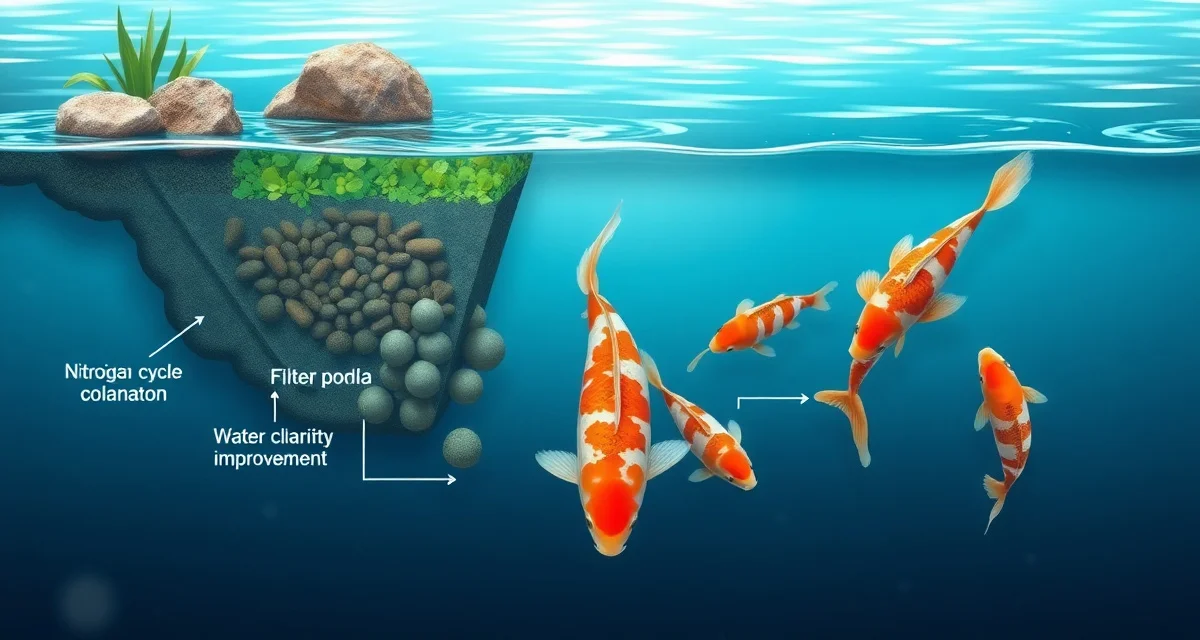
New Koi Pond Cycling: The Nitrogen Cycle Explained
The single most common mistake new koi keepers make is filling a pond, letting it sit for a few days, and then adding fish. Within two weeks, fish are dying and they don't know why. The water looks clear. The fish looked healthy when they bought them. What happened?
The nitrogen cycle didn't happen. Or rather, it started - and the fish were caught in the middle of it.
TL;DR
- The bacteria that drive steps 2 and 3 need to colonize the system.
- This takes time - typically 4–8 weeks from scratch.
- The progression in a new, uncycled pond with fish: - Week 1: Ammonia rises.
- Fill the pond with dechlorinated water 2.
- Tim's Ammonium Chloride) to reach 2–4 mg/L 3.
- As ammonia drops and nitrite rises, the first bacteria are establishing 5.
- Add more ammonia when it drops to keep providing a food source for the bacteria 6.
What the Nitrogen Cycle Actually Is
In any aquatic system with fish, there's a biological process that makes the difference between a pond where fish thrive and a pond that's toxic:
Step 1: Fish produce ammonia (NH3/NH4+) through respiration and waste. Ammonia is directly toxic.
Step 2: Nitrosomonas bacteria (and related species) convert ammonia to nitrite (NO2-). These bacteria colonize filter media, rocks, and any surface in the pond. Nitrite is also toxic.
Step 3: Nitrospira and Nitrobacter bacteria convert nitrite to nitrate (NO3-). Nitrate is relatively benign and is removed by water changes and plant uptake.
The problem with new ponds: You have no bacteria. The bacteria that drive steps 2 and 3 need to colonize the system. This takes time - typically 4–8 weeks from scratch. During this time, ammonia and then nitrite accumulate to potentially lethal levels.
The progression in a new, uncycled pond with fish:
- Week 1: Ammonia rises. Fish look slightly off.
- Week 1–2: Ammonia peaks, starts to drop as Nitrosomonas establish.
- Week 2–3: Nitrite rises sharply as ammonia is converted. This is often where deaths occur.
- Week 3–5: Nitrite peaks, then drops as Nitrospira establish.
- Week 5–8: Both ammonia and nitrite read zero consistently. The pond is cycled.
How to Cycle Without Fish (The Right Way)
The safest approach: cycle the pond before any fish go in.
Fishless cycling with ammonia:
- Fill the pond with dechlorinated water
- Add pure ammonia (household clear ammonia without surfactants, or Dr. Tim's Ammonium Chloride) to reach 2–4 mg/L
- Test ammonia and nitrite every 2 days
- As ammonia drops and nitrite rises, the first bacteria are establishing
- Add more ammonia when it drops to keep providing a food source for the bacteria
- When nitrite starts dropping and nitrate rises, both bacterial colonies are working
- The cycle is complete when you add 2 mg/L ammonia and it reads zero 24 hours later, nitrite also reads zero
This typically takes 4–6 weeks without any seeding.
Cycling with fish food: Add a pinch of fish food daily as an ammonia source instead of pure ammonia. Slower and messier, but works for keepers who don't have access to pure ammonia.
The cycle is complete when: Ammonia and nitrite are both 0 mg/L for at least 7 consecutive days, and you can add an ammonia spike (or fish food) and see it converted to nitrate within 24 hours.
How to Speed Up Cycling
Waiting 6 weeks with an empty pond is frustrating. Here are legitimate ways to accelerate the process:
Seed With Established Filter Media
This is the fastest and most reliable method. Biological filter media from an established pond or aquarium carries millions of nitrifying bacteria. Adding this seeded media to your new pond's filter can reduce cycling time from 6 weeks to 1–2 weeks.
Sources:
- Your own established display pond filter (move media, use pond water for the transfer)
- A trusted fellow koi keeper
- An established aquarium store (filter media from their display tanks)
Add as much seeded media as you can get. The more bacteria you start with, the faster the population grows to full cycling capacity.
Use Commercial Bacterial Products
Products like Fritz Turbo Start 700, Tetra SafeStart, and Seachem Stability contain live nitrifying bacteria. They're not magic - they require a food source (ammonia) and don't survive indefinitely in a bottle - but added to a new pond with an ammonia source, they can reduce cycling time significantly.
Follow manufacturer instructions carefully. The bacteria are fragile and the product must be used properly to work.
Use Pond Water From an Established System
The water from a well-established pond contains suspended bacteria and organic material that can seed a new system. Add 20–30% of new pond volume from established pond water.
This is a free bonus from seeded filter media, not a replacement for it.
Raise Temperature
Nitrifying bacteria reproduce faster in warmer water. Cycling at 70–75°F is significantly faster than cycling at 55°F. If you're cycling in spring or fall with cooler water, expect a longer timeline.
If You Must Add Fish to an Uncycling System
Sometimes fish can't wait. New arrivals that need to go somewhere now. Here's how to minimize damage:
Add very few fish. One or two small koi to a large pond produces far less ammonia than a full stocking. Understoking during the cycle period is critical.
Test daily. Ammonia and nitrite must be tested every morning during the cycle. No guessing.
Water change at first sign of ammonia. Any reading above 0.1 mg/L means a 25% water change today. Daily water changes may be necessary during peak ammonia and nitrite phases.
Salt to protect against nitrite. Maintain 0.3% salt throughout the cycling period. Salt blocks nitrite uptake at the gills and gives fish meaningful protection during the nitrite spike phase.
Don't overfeed. Every pellet is more ammonia. Feed sparingly and remove uneaten food within 5 minutes.
Don't clean the filter. Your filter media is the only place where beneficial bacteria are trying to establish. Cleaning it resets the cycle.
Reading the Cycle Progress
Keep a chart or log. You want to see:
- Ammonia rises then falls (week 1–2)
- Nitrite rises then falls (week 2–4)
- Nitrate climbs steadily throughout (this tells you the cycle is working)
- Both ammonia and nitrite stable at zero = fully cycled
KoiQuanta's parameter log displays these values on a timeline, making the cycling curve visible as a trend rather than requiring you to mentally compare individual readings.
After Cycling: Adding Fish Safely
Once the pond is cycled, add fish gradually. Adding a large number of fish at once can overwhelm the biofilter - even an established one has a limit to how much additional ammonia load it can handle without some nitrite breakthrough.
Add 25–30% of your planned maximum stocking. Test for 2 weeks. If parameters stay at zero, add another 25%. Continue until you reach target stocking.
Each new batch of fish should be quarantined first, regardless of how healthy they look.
Related Articles
- Koi Pond Regulations in New Jersey: NJDEP Dealer Compliance Guide
- How to Buffer pH in a Koi Pond: Stable Chemistry Guide
- What Is the Correct Salt Percentage for Koi Ponds? Complete Guide
- Koi Pond Bead Filter: Sizing, Cleaning, and Maintenance
FAQ
How long does it take to cycle a new koi pond?
Cycling a new pond from scratch takes 4–8 weeks under normal conditions. With seeded filter media from an established pond, this can be reduced to 1–2 weeks. With commercial bacterial products and an ammonia source, 2–4 weeks is typical. Temperature affects cycling speed - warmer water (70°F+) cycles faster than cold water. The cycle is complete when both ammonia and nitrite consistently read zero for 7+ consecutive days.
Can I add koi to an uncycled pond?
Technically yes, but it's high risk. If you must, add only 1–2 small fish, test daily for ammonia and nitrite, and perform water changes immediately when either parameter rises above 0.1 mg/L. Maintain 0.3% salt throughout to protect against nitrite toxicity. Understocking, daily testing, frequent water changes, and salt are the damage control measures - not a substitute for a properly cycled system.
How do I speed up koi pond cycling?
The fastest method is seeding with established filter media from a working pond - this can reduce cycling from 6 weeks to 1–2 weeks. Commercial bacterial products (Fritz Turbo Start, Seachem Stability) combined with an ammonia source (pure ammonia or fish food) can speed cycling to 2–4 weeks. Higher temperature (70–75°F) also accelerates bacteria reproduction. All these methods work better together than individually.
What is New Koi Pond Cycling: The Nitrogen Cycle Explained?
New Koi Pond Cycling: The Nitrogen Cycle Explained is a guide that walks new koi keepers through the biological process their pond must complete before it's safe for fish. It covers how beneficial bacteria colonize a pond, convert toxic ammonia into nitrite and then into relatively harmless nitrate, and why skipping this 4–8 week process is the leading cause of unexplained fish deaths in new setups.
How much does New Koi Pond Cycling: The Nitrogen Cycle Explained cost?
This is a free educational article on KoiQuanta. There is no cost to read it. The only expenses involved are optional — such as purchasing a water test kit, a bacterial starter culture, or an ammonia source like ammonium chloride if you choose to fishless cycle your pond rather than cycling with fish already in it.
How does New Koi Pond Cycling: The Nitrogen Cycle Explained work?
The nitrogen cycle works in three stages: fish waste produces ammonia, Nitrosomonas bacteria convert ammonia to nitrite, and Nitrospira bacteria then convert nitrite to nitrate. Each bacterial colony must physically colonize filter media and pond surfaces before it can function. The article explains how to support this process — either fishless or with fish — by maintaining ammonia at 2–4 mg/L and testing water daily until both ammonia and nitrite consistently read zero.
What are the benefits of New Koi Pond Cycling: The Nitrogen Cycle Explained?
Understanding pond cycling prevents the most common and avoidable cause of koi death: ammonia and nitrite poisoning in a new, uncycled pond. By following the process outlined, keepers establish a stable biological filter before stocking fish, dramatically reducing fish stress and mortality. It also builds the foundational water chemistry knowledge needed for long-term koi health and helps owners interpret test results rather than react blindly to sick or dying fish.
Who needs New Koi Pond Cycling: The Nitrogen Cycle Explained?
Anyone setting up a new koi pond needs this information — especially beginners who assume clear water means safe water. It's also relevant to experienced keepers restarting a pond after a filter crash, moving fish to a new system, or returning from a long break. If your biological filter has been disrupted or never established, your pond is effectively uncycled and your fish are at risk.
Sources
- Associated Koi Clubs of America (AKCA)
- Koi Organisation International (KOI)
- University of Florida IFAS Extension Aquaculture Program
- Fish Vet Group
- Water Quality Association