Koi Hobbyist Resources for the Midwest: Cold-Season Koi Management
Midwest koi ponds can experience water temperature swings of 60 degrees Fahrenheit between winter lows and summer highs. In Iowa or Michigan, you might see water at 2°C in January and 30°C in August. That's an enormous range to manage across a single year, and it creates a koi management challenge that's genuinely different from what you'll read in most koi care books written with coastal or mild climates in mind.
The Midwest koi community has developed considerable expertise in cold-season management, spring disease spikes, and the art of getting koi through serious winters without losses. Finding that community and the right tools to work alongside it makes a meaningful difference, especially for newer keepers.
TL;DR
- In Iowa or Michigan, you might see water at 2°C in January and 30°C in August.
- Club mentors who've managed koi through 20 Midwest winters have knowledge that's genuinely hard to get elsewhere.
- The digestive system of a koi at 8°C cannot process food adequately, and undigested food in the gut causes serious health problems.
- Stop feeding when water reaches 10°C and resume only when it's consistently above 10°C in spring.
- At 10-15°C, use a wheat-germ-based food rather than high-protein growth food.
- Ponds less than 4 feet deep in the Midwest are at real risk in severe winters.
- A deeper main section allows koi to find a temperature refuge at the bottom, where water often stays slightly above 0°C even when the surface freezes.
Midwest Koi Clubs and Organizations
The Midwest has a well-established koi club network, with chapters across Ohio, Michigan, Indiana, Illinois, Wisconsin, Minnesota, Iowa, and Missouri. Organizations to look for include:
- The Ohio Koi and Water Garden Association
- The Greater Chicago Koi Club (Illinois)
- The Michigan Koi and Water Garden Society
- Various AKCA-affiliated chapters throughout the Midwest
Midwest clubs have deep experience with cold-season management, pond depth requirements for winter survival, and the spring disease response protocols that are critical for keeping fish through the difficult transitional period. Club mentors who've managed koi through 20 Midwest winters have knowledge that's genuinely hard to get elsewhere.
Show circuits in the Midwest are also active, with regional shows held through spring and summer before the outdoor season closes.
Cold-Season Koi Management: The Basics
Midwest winters require koi to enter dormancy as water temperatures drop below 10°C. During this period, feeding must stop completely. The digestive system of a koi at 8°C cannot process food adequately, and undigested food in the gut causes serious health problems.
Stop feeding when water reaches 10°C and resume only when it's consistently above 10°C in spring. At 10-15°C, use a wheat-germ-based food rather than high-protein growth food. The koi's digestive efficiency at these temperatures can handle wheat germ but not protein-heavy diets.
Winter survival depends heavily on pond depth. Ponds less than 4 feet deep in the Midwest are at real risk in severe winters. A deeper main section allows koi to find a temperature refuge at the bottom, where water often stays slightly above 0°C even when the surface freezes. Koi that have 4 feet of water available will typically cluster near the bottom through the coldest periods.
The Ice Management Question
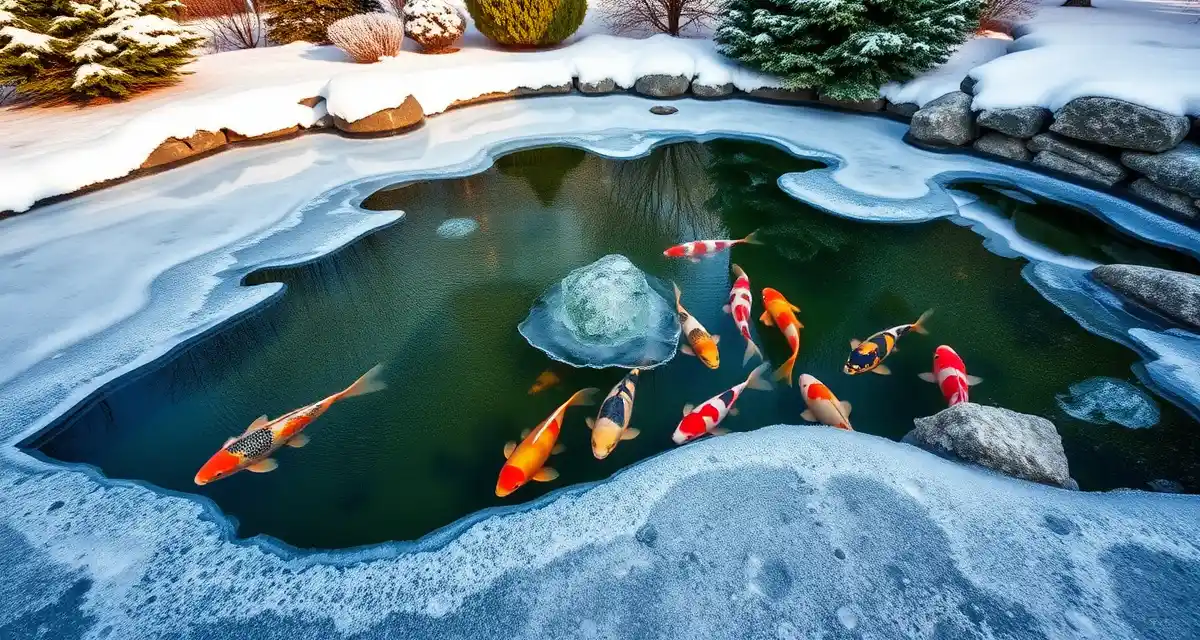
Surface ice in Midwest winters is normal and not inherently dangerous. The danger is a completely sealed ice surface with no gas exchange. Carbon dioxide builds up under solid ice while oxygen depletes. If the ice is sealed for too long, you can come out after a cold snap to find fish at the surface.
The standard solution is a small pond heater or aerator positioned near the surface, not at the bottom, to maintain an ice-free breathing hole. Positioned at the bottom, aerators create convection that brings cold surface water to the bottom, potentially supercooling the deeper refuges where koi are sheltering.
Never smash ice by hammering. The percussion stress can harm or kill koi sheltering near the surface. Melt a hole using warm water poured carefully, or a floating pond heater left in place from the start of the cold season.
Spring: The Midwest Keeper's Annual Challenge
Spring is when Midwest keepers earn their experience points. As water warms from 4°C to 15°C, parasites wake up faster than koi immune systems do. Ammonia spikes as the filter bacteria population recovers from winter. The combination creates conditions where disease hits hard and fast.
KoiQuanta's spring startup checklist triggers automatically as water temperature rises through the critical 8-12°C range. The pre-spring disease screening protocol, ammonia monitoring alerts, and gradual feeding restart guide are all pre-populated for Midwest seasonal timing.
The koi seasonal management guide covers the full Midwest spring startup protocol in detail.
Summer Heat Management
The other end of the Midwest temperature extreme. At 30°C or above, dissolved oxygen in koi ponds drops noticeably. A pond that's fine in June can become dangerous in the August heat, especially if you have algae or if aeration isn't adequate for the temperature.
Add aeration capacity before summer rather than after a dissolved oxygen problem occurs. Running a waterfall or fountain overnight helps maintain oxygen levels during the critical early morning hours when DO is at its daily low point.
Frequently Asked Questions
How do I winterize my koi pond in the Midwest?
Stop feeding when water temperature drops to 10°C. Install a floating pond heater or surface aerator to maintain a gas exchange opening if the surface freezes. Avoid adding aeration at the pond bottom during winter, as this can disrupt the thermal stratification that provides a warmer refuge for koi near the bottom. Remove any equipment that could freeze and crack. Do a final water quality check and consider adding beneficial bacteria to maintain filter populations through the cold period.
When should I start feeding koi in the spring in Ohio?
Resume feeding when water temperature is consistently above 10°C, using a wheat-germ-based low-protein food first. Switch to a higher-protein growth food only when temperatures are consistently above 15°C. In Ohio, this typically means late April to mid-May for wheat germ and mid-May through June for the switch to growth food, though actual timing varies by year. Water temperature measurement rather than calendar date should drive the decision.
How do I keep koi alive in a Midwest winter?
Adequate pond depth (minimum 4 feet), a gas exchange opening in any ice cover, and stopping feeding in time are the three most important factors. Beyond that, koi are remarkably cold-hardy. A healthy koi in a properly managed pond will survive a Michigan winter without additional heat input. The failures tend to come from ponds that are too shallow, insufficient gas exchange under ice, or fish that went into winter with existing health problems that weren't caught and treated in fall.
What is Koi Hobbyist Resources for the Midwest: Cold-Season Koi Management?
Koi Hobbyist Resources for the Midwest: Cold-Season Koi Management is a practical guide addressing the unique challenges Midwest koi keepers face across dramatic seasonal temperature swings. Unlike general koi care resources written for milder climates, it covers winter pond preparation, feeding cutoff thresholds, spring disease prevention, and community-based expertise specific to states like Iowa and Michigan, where water temperatures can range from 2°C in January to 30°C in August.
How much does Koi Hobbyist Resources for the Midwest: Cold-Season Koi Management cost?
This resource is freely available as an informational article on KoiQuanta. There is no purchase required to access the cold-season management guidance, feeding schedules, pond depth recommendations, and community tips it contains. Koi keeping itself involves costs for pond equipment, winterizing supplies, and quality wheat-germ food for transitional feeding, but the knowledge resource itself is provided at no cost to Midwest hobbyists.
How does Koi Hobbyist Resources for the Midwest: Cold-Season Koi Management work?
The guide works by walking keepers through the full cold-season cycle: monitoring water temperature with a reliable thermometer, stopping feeding when temperatures drop to 10°C, switching to wheat-germ food during the 10–15°C transition window, ensuring pond depth meets the 4-foot minimum for safe overwintering, and connecting with regional club mentors who have real Midwest winter experience to fill gaps that general koi literature leaves unaddressed.
What are the benefits of Koi Hobbyist Resources for the Midwest: Cold-Season Koi Management?
Key benefits include preventing fish loss during harsh Midwest winters, avoiding digestive health problems caused by feeding koi in cold water, and accessing regionally relevant advice rather than guidance calibrated for coastal climates. Keepers gain a clear seasonal action plan, learn which pond configurations are genuinely unsafe in cold climates, and can tap into a community of experienced Midwest hobbyists who have successfully managed koi through dozens of serious winters.
Who needs Koi Hobbyist Resources for the Midwest: Cold-Season Koi Management?
Any koi keeper living in the Midwest—particularly in states like Iowa, Michigan, Illinois, or Wisconsin—will find this resource relevant. It is especially valuable for newer hobbyists who may own ponds that are too shallow for safe overwintering or who are following feeding schedules designed for milder climates. Experienced keepers transitioning to a new property or expanding their pond setup will also benefit from the regionally specific cold-season benchmarks.
How long does Koi Hobbyist Resources for the Midwest: Cold-Season Koi Management take?
Cold-season koi management is not a one-time task but a seasonal rhythm that spans several months. Transitional feeding adjustments begin when water cools below 15°C in autumn and the no-feed period typically runs from when temperatures drop below 10°C through late winter. Spring resumption requires consistent water temperatures above 10°C before reintroducing food. The full cold-season management cycle in the Midwest generally covers five to six months depending on the year.
What should I look for when choosing Koi Hobbyist Resources for the Midwest: Cold-Season Koi Management?
Look for resources grounded in actual Midwest conditions rather than general koi literature. Prioritize guidance that specifies concrete temperature thresholds for feeding changes, recommends minimum pond depths for your climate zone, addresses spring disease spikes that are common after cold winters, and connects you to regional club communities. Mentors with 15 to 20 Midwest winters of experience offer practical knowledge that no book written for mild climates can replicate.
Is Koi Hobbyist Resources for the Midwest: Cold-Season Koi Management worth it?
For Midwest koi keepers, yes. The temperature extremes in states like Iowa and Michigan create real risks that generic koi care advice does not adequately address. Feeding koi at the wrong temperature causes serious digestive harm. Ponds under 4 feet deep may not safely overwinter fish. These are preventable losses with the right regional knowledge. Investing time in cold-season management guidance—and connecting with a local club—pays off directly in healthier koi and fewer winter casualties.
Related Articles
- Koi Dealer Software for Minnesota: Cold-Climate Koi Dealer Management
- Koi Dealer Software for Montana: Cold-Climate Koi Dealer Management
- Koi Dealer Software for North Dakota: Northern Plains Cold-Climate Koi Management
Sources
- Associated Koi Clubs of America (AKCA)
- Koi Organisation International (KOI)
- University of Florida IFAS Extension Aquaculture Program
- Fish Vet Group
- Water Quality Association