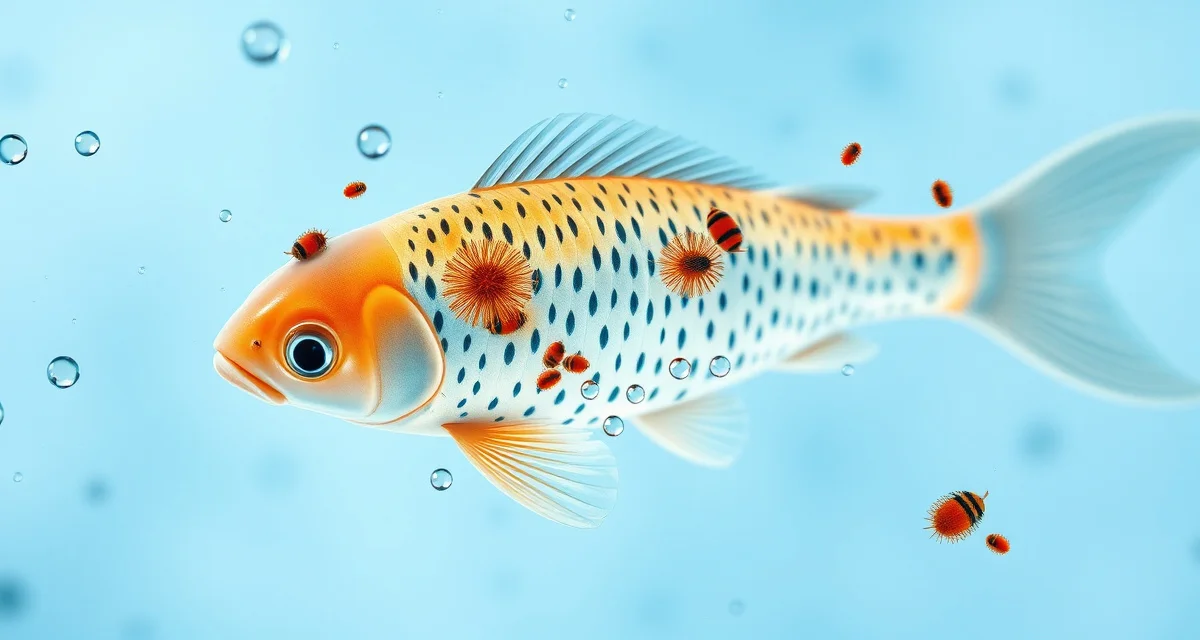
Protozoan Diseases in Koi: Costia, Trichodina, Chilodonella, and More
Protozoan parasites are responsible for over 50% of external parasite cases in koi and are the most common cause of mucus coat excess. They're microscopic, they can multiply rapidly, and they're present in virtually every koi pond at some level - the question is whether the population stays below the threshold that causes disease or grows beyond it.
KoiQuanta's protozoan identification guide distinguishes between Costia, Trichodina, Chilodonella, and Ichthyophthirius by symptom pattern and water temperature.
TL;DR
- At 15°C, the free-swimming stage has 24-48 hours to find a host.
- At 25°C, this window may be only 4-8 hours.
- Chilodonella thrives at 5-12°C - the spring and autumn temperature range when koi immunity is lowest.
- Cold water (5-15°C) with blue-gray skin discoloration suggests Chilodonella or Costia.
- Salt at 0.3-0.5% is broadly effective against most protozoa.
The Major Koi Protozoan Parasites
Ichthyophthirius multifiliis (Ich / White Spot)
Ich is the most widely recognized koi parasite, distinguished by the characteristic white spots (1-1.5mm) visible to the naked eye. The white spots are trophonts - the feeding stage of the parasite - burrowed just under the outer skin layer.
Life cycle: Trophonts feed for several days, then exit the fish as tomonts that settle on the pond bottom and begin rapid cell division. The resulting theronts (free-swimming infective stage) must find and infect a fish within hours or die.
Temperature dependency: Ich life cycle speed is highly temperature-dependent. At 15°C, the free-swimming stage has 24-48 hours to find a host. At 25°C, this window may be only 4-8 hours. Retreatment intervals must be calculated based on current temperature.
Treatment: Malachite green (most effective, some regulatory restrictions), salt, and formalin all kill the free-swimming theront stage. No treatment kills trophonts inside the fish - all treatment must be timed to the theront stage.
Trichodina
Disc-shaped, saucer-like protozoa (30-100 micrometers) with a characteristic ring of denticles (hooks) on their ventral surface. Under microscopy, the denticle ring is the identifying feature. Trichodina moves across the skin and gill surface, feeding on epithelial cells and mucus.
Disease context: Trichodina is found in virtually all koi ponds at low levels without causing disease. High organic load, overcrowding, and poor water quality allow Trichodina populations to exceed the threshold where clinical disease occurs.
Presentation: Excess mucus (gray or cloudy appearance of the skin), flashing, gill disease (from gill Trichodina), reduced appetite.
Treatment: Salt at 0.3-0.5%, potassium permanganate baths, formalin. Trichodina doesn't have a resistant environmental stage, so a single effective treatment clears the parasite.
Ichthyobodo (Costia)
Costia (now formally Ichthyobodo necator) are tiny comma-shaped flagellates (5-20 micrometers) that cause disproportionate damage relative to their size. They have two life forms: an attached form feeding on the host epithelium, and a free-swimming form for transmission between fish.
Pathogenicity: Costia is one of the most damaging of the small protozoa, particularly dangerous for juvenile fish. Heavy infestations cause massive mucus production, gill damage, and can cause death in weakly fish within days. Older, larger fish tolerate moderate infestations better but are still significantly affected.
Temperature preference: Costia thrives in cooler water (10-18°C) and can cause severe disease in early spring when koi immunity is low.
Presentation: Heavy mucus production, blue-gray discoloration of skin, respiratory distress, flashing, lethargy. Very similar to Chilodonella presentation.
Treatment: Salt, acriflavine, potassium permanganate, formalin. Effective treatments kill Costia quickly. Retreatment after 5-7 days is prudent.
Chilodonella
Heart-shaped ciliates (30-70 micrometers) with specifically arranged cilia bands. Chilodonella thrives at 5-12°C - the spring and autumn temperature range when koi immunity is lowest. See the dedicated koi disease chilodonella article for the complete management protocol.
Epistylis
Stalked colonial ciliates that aren't truly parasitic but cause disease through secondary bacterial infection. Treated with antibiotics, not antiparasitic drugs. See the separate koi disease epistylis article for differential diagnosis.
Can Multiple Protozoa Infect Koi Simultaneously?
Yes, frequently. The conditions that allow one protozoan parasite to cause disease - compromised immune function, high organic load, cold stress - often permit multiple species to co-infect simultaneously. Finding Trichodina and Costia on the same skin scrape is common. Chilodonella and Gyrodactylus co-infections occur in early spring.
This matters for treatment because different protozoa have different susceptibilities to specific treatments. Salt is broadly effective against most protozoa. Specific treatments (malachite green, acriflavine) may have species-specific efficacy advantages. When you identify multiple parasites on a skin scrape, choose a treatment with activity against all of them - or use a sequential approach.
Differentiating Protozoa Without a Microscope
While microscopy is the definitive tool, some clinical clues help differentiate:
Temperature correlation:
- Cold water (5-15°C): Chilodonella, Costia
- Any temperature, high organic load: Trichodina
- Any temperature: Ich (but warmer water accelerates spread)
Visible signs:
- White spots visible to naked eye: Ich
- Blue-gray skin discoloration: Chilodonella, Costia
- Excess mucus without strong color change: Trichodina
- Focal white tufts: Epistylis (treat with antibiotics)
Treatment response test:
- Responds rapidly to salt and standard antiparasitic treatment: most protozoa
- No response to antiparasitic treatment: Epistylis (switch to antibiotics)
Treatment Decision Framework
First: Collect a skin scrape if possible. Even a basic microscopy examination showing the type of organisms present guides treatment selection.
Without microscopy, empirical treatment approach:
Step 1: Salt at 0.3% for 5-7 days addresses most protozoa with minimal risk.
Step 2: If no improvement, add or switch to a more targeted treatment based on temperature correlation and presentation:
- Cold-water + blue-gray skin: Formalin or permanganate
- Warm-water + white spots: Ich-specific protocol
- High organic load + any temperature: Address water quality + salt
Your costia and Trichodina treatment tracker manages the treatment and retreatment schedule. The koi disease identification guide provides the broader diagnostic framework.
Frequently Asked Questions
How do I tell which protozoan parasite my koi has?
The most reliable differentiation uses a combination of temperature context, visual presentation, and microscopy. Cold water (5-15°C) with blue-gray skin discoloration suggests Chilodonella or Costia. Any temperature with white spots visible to the naked eye indicates Ich. High organic load with excess mucus and flashing at any temperature suggests Trichodina. White tufts on skin that don't respond to antiparasitic treatment suggests Epistylis (treat with antibiotics). Microscopy of a fresh skin scrape provides definitive identification and is the standard diagnostic approach for serious disease events.
Can multiple protozoan parasites infest koi at the same time?
Yes, frequently. Conditions that allow one protozoan to cause disease - immune compromise, cold stress, poor water quality - often permit multiple species to establish simultaneously. Finding Trichodina and Costia together on a skin scrape is common. When multiple parasites are identified, choose a treatment effective against all present species. Salt at 0.3-0.5% is broadly effective against most protozoa. Some specific treatments (malachite green, formalin) have broader spectrum than others. After treating, retreatment should be based on the parasite with the most complex life cycle (Ich has the most treatment-timing requirements).
What is the most effective treatment for koi protozoan parasites?
This depends on the specific parasite. For Ich, malachite green (where legal) or formalin plus malachite green are most effective, timed to the free-swimming stage. For Trichodina, salt is usually sufficient for non-severe cases; potassium permanganate or formalin for more severe infestations. For Costia and Chilodonella, formalin or permanganate bath treatments at appropriate doses are effective, with salt as a less potent alternative. For Epistylis, which mimics protozoan disease but requires antibiotics, using any standard antiparasitic will fail. Temperature-adjusted retreatment is important for Ich; single-course treatment is usually sufficient for the others.
What is Protozoan Diseases in Koi: Costia, Trichodina, Chilodonella, and More?
Protozoan diseases in koi are illnesses caused by microscopic single-celled parasites — including Costia, Trichodina, Chilodonella, and Ichthyophthirius (Ich) — that colonize the skin, gills, and mucus coat. Responsible for over 50% of external parasite cases, these organisms are present in nearly every pond at low levels. Disease occurs when stress, poor water quality, or temperature shifts allow populations to explode beyond the threshold a healthy koi can manage.
How much does Protozoan Diseases in Koi: Costia, Trichodina, Chilodonella, and More cost?
Diagnosing and treating protozoan disease carries real costs: a quality microscope for wet-mount scrapes runs $100–$400, while treatments like salt, formalin, potassium permanganate, or proprietary antiparasitics range from a few dollars to $30–$60 per treatment course depending on pond volume. Early, accurate identification prevents wasted spend on the wrong treatment — misdiagnosing Chilodonella as Ich, for example, leads to ineffective therapy and continued fish loss.
How does Protozoan Diseases in Koi: Costia, Trichodina, Chilodonella, and More work?
Protozoan parasites attach to or burrow into koi skin and gills, feeding on mucus and epithelial cells. They reproduce rapidly — doubling in hours at warm temperatures — causing progressive tissue damage, excess mucus production, and gill impairment. The host koi responds with increased mucus secretion, behavioral changes like flashing or lethargy, and eventually compromised respiration. Treatment works by interrupting the parasite's life cycle using chemical agents or environmental manipulation such as elevated salt concentration.
What are the benefits of Protozoan Diseases in Koi: Costia, Trichodina, Chilodonella, and More?
Understanding protozoan disease allows you to act fast and accurately rather than guessing. Correct identification means you treat the right organism at the right dose, avoiding the toxicity risks of over-treating or the continued losses from under-treating. It also helps you time interventions — knowing Chilodonella peaks at 5–12°C means you can proactively monitor during spring and autumn. Early intervention dramatically improves survival rates and reduces the cascade of secondary bacterial infections that follow parasite damage.
Who needs Protozoan Diseases in Koi: Costia, Trichodina, Chilodonella, and More?
Any koi keeper benefits from understanding protozoan diseases, but it is essential knowledge for pond owners who overwinter fish, stock new koi, or keep high-density ponds. Hobbyists experiencing unexplained lethargy, flashing, or excess mucus in cold water need this information urgently. Breeders, dealers, and anyone receiving fish from outside sources should treat protozoan identification as a baseline quarantine skill, since introduced fish are a primary vector for spreading Costia, Trichodina, and Chilodonella.
How long does Protozoan Diseases in Koi: Costia, Trichodina, Chilodonella, and More take?
Treatment timelines depend on temperature and the specific parasite. Ich requires completing the full life cycle — trophonts under skin are untreatable, so you must wait for the free-swimming theront stage, which takes days to weeks depending on water temperature. Costia and Trichodina respond faster, typically within a few days of effective treatment. Salt treatment at 0.3–0.5% works broadly against most protozoa but should be maintained for at least 7–14 days to ensure the population is fully suppressed.
What should I look for when choosing Protozoan Diseases in Koi: Costia, Trichodina, Chilodonella, and More?
When tackling protozoan disease, prioritize accurate diagnosis first — a skin scrape examined under magnification identifies the organism and guides treatment choice. Look for products with proven efficacy against your specific parasite: salt for broad coverage, formalin or potassium permanganate for resistant cases. Consider water temperature when selecting treatments, as some chemicals are more toxic at higher temperatures. Avoid combining treatments without research. Also address the underlying stressor — poor water quality, overcrowding, or recent introduction of new fish — to prevent recurrence.
Is Protozoan Diseases in Koi: Costia, Trichodina, Chilodonella, and More worth it?
Yes. Protozoan parasites are the single most common cause of external disease in koi, and untreated infections escalate quickly — especially during temperature transitions in spring and autumn. A basic understanding of Costia, Trichodina, Chilodonella, and Ich pays dividends through faster diagnosis, more targeted treatment, and significantly better fish survival outcomes. The cost of a microscope and a salt treatment is negligible compared to losing valuable koi to a parasite that is entirely manageable when caught early.
Sources
- Associated Koi Clubs of America (AKCA)
- Koi Organisation International (KOI)
- University of Florida IFAS Extension Aquaculture Program
- Fish Vet Group
- Water Quality Association