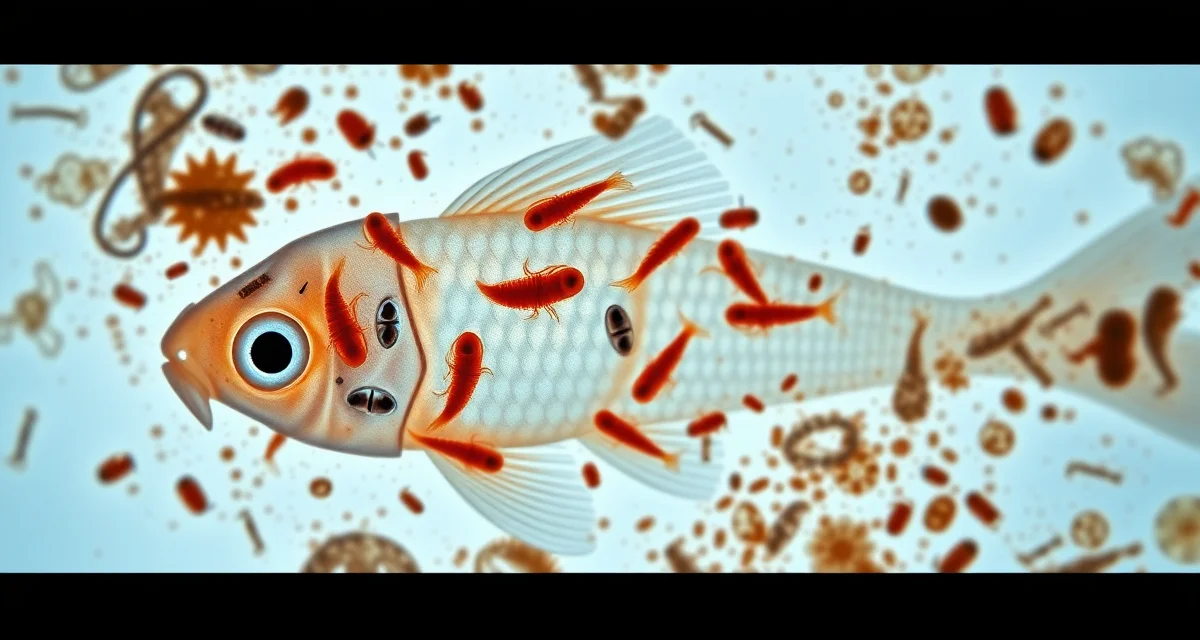
Internal Parasites in Koi: Identification, Diagnosis, and Treatment
Koi with significant internal parasite burdens can lose up to 20% of body weight over 6-8 weeks before other symptoms become visible. This is the defining challenge of internal koi parasites: the disease progresses silently, robbing the fish of condition over months before the problem is obvious enough to trigger investigation.
KoiQuanta's body weight tracking detects the gradual weight loss pattern characteristic of chronic internal parasite infestations - the earliest reliable indicator available without laboratory testing.
TL;DR
- Treatment: Fenbendazole (Panacur) administered via medicated food at 25mg/kg for 3 days, repeated after 14 days.
- A 5-10% weight decrease from the previous month is a flag for closer investigation.
- A 15-20% decrease is an urgent concern requiring prompt assessment.
- Metronidazole treats flagellate protozoa (Hexamita, Spironucleus) - administer via medicated food at 10mg per gram of food for 5-7 days.
- Fenbendazole (Panacur) treats nematode roundworms (Capillaria, Camallanus) - administer via medicated food at 25mg/kg fish weight for 3 days, repeated after 14 days.
Why Internal Parasites Are Hard to Diagnose
External parasite diagnosis starts with what you can see: white spots, flukes under a microscope, visible crustaceans. Internal parasites are, by definition, inside the fish where you can't observe them directly.
The symptoms they cause - wasting, lethargy, reduced appetite, abnormal feces - are shared with many other conditions. A koi losing weight might have internal parasites, or bacterial disease, or a koi pond water quality tracker issue, or nutritional deficiency. Without targeted diagnostic tools, the differential diagnosis is broad.
Weight monitoring provides the earliest objective data point. A fish that's losing weight despite adequate nutrition and good water quality has something happening internally. Regular weighing - monthly for active fish in good condition, more frequently when a fish seems "off" - creates the trend that makes this pattern visible.
Common Internal Parasites in Koi
Hexamita (Flagellate Protozoa)
Hexamita are flagellate protozoa that infect the intestinal tract and associated organs. They cause chronic intestinal inflammation, malabsorption, and progressive wasting. The characteristic abnormal feces - white, stringy, or mucoid - are a diagnostic clue but not always present.
Treated with Metronidazole via medicated food. See the koi disease hexamita guide for the complete treatment protocol.
Spironucleus (Flagellate Protozoa)
A related hexamitid flagellate sometimes confused with Hexamita. Spironucleus causes similar intestinal disease and is similarly treated with Metronidazole. Definitive differentiation requires microscopy.
Capillaria (Intestinal Roundworms)
Thread-like nematode worms (roundworms) that infect the intestinal tract. Capillaria are transmitted through ingestion of infected intermediate hosts (earthworms, tubifex worms, Daphnia). Infections cause weight loss and in heavy infestations, intestinal obstruction.
Diagnosis: Eggs visible in fecal examination under microscopy - barrel-shaped eggs with bipolar plugs are characteristic.
Treatment: Fenbendazole (Panacur) administered via medicated food at 25mg/kg for 3 days, repeated after 14 days. Available as aquatic formulations or adapted from veterinary dog/cat products with veterinary guidance.
Camallanus (Intestinal Roundworms)
Red worm nematodes that can extend out of the vent of heavily infested fish - this is the most visible indicator of internal roundworm infection. The red worms at the vent are actually adults, with the anterior end attached to the intestinal wall.
Camallanus are particularly common in fish that have been fed wild-caught live food.
Treatment: Fenbendazole or Levamisole. The parasites emerging from the vent should not be manually pulled out - this can cause internal damage. Treatment kills adults and they pass naturally.
Myxozoa (Internal Myxozoan Parasites)
Various Myxozoa species affect different internal organs in koi - kidney, gallbladder, and muscle tissue. Myxozoa cause organ-specific pathology that ranges from subclinical to severe depending on the species and burden.
Myxobolus cerebralis (whirling disease) is the most notorious Myxozoan affecting carp - see the separate koi disease myxobolus infection guide.
Other Myxozoa: various species cause gill, kidney, and skin cysts visible grossly. Some are incidental findings without clinical significance; others cause significant pathology.
No effective treatment exists for most Myxozoan infections - management focuses on preventing introduction and managing affected individuals based on clinical signs.
Tapeworms (Cestodes)
Cestode infections in koi are less common than in some other fish species but do occur. Fish tapeworms require intermediate hosts and are introduced through infected live or frozen food organisms. Heavy tapeworm burdens cause weight loss and can cause intestinal obstruction in severe cases.
Treatment: Praziquantel is effective against cestodes as well as monogenean flukes. The dose and duration for tapeworms is typically higher than for monogeneans - veterinary guidance is recommended.
The Diagnostic Approach
Step 1: Weight monitoring trend. A fish losing weight over 4-8 weeks despite normal feeding is your primary flag for internal parasite investigation.
Step 2: Fecal examination. Fresh feces collected from a fish held briefly in a small tank can be examined under microscopy for parasite eggs and flagellate organisms. Fresh samples only - parasites die quickly.
Step 3: Behavioral history. Duration of reduced appetite, whether feces have been abnormal, whether the fish is more or less active than normal.
Step 4: Therapeutic trial. When microscopy isn't available, a Metronidazole trial (for flagellates) or Fenbendazole trial (for nematodes) with careful response monitoring is a practical diagnostic approach. Response to treatment confirms the general cause.
Step 5: Veterinary consultation. For fish with significant value or where multiple fish are affected, veterinary post-mortem of a deceased fish or collection of samples from a live fish provides the most definitive diagnosis.
KoiQuanta Weight Tracking
KoiQuanta's body weight tracking detects the gradual weight loss pattern characteristic of chronic internal parasite infestations. Setting up monthly weight records for your fish - particularly valuable for high-value individuals - creates the trend data that catches problems before they're clinically obvious.
Weight a koi on a wet towel or in a water-filled bucket on a kitchen scale. Record in the fish's KoiQuanta profile. A 5-10% weight decrease from the previous month is a flag for closer investigation. A 15-20% decrease is an urgent concern requiring prompt assessment.
Your koi disease identification guide and the parasitic infection tracker provide the full management framework.
Frequently Asked Questions
How do I know if my koi has internal parasites?
The most reliable early indicator is gradual, unexplained weight loss over weeks to months - a fish that's losing condition despite apparently normal feeding and good water quality. Abnormal feces (white, stringy, mucoid, or very pale) is a secondary indicator associated with intestinal parasites. Some koi with heavy worm burdens show red worms protruding from the vent (Camallanus). KoiQuanta's monthly weight tracking creates the trend data that catches weight loss before it becomes visually obvious. Fecal examination under microscopy, or veterinary assessment, provides definitive diagnosis when internal parasites are suspected.
What medications treat internal parasites in koi?
Treatment depends on the type of parasite. Metronidazole treats flagellate protozoa (Hexamita, Spironucleus) - administer via medicated food at 10mg per gram of food for 5-7 days. Fenbendazole (Panacur) treats nematode roundworms (Capillaria, Camallanus) - administer via medicated food at 25mg/kg fish weight for 3 days, repeated after 14 days. Praziquantel treats cestodes (tapeworms) - consult your vet for the specific dose and duration, as tapeworm protocols differ from fluke protocols. No effective pharmacological treatment exists for most Myxozoan infections.
Can internal parasites in koi spread to other fish?
Yes, though the transmission route varies by parasite type. Hexamita and Spironucleus spread through contaminated water and feces - fish in the same pond share the same water and can all be exposed. Nematodes (Capillaria, Camallanus) typically require intermediate hosts, so direct fish-to-fish transmission is limited, but shared water exposure to eggs is possible. Tapeworms similarly require intermediate hosts. Myxozoa typically require oligochaete worm intermediate hosts. Isolating visibly affected fish reduces load in the display pond, and treating all fish in the system with appropriate medications is recommended when internal parasites are diagnosed in one fish.
What is Internal Parasites in Koi: Identification, Diagnosis, and Treatment?
Internal parasites in koi are organisms such as nematode roundworms (Capillaria, Camallanus) and flagellate protozoa (Hexamita, Spironucleus) that infest a fish's digestive tract and internal organs. Unlike external parasites, they are invisible without laboratory testing and cause slow, silent damage — including up to 20% body weight loss over 6–8 weeks — before obvious symptoms appear. Diagnosis relies on behavioral clues, weight tracking, and sometimes fecal or necropsy analysis.
How much does Internal Parasites in Koi: Identification, Diagnosis, and Treatment cost?
Diagnosing and treating internal parasites in koi involves minimal direct costs. Fenbendazole (Panacur) and Metronidazole are the primary medications and are generally affordable. The bigger investment is in monitoring tools — accurate scales for weight tracking and potentially professional lab testing for confirmation. Early detection through consistent weight monitoring can prevent costly losses, making routine tracking far more economical than emergency treatment of a severe infestation.
How does Internal Parasites in Koi: Identification, Diagnosis, and Treatment work?
Treatment works by delivering antiparasitic medication directly into the fish via medicated food. Fenbendazole targets nematode worms by disrupting their cellular energy metabolism, while Metronidazole disrupts the DNA of flagellate protozoa. Since koi must consume the medicated food voluntarily, fish that have stopped eating may require alternative delivery methods. A two-round treatment protocol — with a 14-day gap — ensures both adults and newly hatched parasites are eliminated.
What are the benefits of Internal Parasites in Koi: Identification, Diagnosis, and Treatment?
Early identification and treatment of internal parasites preserves koi health, condition, and longevity. Left untreated, heavy parasite burdens cause chronic malnutrition, immune suppression, and secondary infections. Prompt treatment stops further weight loss, allows the fish to recover condition, and prevents spread within the pond. Regular weight monitoring provides the earliest possible warning — often weeks before visible symptoms — giving keepers a significant advantage in protecting their fish.
Who needs Internal Parasites in Koi: Identification, Diagnosis, and Treatment?
Any koi keeper with fish showing unexplained weight loss, reduced appetite, sunken bellies, or lethargy should investigate internal parasites. Fish in ponds with new additions, wild-caught feeders, or poor biosecurity are at elevated risk. Keepers who track weight monthly and notice a 5–10% decline from the previous month should begin closer investigation. A 15–20% drop warrants urgent assessment, even if the fish appears otherwise normal and active.
How long does Internal Parasites in Koi: Identification, Diagnosis, and Treatment take?
Treatment duration depends on the parasite type. Fenbendazole for nematodes is administered over 3 days, then repeated after a 14-day gap to catch newly hatched worms — a total cycle of approximately 17 days. Metronidazole for flagellate protozoa runs 5–7 days continuously. Recovery of lost body condition after successful treatment typically takes several additional weeks of good nutrition. Early detection shortens the overall timeline by preventing severe infestation before treatment begins.
What should I look for when choosing Internal Parasites in Koi: Identification, Diagnosis, and Treatment?
Choose a treatment approach based on accurate parasite identification — Metronidazole for protozoa, Fenbendazole for nematodes, as the wrong medication will have no effect. Ensure medicated food is palatable and that the fish is still eating. Dose precisely by fish weight rather than guessing. Confirm water quality is optimal to support recovery. If fish are not eating or symptoms are severe, consult an aquatic veterinarian rather than relying solely on over-the-counter treatments.
Is Internal Parasites in Koi: Identification, Diagnosis, and Treatment worth it?
Yes. Internal parasites are a common, underdiagnosed cause of koi decline, and proactive identification and treatment is consistently worthwhile. Koi can carry significant parasite burdens with few outward signs, meaning many losses attributed to 'unknown causes' involve parasites. The cost of treatment is low relative to the value of the fish and the expense of a full pond loss. Establishing routine weight tracking makes early detection reliable, turning a historically difficult diagnosis into a manageable part of koi husbandry.
Sources
- Associated Koi Clubs of America (AKCA)
- Koi Organisation International (KOI)
- University of Florida IFAS Extension Aquaculture Program
- Fish Vet Group
- Water Quality Association