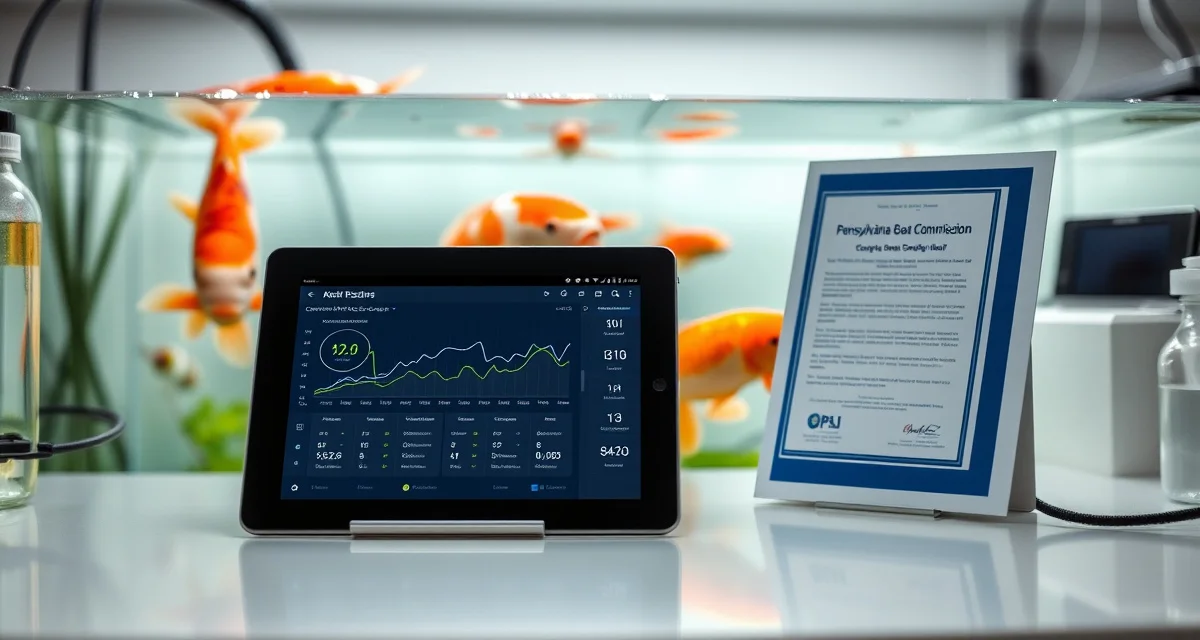
Koi Dealer Software for Pennsylvania: Compliance and Treatment Tracking for PA Dealers
Pennsylvania koi dealers face a specific regulatory challenge. The Pennsylvania Fish and Boat Commission (PFBC) regulates koi as a controlled aquatic species and requires dealers to maintain health certification records for imported fish. These aren't guidelines. They're requirements, and compliance gaps discovered during inspections result in citation regardless of the quality of actual fish care.
The record management risk is straightforward. A paper log misplaced, a notebook damaged by water or weather, or a spreadsheet on a crashed laptop can wipe out years of compliance documentation. Pennsylvania dealers using paper-based records face this risk with every import lot.
KoiQuanta's cloud-based record system keeps all compliance documentation permanently accessible. A record logged three years ago for a lot long since sold is retrievable in seconds, because the PFBC's retention requirements don't end when the fish are sold.
TL;DR
- As water warms above 10°C in spring, increase monitoring frequency immediately and conduct a disease screening before resuming normal feeding.
- Tracking trends over time reveals issues before they become visible in fish behavior.
- KoiQuanta connects observations, water data, and treatment records in one searchable history.
- Early detection based on parameter trends reduces treatment costs and fish stress.
- Seasonal changes require adjusted monitoring schedules; automated reminders help maintain consistency.
Pennsylvania Fish and Boat Commission Requirements
PFBC regulates the importation and sale of live fish under its Fish Seller Permit framework. Dealers bringing koi into Pennsylvania from other states or internationally need PFBC permits and must maintain health certification documentation accompanying each lot. Health certificates from the source state's fish health authority or USDA-approved vet are required for interstate shipments.
PFBC inspectors focus on three documentation areas: whether health certifications are present and valid, whether quarantine was performed for the required period, and whether treatment records are complete if disease was detected during quarantine.
The dealer import compliance guide covers PFBC and federal requirements with specific guidance for Pennsylvania dealers.
Four-Season Quarantine in Pennsylvania
Like other mid-Atlantic and Midwestern states, Pennsylvania dealers contend with a four-season climate that affects quarantine planning. Outdoor quarantine is viable from approximately May through September. Late-season imports in October and November run into cooling water that reduces treatment effectiveness and slows quarantine assessment.
KoiQuanta adjusts quarantine timing recommendations for Pennsylvania's seasonal water temperature profile. Late-season quarantine lots receive flag warnings and recommendations for heated indoor facilities to maintain the temperature ranges where parasites are detectable and treatable.
Spring startup disease risks are well-documented for Pennsylvania dealers. As water warms from winter dormancy temperatures, the pre-spring checklist in KoiQuanta triggers at the appropriate temperature threshold for a follow-up disease screening protocol.
Permanent Record Retention
One of the practical problems with dealer compliance in Pennsylvania is the retention period. PFBC requires records to be maintained for a specified period after each lot. For dealers with high import volume, that means managing hundreds of records across multiple years simultaneously.
KoiQuanta doesn't archive or delete records. Every quarantine log, every treatment record, every water quality entry is permanently stored and searchable. A dealer receiving a PFBC inspection request for records from two years ago can pull the complete lot documentation in minutes rather than searching through filing cabinets or hoping the right spreadsheet is findable.
The quarantine documentation hub explains the complete record trail KoiQuanta builds for each quarantine lot.
Frequently Asked Questions
What do Pennsylvania koi dealers need for compliance?
PA dealers need a PFBC Fish Seller Permit and, for importing fish from other states or internationally, must obtain health certification documents accompanying each lot. During quarantine, dealers must maintain water quality test logs, daily observation records, and treatment documentation if disease is detected. All records must be kept for the PFBC-specified retention period and made available during inspections on request.
How do I keep koi healthy through Pennsylvania winters?
Pennsylvania winters require dormancy management for koi. Below 10°C, stop feeding completely. Maintain at least one ice-free opening in the pond surface for gas exchange if freezing occurs. Monitor water quality monthly rather than weekly during dormancy. As water warms above 10°C in spring, increase monitoring frequency immediately and conduct a disease screening before resuming normal feeding.
Does KoiQuanta meet Pennsylvania Fish and Boat Commission record requirements?
KoiQuanta's quarantine records include all fields PFBC inspectors look for: lot source, health certification reference numbers, quarantine dates, daily observation logs, water quality test results, treatment records with product names and doses, and clearance dates. Records are timestamped automatically and exportable as PDF documents suitable for regulatory review.
What is Koi Dealer Software for Pennsylvania: Compliance and Treatment Tracking for PA Dealers?
Koi dealer software for Pennsylvania is a specialized compliance and record-keeping platform designed to help PA dealers meet Pennsylvania Fish and Boat Commission (PFBC) requirements. It stores health certification records, import lot documentation, and treatment histories in a cloud-based system that remains accessible for the duration of PFBC retention requirements—eliminating the risk of lost paper logs or crashed spreadsheets during inspections.
How much does Koi Dealer Software for Pennsylvania: Compliance and Treatment Tracking for PA Dealers cost?
KoiQuanta offers tiered pricing based on operation size and feature needs. Exact costs depend on your inventory volume and the modules you require. Compared to the financial and legal exposure of a PFBC compliance citation—or the labor cost of manually managing paper records across multiple import lots—most PA dealers find a dedicated software subscription significantly more cost-effective. Contact KoiQuanta directly for a quote tailored to your dealership.
How does Koi Dealer Software for Pennsylvania: Compliance and Treatment Tracking for PA Dealers work?
KoiQuanta works by centralizing all dealer records into a single cloud-based platform. You log import lots, attach health certifications, record treatment protocols, and track water quality data as you go. When PFBC inspectors request documentation, records are retrievable in seconds regardless of how old they are. The system also connects observations and treatment records so trends can be identified before problems become visible in fish behavior.
What are the benefits of Koi Dealer Software for Pennsylvania: Compliance and Treatment Tracking for PA Dealers?
Key benefits include permanent, inspection-ready compliance documentation; elimination of record loss from water damage, hardware failure, or misplacement; trend tracking that surfaces health issues early; and a single system connecting water data, observations, and treatment records. For PA dealers specifically, the ability to retrieve records from completed import lots—even years after the fish are sold—directly addresses PFBC retention requirements.
Who needs Koi Dealer Software for Pennsylvania: Compliance and Treatment Tracking for PA Dealers?
Any Pennsylvania koi dealer importing fish, maintaining holding stock, or selling to the public needs this software. PFBC regulates koi as a controlled aquatic species, making health certification recordkeeping a legal requirement rather than a best practice. Operations of any size—from small hobbyist dealers to large commercial importers—face the same documentation obligations and the same inspection risk if records are incomplete or inaccessible.
How long does Koi Dealer Software for Pennsylvania: Compliance and Treatment Tracking for PA Dealers take?
Setup is typically fast—most dealers can import existing records and begin logging new lots within a day. Ongoing use is continuous: records are created at each import, updated through treatment cycles, and retained automatically. The time investment per lot is minimal compared to manual paper systems, and the cumulative recordkeeping burden is significantly reduced since retrieval is immediate rather than requiring physical search through archived files.
What should I look for when choosing Koi Dealer Software for Pennsylvania: Compliance and Treatment Tracking for PA Dealers?
Prioritize cloud storage with permanent retention, since PFBC requirements don't expire when fish are sold. Look for PFBC-specific compliance templates, lot-level health certification tracking, integrated treatment and water quality logging, and simple retrieval for inspection scenarios. Audit trail integrity matters—records should be timestamped and tamper-evident. Ease of use is also critical; software your staff won't consistently use provides no compliance protection.
Is Koi Dealer Software for Pennsylvania: Compliance and Treatment Tracking for PA Dealers worth it?
For Pennsylvania dealers subject to PFBC oversight, yes. The compliance risk of inadequate recordkeeping is concrete: citations result from documentation gaps regardless of how well the fish are actually maintained. Cloud-based software removes the single points of failure inherent in paper and local-file systems. Beyond compliance, the treatment tracking and trend analysis features support better fish health outcomes—making the investment worthwhile on both the regulatory and operational side.
Related Articles
Sources
- Associated Koi Clubs of America (AKCA)
- Koi Organisation International (KOI)
- University of Florida IFAS Extension Aquaculture Program
- Fish Vet Group
- Water Quality Association