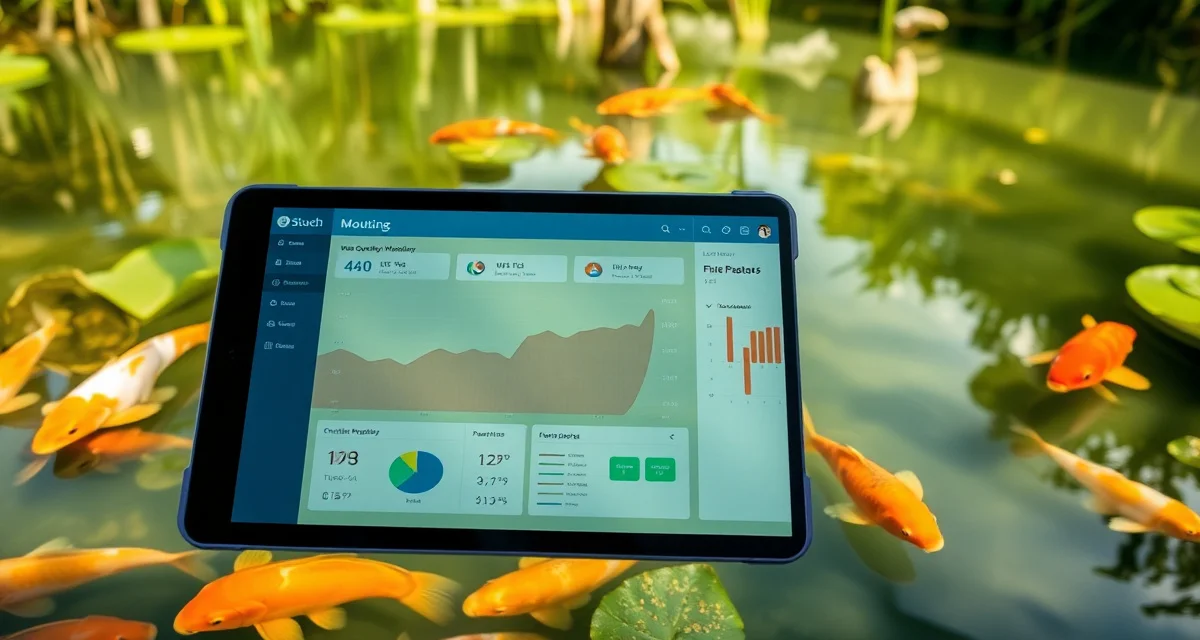
Koi Dealer Software for Louisiana: Subtropical Koi Health Management
Louisiana's Gulf Coast humidity and heat create some of the most challenging koi disease management conditions in the continental US. Louisiana isn't just warm in summer. It's subtropical year-round, with winters that rarely suppress parasite or bacterial activity to the levels that cold-climate dealers use as a natural disease reset. Louisiana koi dealers are managing active disease pressure in every month of the year.
KoiQuanta's year-round parasite monitoring tracks activity of Trichodina, Costia, and gill flukes throughout Louisiana's warm year. There's no winter "off switch" for this monitoring. The system stays active and alert through December and February the same as July and August.
TL;DR
- In northern states, cold water below 10 degrees Celsius provides weeks to months of reduced parasite reproduction and bacterial activity.
- Tracking trends over time reveals issues before they become visible in fish behavior.
- KoiQuanta connects observations, water data, and treatment records in one searchable history.
- Early detection based on parameter trends reduces treatment costs and fish stress.
- Seasonal changes require adjusted monitoring schedules; automated reminders help maintain consistency.
Louisiana's Year-Round Disease Challenge
Louisiana's climate creates the disease management challenge that matters most for koi dealers: continuous, uninterrupted parasite and bacterial activity with no reliable winter suppression period. In northern states, cold water below 10 degrees Celsius provides weeks to months of reduced parasite reproduction and bacterial activity. Louisiana ponds rarely, if ever, drop to these temperatures.
The practical consequence is that the parasite burden that builds during summer doesn't reset over winter. Without active management, each successive year can see higher baseline parasite levels. Fluke populations that would die off during northern winters can persist and build in Louisiana ponds. Trichodina that would be suppressed in January in Minnesota is still active in January in New Orleans.
KoiQuanta's Louisiana configuration treats parasite risk as a year-round active monitoring concern, with risk scoring active in every month. The dashboard doesn't give you a "safe winter" false signal. It accurately reflects that Louisiana koi management is a continuous effort.
Managing Louisiana's Heat and Humidity
Louisiana summers are among the hottest and most humid in the US. Gulf Coast humidity and high temperatures create intense heat stress risk for koi pond fish during June through September. Shade installation for dealer holding facilities is not optional in Louisiana. It's the primary tool for preventing pond water from reaching lethal temperatures.
The summer heat stress management guide covers the full range of hot-climate heat management. For Louisiana dealers, these protocols apply from May through October rather than just the peak July-August window of northern states.
Compliance for Louisiana Dealers
Louisiana koi dealers need to maintain federal USDA APHIS compliance records for all imported koi. Louisiana Department of Wildlife and Fisheries requirements apply to koi dealer operations. The koi dealer import compliance guide covers the federal documentation requirements in detail.
The Costia and Trichodina treatment tracker in KoiQuanta covers treatment protocols for the parasitic infections that represent the primary year-round disease pressure in Louisiana's subtropical climate.
Frequently Asked Questions
How do I manage koi parasites in Louisiana's warm climate?
Year-round parasite management in Louisiana requires continuous monitoring without seasonal breaks. Test water regularly, observe fish weekly for behavioral parasite signs (flashing, excess mucus, respiratory distress), and quarantine all new arrivals with active parasite monitoring regardless of arrival month. KoiQuanta's year-round parasite risk monitoring tracks Trichodina, Costia, and fluke activity based on Louisiana water temperature data throughout the year.
What compliance records do Louisiana koi dealers need?
Federal USDA APHIS documentation requirements apply to all imported koi, including health certifications, quarantine records, and treatment histories. Louisiana Department of Wildlife and Fisheries requirements apply to commercial koi dealer operations. KoiQuanta generates complete compliance documentation from daily management data for both regulatory frameworks.
Can koi thrive in Louisiana's subtropical heat?
Yes, with appropriate management. Shade installation to prevent pond water from exceeding 32 degrees Celsius, maximum aeration for dissolved oxygen support, regular water quality monitoring, and year-round disease management allow koi to thrive in Louisiana conditions. Many Louisiana hobbyists successfully keep koi long-term with the right infrastructure and consistent management. KoiQuanta's warm-climate tools are designed for exactly this environment.
What is Koi Dealer Software for Louisiana: Subtropical Koi Health Management?
KoiQuanta's koi dealer software for Louisiana is a health management platform designed specifically for the state's subtropical climate. Unlike generic pond software, it accounts for Louisiana's year-round disease pressure — tracking parasites like Trichodina, Costia, and gill flukes continuously, even in winter. It connects water parameter data, fish observations, and treatment records in one searchable system, helping dealers detect problems early before they escalate into costly outbreaks.
How much does Koi Dealer Software for Louisiana: Subtropical Koi Health Management cost?
KoiQuanta offers tiered pricing based on inventory size and feature set. Exact costs vary by plan, so visiting KoiQuanta.com for current pricing is recommended. Given that early detection through the platform reduces treatment costs and fish losses, most Louisiana dealers find the subscription pays for itself quickly — especially in a climate where disease pressure never fully resets and a single missed outbreak can affect an entire collection.
How does Koi Dealer Software for Louisiana: Subtropical Koi Health Management work?
The software works by centralizing water quality data, parasite monitoring logs, and treatment records into one connected platform. Dealers log observations and parameter readings, and KoiQuanta tracks trends over time to flag early warning signs. Automated reminders prompt consistent monitoring even during months when dealers might otherwise reduce vigilance. Because Louisiana has no cold-water disease reset, the system stays active and alert throughout all twelve months of the year.
What are the benefits of Koi Dealer Software for Louisiana: Subtropical Koi Health Management?
Key benefits include year-round parasite activity tracking, early detection based on parameter trends, reduced treatment costs, and lower fish stress. KoiQuanta eliminates the guesswork by connecting observations with historical data in a searchable format. For Louisiana dealers facing continuous bacterial and parasite pressure — without the natural winter suppression that northern states rely on — having a persistent, organized monitoring system is a direct competitive and health management advantage.
Who needs Koi Dealer Software for Louisiana: Subtropical Koi Health Management?
Louisiana koi dealers, pond retailers, hobbyist breeders, and aquatic wholesalers operating in subtropical or Gulf Coast climates are the primary users. Anyone managing koi in an environment where water temperatures rarely drop below 10 degrees Celsius will benefit most. If your fish face active disease pressure year-round and you are tracking Trichodina, Costia, gill flukes, or bacterial infections across multiple ponds or customer systems, this software is built for your situation.
How long does Koi Dealer Software for Louisiana: Subtropical Koi Health Management take?
Initial setup typically takes a few hours to input baseline water data and configure monitoring schedules. Day-to-day use is minimal — logging observations and parameter readings takes minutes per session. The platform is designed to fit into an existing routine without significant time overhead. Over time, the accumulated data becomes more valuable, as trend analysis improves with longer histories. Dealers generally see meaningful health insights within the first few weeks of consistent use.
What should I look for when choosing Koi Dealer Software for Louisiana: Subtropical Koi Health Management?
Look for software that handles continuous monitoring rather than seasonal-only tracking, since Louisiana's climate offers no natural disease pause. Prioritize platforms that integrate water parameters, treatment history, and fish observations in one place. Automated reminders for monitoring consistency matter in subtropical environments. Parasite-specific tracking for species like gill flukes, Trichodina, and Costia is essential. A searchable history that surfaces trends — not just snapshots — is what separates useful software from basic logging tools.
Is Koi Dealer Software for Louisiana: Subtropical Koi Health Management worth it?
For Louisiana koi dealers, yes. The subtropical climate means disease management is a twelve-month responsibility, not a seasonal one. Without software tracking trends across that full year, problems can develop gradually and go unnoticed until fish show visible symptoms — by which point treatment costs and losses are significantly higher. KoiQuanta's early detection approach, combined with centralized records and automated reminders, gives dealers a measurable advantage in a climate that never truly gives fish or their keepers a break.
Related Articles
Sources
- Associated Koi Clubs of America (AKCA)
- Koi Organisation International (KOI)
- University of Florida IFAS Extension Aquaculture Program
- Fish Vet Group
- Water Quality Association