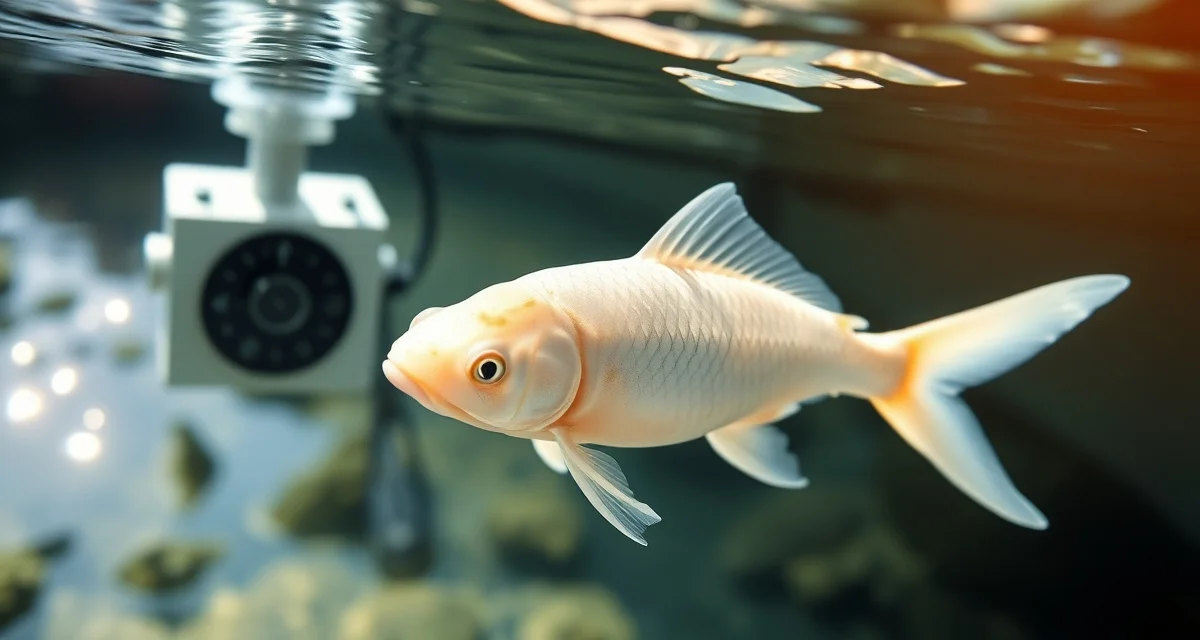
Ghost Koi Care Tracking: Health Management for Wild-Cross Koi
Ghost koi are fascinating to manage because their hybrid genetics genuinely change the health management equation. They carry wild mirror carp genetics alongside standard koi genetics, which provides stronger disease resistance but also introduces a complication: they may harbor subclinical infections for longer without showing visible symptoms.
A standard koi with an early bacterial infection will often show behavioral changes, reduced appetite, or mild physical signs within a few days of infection onset. A Ghost koi with the same infection may appear outwardly normal for longer before the infection manifests visibly. The hybrid vigor that makes Ghost koi so resilient in general can make early disease detection harder.
This isn't a reason to be less vigilant. It's a reason to rely on consistent, logged data rather than point-in-time observation.
TL;DR
- Ghost koi should still complete a full 30-day quarantine regardless of their reputation for hardiness.
- Ghost koi that are eating well and active by day 3-5 are a good sign.
- Ghost koi that remain at the bottom or show reduced appetite beyond the first 24-48 hours of stress recovery warrant closer inspection.
- A 30-day quarantine with a prophylactic praziquantel course at day 7-10 is strongly recommended before introducing Ghost koi to a mixed pond.
- Seasonal changes require adjusted monitoring schedules; automated reminders help maintain consistency.
Understanding Ghost Koi Hybrid Characteristics
Ghost koi were developed by crossing wild mirror carp (Cyprinus carpio) with standard koi. The result is a fish that retains some of the mirrored scale pattern of the carp parent, often appearing as a metallic or ghost-like sheen alongside or in place of standard koi scaling. Color ranges from predominantly black to gray, silver, bronze, and various metallic tones.
The carp genetics bring several genuine advantages:
- Higher disease resistance to many common koi pathogens. Ghost koi appear to mount stronger immune responses to bacterial infections and some parasitic infestations than standard koi of similar size and age.
- Cold tolerance. Ghost koi generally handle low water temperatures and the dormancy-to-active transition better than standard ornamental varieties.
- Hardiness to koi pond water quality tracker fluctuations. Ghost koi are less sensitive to parameter swings, particularly pH and temperature changes, than many fancy koi varieties.
The practical implication is that Ghost koi are excellent pond companions for beginners and those with less controlled water quality. They're also good "sentinel" fish in the sense that if a disease event severe enough to visibly affect a Ghost koi occurs, it's worth treating as a serious pond-wide issue.
The Subclinical Infection Risk
Here's the challenge. The same disease resistance that makes Ghost koi resilient also means they can carry parasites and bacteria at subclinical levels that would visibly affect a standard koi. Before introducing Ghost koi to an established pond with more sensitive fish, this matters.
Ghost koi should still complete a full 30-day quarantine regardless of their reputation for hardiness. The quarantine isn't just about protecting the new fish. It's about protecting your established pond fish from whatever the new fish might be carrying without showing obvious signs.
A standard koi in the same quarantine tank might show flashing and gill movement changes that alert you to a parasite load. A Ghost koi with the same load might not show the same visible stress. This is why microscopic gill and skin scrapes during quarantine are particularly valuable when quarantining Ghost koi, even if behavior looks completely normal.
Quarantine Protocol for Ghost Koi
Setup: Same 30-day protocol at 18-22°C, salt at 0.2%. Aeration, tested biofilter or beneficial bacteria supplement, smooth tank surfaces.
Arrival inspection: Ghost koi often have scale patterns that make early disease signs harder to read than on white-background varieties. Look for the following regardless of scale color:
- Scale lifting anywhere on the body
- Any fin fraying or blood streaking
- Mucus excess (a slightly cloudy or whitish film on scales)
- Gill movement rate relative to dissolved oxygen level
Because Ghost koi may not flash or show typical behavioral stress signs even with parasites, a prophylactic praziquantel course at day 7-10 is strongly recommended for this variety. The praziquantel dose calculator handles the calculation for your quarantine volume.
Behavioral baselines: Log feeding behavior, resting position, and activity level daily in KoiQuanta during quarantine. Ghost koi that are eating well and active by day 3-5 are a good sign. Ghost koi that remain at the bottom or show reduced appetite beyond the first 24-48 hours of stress recovery warrant closer inspection.
Ongoing Health Monitoring
Because Ghost koi are slower to show disease symptoms, logging is more important rather than less important for this variety. You're relying on logged trends rather than acute observations to catch problems early.
What to log for Ghost koi specifically:
- Feeding frequency and amount consumed. Ghost koi are typically enthusiastic feeders. A day without feeding response in a normally greedy Ghost koi is notable.
- Resting behavior. Ghost koi typically stay in motion. Unusual periods of sitting on the bottom or staying in one area are behavioral changes worth recording.
- Physical inspection notes twice weekly. Scale condition, fin condition, any mucus changes.
The Ghost koi hybrid vigor profile in KoiQuanta adjusts disease risk alert thresholds for this variety's different clinical presentation pattern. Rather than flagging the same behavioral changes that would trigger an alert in a standard koi, the Ghost koi profile uses Ghost-appropriate behavior baselines.
Disease Treatment for Ghost Koi
When Ghost koi do require disease treatment, dosing is the same as for standard koi based on fish weight and pond volume. The higher disease resistance doesn't mean lower medication doses. It means the disease event was less immediately severe, but the treatment protocol doesn't change.
One area where Ghost koi sometimes differ is treatment response time. Because they can mount stronger immune responses, recovery from bacterial infections with appropriate treatment is often faster than for standard koi in equivalent condition. Don't discontinue treatment early just because improvement appears rapid. Complete the full course. The bacterial infection treatment tracker handles the full treatment logging and follow-up scheduling.
Pond Compatibility
Ghost koi are excellent companions for standard koi in a mixed pond. They're active, reasonably peaceful with similar-sized fish, and their hardiness provides a kind of resilience buffer for the pond ecosystem as a whole.
Watch them during spring startup disease risk periods. If your Ghost koi look unwell in spring, it's a strong signal that disease pressure in the pond is high, because Ghost koi typically hold up better than standard koi in the same conditions. Their decline is a late-stage indicator rather than an early one.
Frequently Asked Questions
Are Ghost koi disease-resistant?
Ghost koi carry wild mirror carp genetics that provide genuinely stronger disease resistance than most ornamental koi varieties. They handle bacterial infections and some parasitic infestations with greater resilience and tend to be more tolerant of water quality fluctuations. However, disease resistance is not immunity. Ghost koi can and do get sick, and their tendency to show fewer early symptoms means subclinical infections can progress further before detection. Regular logged observation rather than casual inspection is the appropriate response to their tougher constitution.
Do Ghost koi still need quarantine?
Yes, and it's particularly important for established ponds with sensitive ornamental koi. Ghost koi may harbor parasites or bacteria at subclinical levels that don't noticeably affect the Ghost koi but would quickly affect standard koi. A 30-day quarantine with a prophylactic praziquantel course at day 7-10 is strongly recommended before introducing Ghost koi to a mixed pond. The quarantine protects your existing fish from whatever the Ghost koi might be carrying without obvious signs.
What health issues are Ghost koi prone to?
Ghost koi are susceptible to the same diseases as standard koi but typically with more resistance. The most relevant specific concerns are: anchor worm infestation (their mirror carp genetics make them a preferred host in some regions), skin ulcers if water quality drops sharply, and gill disease from parasites if infestation levels are high. Their tendency to maintain apparently normal behavior despite underlying infections makes logged observation data more valuable than point-in-time visual checks for detecting problems early.
What is Ghost Koi Care Tracking: Health Management for Wild-Cross Koi?
Ghost Koi Care Tracking is a health management approach tailored specifically to wild-cross koi—fish bred from mirror carp and standard koi. Because Ghost koi carry hybrid genetics, they often mask early illness longer than purebred koi. Care tracking means logging behavioral baselines, appetite patterns, and physical checks over time rather than relying on spot observations. This data-driven method helps owners catch subclinical infections that Ghost koi might otherwise hide until the condition becomes serious.
How much does Ghost Koi Care Tracking: Health Management for Wild-Cross Koi cost?
Ghost Koi Care Tracking as a practice costs nothing beyond your time and a basic log—a notebook or spreadsheet works fine. Dedicated koi management software like KoiQuanta offers structured tracking tools, with pricing varying by plan. The real investment is consistency: daily or weekly observations entered reliably over months. Compared to the cost of treating an advanced infection or losing a fish, the time investment in systematic tracking is minimal.
How does Ghost Koi Care Tracking: Health Management for Wild-Cross Koi work?
Ghost Koi Care Tracking works by establishing a logged baseline for each fish—normal activity level, feeding response, posture, and appearance—then flagging deviations over time. Because Ghost koi can harbor infections without obvious symptoms, a single observation tells you little. A log of 30 days of normal behavior makes a subtle change on day 31 meaningful. Tracking also structures your quarantine protocol, including scheduling a prophylactic praziquantel treatment at day 7–10 for new arrivals.
What are the benefits of Ghost Koi Care Tracking: Health Management for Wild-Cross Koi?
The primary benefit is earlier disease detection in fish that are genetically predisposed to hide illness. Ghost koi's hybrid vigor is an asset, but it can delay the visible signs that prompt action. Consistent tracking catches behavioral shifts—reduced feeding, bottom-sitting, altered swimming—before physical symptoms appear. Secondary benefits include better quarantine discipline, a historical record useful for vet consultations, and greater confidence that a fish appearing healthy actually is healthy based on trend data rather than assumption.
Who needs Ghost Koi Care Tracking: Health Management for Wild-Cross Koi?
Anyone keeping Ghost koi benefits from a structured tracking approach, but it is especially important for pond owners mixing Ghost koi with other koi varieties. Because Ghost koi may carry subclinical infections longer, an unmonitored fish can become a transmission risk to pond mates. Hobbyists who rely purely on visual checks are most at risk of missing early illness. New Ghost koi owners unfamiliar with the hybrid's behavior patterns will find a log particularly useful for building a reliable health baseline.
How long does Ghost Koi Care Tracking: Health Management for Wild-Cross Koi take?
Establishing a useful health baseline takes a minimum of 30 days—the same window recommended for quarantine. Within the first 3–5 days, a healthy Ghost koi should show active movement and feeding interest. Weeks two through four reveal the fish's stable behavioral pattern under your conditions. Ongoing tracking then continues indefinitely, with meaningful trend data accumulating over months. Identifying a health issue through logged data typically takes days rather than the weeks it might take through casual observation alone.
What should I look for when choosing Ghost Koi Care Tracking: Health Management for Wild-Cross Koi?
Look for a tracking method that captures feeding response, activity level, physical appearance, and water parameters in each entry. Consistency matters more than sophistication—a simple daily log beats elaborate software used sporadically. For Ghost koi specifically, ensure your approach includes a structured quarantine checklist and a scheduled antiparasitic treatment window. If using software, check whether it allows per-fish notes and flags deviations from baseline, since Ghost koi health management depends on trend comparison rather than single-point assessment.
Is Ghost Koi Care Tracking: Health Management for Wild-Cross Koi worth it?
Yes, for Ghost koi specifically, systematic health tracking is worth the effort. Their hybrid genetics give them genuine resilience, but that same resilience can obscure early infection long enough for a treatable problem to become serious. Owners who track consistently report catching issues earlier and losing fewer fish to advanced disease. The discipline of logging also improves quarantine compliance, which reduces the risk of introducing illness to an established pond. The investment is low; the protection it provides is proportionally high.
Sources
- Associated Koi Clubs of America (AKCA)
- Koi Organisation International (KOI)
- University of Florida IFAS Extension Aquaculture Program
- Fish Vet Group
- Water Quality Association