White Spots on Koi: Diagnosis Guide
Incorrectly treating carp pox as ich with chemical treatment is a common and harmful mistake. Carp pox is a viral condition that typically resolves on its own with warm weather. Treating it with formalin, potassium permanganate, or other antiparasitic chemicals stresses the fish unnecessarily without any benefit.
KoiQuanta's AI identification evaluates white spot characteristics for differential diagnosis. No competitor provides differential diagnosis for common symptom presentations the way KoiQuanta does.
TL;DR
- Ich (White Spot Disease / Ichthyophthirius multifiliis) Appearance: Small, round white spots, approximately 0.5-1mm in diameter, distributed across the body and fins.
- Carp pox is caused by Cyprinid herpesvirus 1, a viral condition.
- KoiQuanta connects observations, water data, and treatment records in one searchable history.
- Early detection based on parameter trends reduces treatment costs and fish stress.
- Seasonal changes require adjusted monitoring schedules; automated reminders help maintain consistency.
The Main Causes of White Spots on Koi
1. Ich (White Spot Disease / Ichthyophthirius multifiliis)
Appearance: Small, round white spots, approximately 0.5-1mm in diameter, distributed across the body and fins. Up close, each spot has a slightly granular or salt-grain texture. Fish typically flash (rub against surfaces) and show behavioral distress.
Key characteristics:
- Multiple spots, usually scattered across body and fins
- Granular or slightly rough texture
- Fish showing distress behaviors (flashing, clamping, surface hanging)
- Progresses and worsens over days if untreated
Treatment: Ich is a ciliated protozoan parasite. Effective treatments include formalin, potassium permanganate, and elevated temperature combined with salt. One treatment cycle is rarely sufficient; the parasite has a life cycle where the reproductive stage (tomont) is not susceptible to most treatments, requiring repeat dosing.
2. Carp Pox (Herpesviral Epithelioma of Cyprinids)
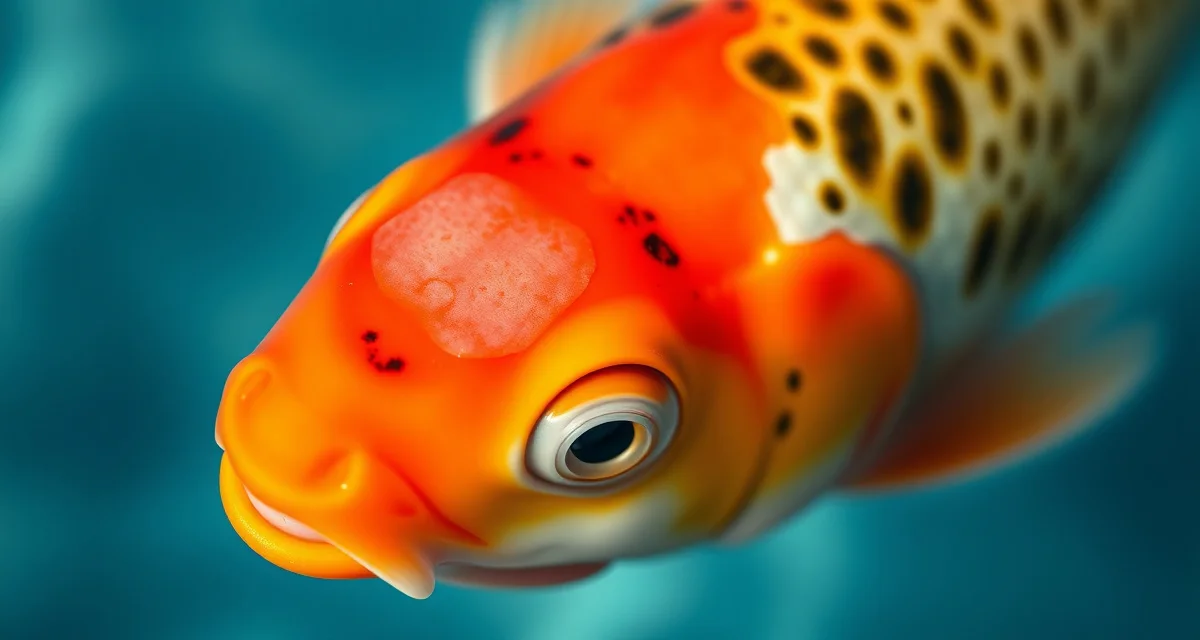
Appearance: Smooth, waxy, raised lesions that may appear white, pinkish, or translucent. Lesions often have a milky or candle-wax appearance. They tend to appear on fins and the dorsal body surface. They do NOT cause flashing or obvious distress behavior.
Key characteristics:
- Smooth, waxy surface texture (not granular)
- Fish not flashing or showing distress
- Lesions often appear on fins and dorsal surface
- Lesions tend to regress spontaneously as temperatures warm
Treatment: None required or effective. Carp pox is caused by Cyprinid herpesvirus 1, a viral condition. No antiviral treatment exists. Lesions typically regress in warm summer temperatures and may recur in cooler seasons. Affected fish are not at significant health risk from the pox itself.
3. Lymphocystis
Appearance: Cauliflower-like, irregular white growths that look distinctly different from the smooth carp pox lesions or the small granular ich spots. The growths are typically larger and more irregular in shape than either of the above.
Key characteristics:
- Cauliflower or raspberry-like textured growth
- Usually affects fins, less commonly body surface
- Not associated with behavioral distress
- Fish otherwise appear healthy
Treatment: Like carp pox, lymphocystis is a viral condition. No effective treatment exists. Most cases self-resolve over weeks to months, especially in fish with good immune function and good water quality. Improving water quality and nutrition supports recovery.
4. Excess Mucus Production
Appearance: A milky or whitish haze over the skin surface rather than discrete spots. The haze may be patchy and can look like smeared white areas rather than individual spots.
Key characteristics:
- Diffuse, hazy appearance rather than individual spots
- Often associated with water quality problems, parasite irritation, or chemical injury
- Fish may be flashing or showing irritation signs
Treatment: Address the underlying cause. If related to water quality (ammonia irritation, pH imbalance), correct parameters. If related to parasitic irritation, investigate and treat accordingly.
The Diagnostic Decision Tree
Step 1: Look at spot texture. Are the white areas smooth and waxy (carp pox/lymphocystis) or granular/salt-grain texture (ich)? Or is it a diffuse haze (excess mucus)?
Step 2: Observe behavior. Is the fish flashing, scratching, or showing distress? Ich causes distress. Carp pox and lymphocystis typically don't.
Step 3: Check progression. If the spots are new and spreading over days, ich is more likely. If they've been present for weeks and are stable or slowly growing, viral conditions are more likely.
Step 4: Skin scrape. For the definitive answer on whether ich parasites are present, a scrape and examination under magnification will show the Ichthyophthirius trophont (the feeding stage) if present.
Frequently Asked Questions
What are white spots on koi?
White spots on koi are most commonly caused by one of four conditions: ich (Ichthyophthirius multifiliis), a parasitic protozoan that produces small granular white spots and causes behavioral distress; carp pox, a viral condition producing smooth, waxy spots that don't cause distress; lymphocystis, another viral condition producing cauliflower-like growths on fins; or excess mucus production from irritation or poor water quality, which produces a diffuse whitish haze rather than discrete spots. The appearance characteristics and behavioral signs are the primary tools for distinguishing these conditions.
How do I tell ich from carp pox on my koi?
The key distinction is spot texture and fish behavior. Ich spots are granular, slightly rough in texture, and fish with ich show distress behaviors including flashing (rubbing against surfaces), clamped fins, and surface hanging. Ich progresses and spreads over days if untreated. Carp pox lesions are smooth, waxy, and milky in appearance. Fish with carp pox typically show no distress and continue feeding normally. Carp pox lesions are often larger than ich spots and tend to appear preferentially on fins. When in doubt, a skin scrape confirms whether ich organisms are present.
What is the treatment for white spots on koi?
Treatment depends on the cause. Ich requires antiparasitic treatment (formalin, potassium permanganate, or salt with elevated temperature), typically requiring multiple treatment cycles to address all life cycle stages. Carp pox has no effective treatment and typically resolves on its own in warm water; do not apply harsh antiparasitic chemicals, which stress the fish without benefit. Lymphocystis similarly has no specific treatment and typically self-resolves with good water quality and nutrition. Excess mucus from irritation requires addressing the underlying cause: water quality correction, parasite treatment, or removal of chemical irritants. Diagnosis before treatment is essential.
What is White Spots on Koi: Diagnosis Guide?
White Spots on Koi: Diagnosis Guide is a resource for identifying the cause of white spots on koi fish. Different conditions—such as ich (Ichthyophthirius multifiliis), carp pox, and fungal infections—can look similar but require very different treatments. This guide walks you through the key visual differences, behavioral clues, and water parameter signals that point to the correct diagnosis, helping you avoid harmful misidentification and unnecessary chemical treatments.
How much does White Spots on Koi: Diagnosis Guide cost?
The diagnostic guide itself is free to read on KoiQuanta. KoiQuanta's AI-assisted identification tool, which evaluates white spot characteristics for differential diagnosis, is available through the platform. No competitor offers this level of automated differential diagnosis for common koi symptom presentations. There are no costs associated with accessing the core article content.
How does White Spots on Koi: Diagnosis Guide work?
The guide works by walking you through the distinguishing visual characteristics of each condition. For example, ich presents as small, round, salt-grain-like spots roughly 0.5–1mm across, while carp pox produces waxy, raised lesions with a different texture. KoiQuanta's AI tool supplements this by analyzing your observations alongside water data and treatment history to suggest the most likely diagnosis.
What are the benefits of White Spots on Koi: Diagnosis Guide?
The primary benefit is avoiding costly and harmful misdiagnosis. Treating carp pox as ich with formalin or potassium permanganate stresses fish without any benefit, since carp pox is viral and resolves on its own with warmer water. Correct diagnosis saves money, reduces fish stress, and improves outcomes. KoiQuanta also connects water parameters, observations, and treatment records in one searchable history for long-term trend analysis.
Who needs White Spots on Koi: Diagnosis Guide?
Any koi keeper who has noticed white spots on their fish needs this guide. It is especially useful for hobbyists who lack microscopy skills or veterinary access, since differential diagnosis based on visual observation alone is difficult. It is also valuable for experienced keepers managing multiple fish, where early and accurate detection prevents an outbreak from spreading and reduces overall treatment costs.
How long does White Spots on Koi: Diagnosis Guide take?
Reading the guide takes around five to ten minutes. Reaching an accurate diagnosis for your fish may take longer depending on how the spots develop. Carp pox, for instance, may require observation over days or weeks as water temperatures change. Ich progresses rapidly and requires prompt action. KoiQuanta's automated monitoring reminders help maintain consistent observation schedules, particularly as seasonal conditions shift.
What should I look for when choosing White Spots on Koi: Diagnosis Guide?
Look for a resource that distinguishes between multiple conditions rather than defaulting to a single treatment recommendation. A good diagnosis guide covers appearance, progression, affected areas, and water temperature context for each condition. KoiQuanta stands out because it offers AI-assisted differential diagnosis that no competitor matches, and it integrates observation data with water quality history for a more complete clinical picture.
Is White Spots on Koi: Diagnosis Guide worth it?
Yes, for any koi keeper dealing with white spots, a proper diagnosis guide is essential. Misidentifying carp pox as ich and treating with antiparasitic chemicals is a common and avoidable mistake that causes unnecessary fish stress. The cost of misdiagnosis—in treatments, fish loss, and pond disruption—far outweighs the time spent reading a thorough guide. KoiQuanta's integrated approach makes accurate, informed decisions significantly more accessible.
Related Articles
- How to Do a Koi Skin Scrape: Parasite Diagnosis
- Black Spots on Koi: Healing Ulcers, Melanophore Migration, or Disease?
- Koi Ich (White Spot Disease): Fast Treatment Before It Kills Your Fish
- How to Buffer pH in a Koi Pond: Stable Chemistry Guide
Sources
- Associated Koi Clubs of America (AKCA)
- Koi Organisation International (KOI)
- University of Florida IFAS Extension Aquaculture Program
- Fish Vet Group
- Water Quality Association