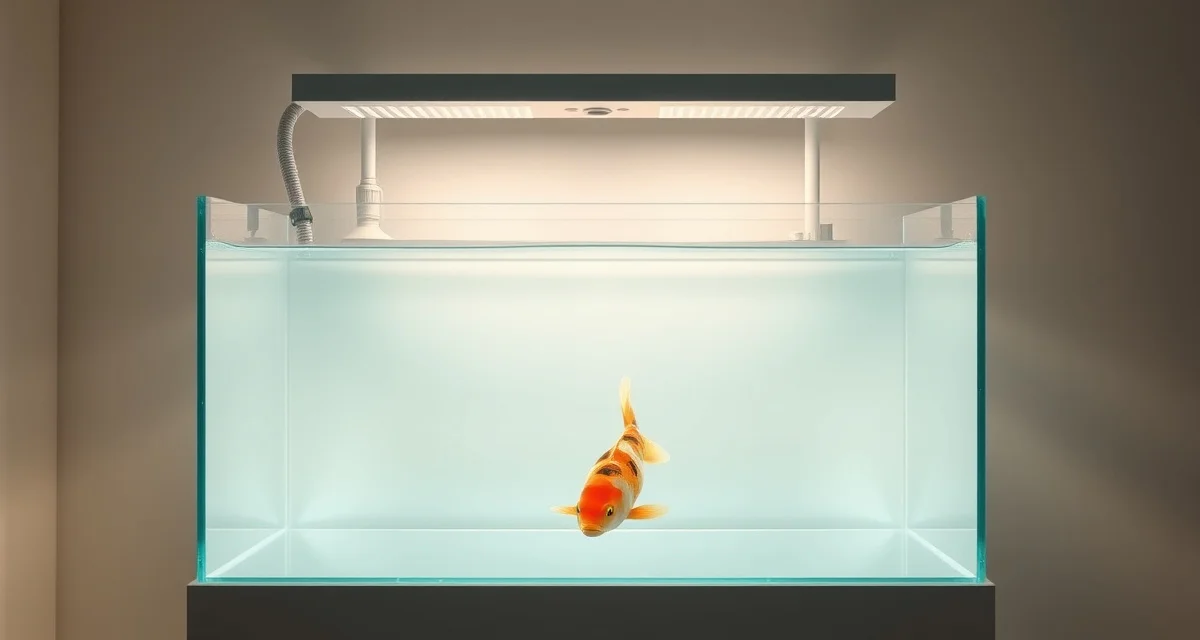
Isolation Protocols for Koi Showing Disease Signs
Delaying isolation of a single diseased fish by 24 hours doubles whole-after-pond-treatment)-tank disease spread risk. The decision to isolate and the execution of isolation need to be fast, competent, and followed by appropriate management in the isolation container.
KoiQuanta's isolation protocol is triggered by disease-second-opinion) sign detection with step-by-step guidance. No competitor provides isolation decision trees for disease scenarios.
TL;DR
- The minimum setup: Container: A 20-50 gallon tote or container (smaller than a full quarantine tank is acceptable for short-term isolation).
- Change 20-30% of the water twice daily to manage ammonia.
- If isolation is to continue beyond 3-4 days, add a sponge filter pre-seeded from your established system.
- Don't wait 3-4 days for a prophylactic treatment to load.
- Two to three 25-30% water changes daily using conditioned water at the correct temperature prevents ammonia accumulation.
- Delaying isolation by 24 hours doubles the risk of spread in shared water systems.
- The 15-20 minutes required to prepare the isolation container and transfer the fish is time well spent compared to the cost of a whole-tank disease event.
When to Isolate: The Decision Criteria
Not every sick-looking fish needs immediate isolation. The isolation decision should be based on:
Isolate immediately when:
- A fish shows obvious, active disease signs: ulcers, hemorrhagic lesions, severe fin clamping combined with lethargy, pineconing scales
- A fish is showing symptoms associated with a highly contagious disease (KHV signs, rapid bacterial spread visible)
- One fish is sick in a group of otherwise healthy fish and disease could spread (bacterial disease, many parasites)
- A fish is dead in shared water (remove and investigate immediately; the body sheds pathogens)
Monitor closely before isolating when:
- Mild behavioral changes in a fish that could be stress-related (flashing once, slightly reduced appetite)
- You're uncertain whether signs indicate disease or stress
- Water quality might be the cause (check parameters first, koi pond water quality tracker treatment affects all fish)
The key factor in the "isolate immediately" category is disease that spreads through shared water. If the disease is contagious in water, every hour the sick fish shares water with healthy fish is additional exposure.
Setting Up an Isolation Container
You need isolation capacity ready before disease appears. The minimum setup:
Container: A 20-50 gallon tote or container (smaller than a full quarantine tank is acceptable for short-term isolation). The fish needs to be comfortable but doesn't need the space it would occupy in a permanent pond.
Aeration: An air stone connected to a pump. Adequate aeration is particularly important in small isolation containers where volume is limited.
Temperature: Match the temperature of the source pond or quarantine tank within 2°C. A submersible heater to maintain temperature is important especially in cooler weather.
Water source: Use water from the source system (display pond or quarantine tank water). This minimizes the chemical shock of transfer. Add dechlorinated tap water only if source water is not available in sufficient quantity.
No filter initially: An isolation container doesn't need a cycled filter for the first 24-48 hours. Change 20-30% of the water twice daily to manage ammonia. If isolation is to continue beyond 3-4 days, add a sponge filter pre-seeded from your established system.
The Isolation Process
Step 1: Prepare the container first. Fill, aerate, and match temperature before catching the fish. Chasing and netting a sick fish then transferring it into an unprepared container adds stress to an already compromised fish.
Step 2: Catch gently. Use the softest appropriate net. Minimize handling time. Don't net the fish out of the water for longer than absolutely necessary.
Step 3: Float briefly if significant temperature difference exists. If isolation container temperature differs from source water by more than 3°C, float the fish in a bag from the source water inside the isolation container for 15-20 minutes before releasing.
Step 4: Log the isolation event in KoiQuanta. Record which fish was isolated, the date and time, what signs triggered isolation, and the current water quality parameters. This begins the isolation record that tracks treatment and outcome.
Step 5: Assess after 30 minutes. Once the fish has settled from transport, do your first assessment: observe carefully, log specific signs, begin the diagnostic process.
Is Isolation Treatment Different from Quarantine Treatment?
Yes, in important ways.
Isolation is more urgent. A fish that's actively sick needs treatment faster than a fish in routine quarantine. Don't wait 3-4 days for a prophylactic treatment to load. Treat the presenting condition.
Isolation water volume is smaller. Calculate treatment doses for the isolation container volume specifically, not the source tank volume. KoiQuanta's dose calculator uses the specific container you designate.
Isolation is individual. Even if the disease might be contagious, the fish in isolation is receiving individual care. Optimize the isolation environment for this specific fish.
Extended isolation for high-risk disease. For suspected KHV or other serious disease, isolation duration may be open-ended until diagnosis is confirmed and outcome determined.
The emergency koi quarantine guide covers the emergency response protocol that isolation triggers in a display pond outbreak scenario.
Managing the Isolation Environment
Water quality in a small isolation container needs active management. Without an established filter, ammonia accumulates from fish metabolism. Two to three 25-30% water changes daily using conditioned water at the correct temperature prevents ammonia accumulation.
Keep a test kit at the isolation station and test ammonia at every water change. Log results in KoiQuanta alongside your fish observations.
Reduce or stop feeding during isolation. A sick fish has reduced digestion capacity and reduced appetite. Uneaten food in a small container dramatically worsens water quality. Resume feeding only when the fish shows active interest in food.
Should Isolated Koi Be Treated Differently?
Yes. Isolated fish are:
- More stressed than pond fish (small volume, recent handling)
- Often more immune-compromised (that's why they're isolated)
- Being medicated in smaller volumes where dose precision matters more
This means:
- Be precise with doses: calculate for isolation container volume exactly
- Consider lower-impact treatments first: salt before formalin, topical treatments before bath treatments for localized lesions
- Monitor more frequently: check the fish every 2-4 hours initially, not daily
- Be ready to act: if the fish deteriorates rapidly, veterinary consultation is appropriate
Frequently Asked Questions
How quickly must I isolate a sick koi?
Isolate immediately when a fish shows active disease signs or when disease could spread through shared water. Delaying isolation by 24 hours doubles the risk of spread in shared water systems. The question "should I wait to see if this gets better?" almost always has the answer no. A fish with visible lesions, severe behavioral abnormality, or signs of a contagious disease should be in an isolation container before you do anything else. The 15-20 minutes required to prepare the isolation container and transfer the fish is time well spent compared to the cost of a whole-tank disease event.
What do I need for an isolation container for a sick koi?
The minimum isolation container setup requires a 20-50 gallon container (a tote, bucket, or even a clean trash can for emergency use), an air stone and air pump for oxygenation, temperature management (a heater in cold conditions, shade in hot conditions), and water from the source system at matched temperature. A cycled filter isn't essential for the first 2-3 days if you perform 25-30% water changes twice daily to manage ammonia. Have a test kit and test ammonia at each water change. Log the isolation event immediately in KoiQuanta and begin the disease assessment and treatment protocol.
Should I treat isolated koi differently from quarantined koi?
Yes. Isolation is more urgent than routine quarantine: treat the presenting condition immediately rather than running a prophylactic protocol. Calculate doses for the isolation container volume specifically, as small container volumes require precise dosing where errors are more consequential. Monitor more frequently (every 2-4 hours initially for seriously ill fish). Minimize feeding to reduce ammonia load in the small container. Consider less stressful treatment options first (salt before formalin, topical wound care before bath treatment) given the already stressed state of the fish. Veterinary consultation is appropriate for any isolation case involving high-value fish or suspected serious disease.
What is Isolation Protocols for Koi Showing Disease Signs?
Isolation protocols for koi showing disease signs are systematic procedures for quickly separating a sick fish from the main pond to prevent disease spread. The protocol covers when to act, how to set up an emergency isolation container, and how to manage water quality during the isolation period. KoiQuanta's approach uses decision trees to guide hobbyists through disease scenarios, ensuring fast, competent responses that protect the entire collection.
How much does Isolation Protocols for Koi Showing Disease Signs cost?
Isolation protocols themselves cost nothing beyond the equipment you likely already own. A 20-50 gallon tote or storage container is the primary requirement. Ongoing costs include dechlorinator for water changes and a pre-seeded sponge filter if isolation extends beyond three to four days. Acting promptly on isolation is far cheaper than treating a whole-pond disease event, which can cost hundreds in medications and potentially result in fish losses.
How does Isolation Protocols for Koi Showing Disease Signs work?
The protocol works by immediately removing the affected fish into a separate container filled with conditioned, temperature-matched water. You perform two to three 25-30% water changes daily to control ammonia in the absence of established biological filtration. If isolation continues past three to four days, a sponge filter seeded from your main system is added. The sick fish is monitored, treated if needed, and only returned once disease signs have resolved.
What are the benefits of Isolation Protocols for Koi Showing Disease Signs?
Isolating a diseased koi stops pathogens from spreading through shared water before other fish are exposed. Research shows that delaying isolation by just 24 hours doubles whole-tank spread risk. Acting within 15-20 minutes protects your investment, reduces the scope and cost of any treatment, and gives the sick fish a calmer environment with targeted care rather than competition from tankmates while its immune system is compromised.
Who needs Isolation Protocols for Koi Showing Disease Signs?
Any koi keeper maintaining more than one fish needs to understand isolation protocols. Hobbyists with mixed-age ponds, those who regularly introduce new fish, and keepers housing high-value koi are especially at risk from rapid disease spread. Even experienced keepers benefit from a clear decision tree during stressful disease events when quick, correct action matters most. Isolation protocols are essential knowledge for anyone serious about fish health management.
How long does Isolation Protocols for Koi Showing Disease Signs take?
Preparing the isolation container and transferring the fish takes roughly 15-20 minutes. Short-term isolation typically lasts three to four days for observation or initial treatment. If the fish requires extended treatment or recovery, isolation can continue for weeks with appropriate filtration added after day three or four. The duration depends on the disease identified, the treatment protocol followed, and whether the fish shows consistent improvement before reintroduction.
What should I look for when choosing Isolation Protocols for Koi Showing Disease Signs?
Look for protocols that include clear decision criteria for when to isolate, not just how. A good protocol specifies container size, water change frequency, temperature matching, and when to add filtration. KoiQuanta's approach provides disease-specific decision trees rather than generic advice. Prioritize guidance that addresses ammonia management explicitly, since unfiltered isolation containers crash quickly without twice-daily water changes and can add stress that worsens the fish's condition.
Is Isolation Protocols for Koi Showing Disease Signs worth it?
Yes. The 15-20 minutes spent setting up an isolation container is a minimal investment compared to the cost of a whole-pond disease event involving medications, potential fish loss, and weeks of treatment. Isolation also gives the sick fish targeted care without the stress of competing for resources. For any keeper who values their fish financially or emotionally, having a practiced isolation protocol ready before disease strikes is simply responsible husbandry.
Related Articles
Sources
- Associated Koi Clubs of America (AKCA)
- Koi Organisation International (KOI)
- University of Florida IFAS Extension Aquaculture Program
- Fish Vet Group
- Water Quality Association