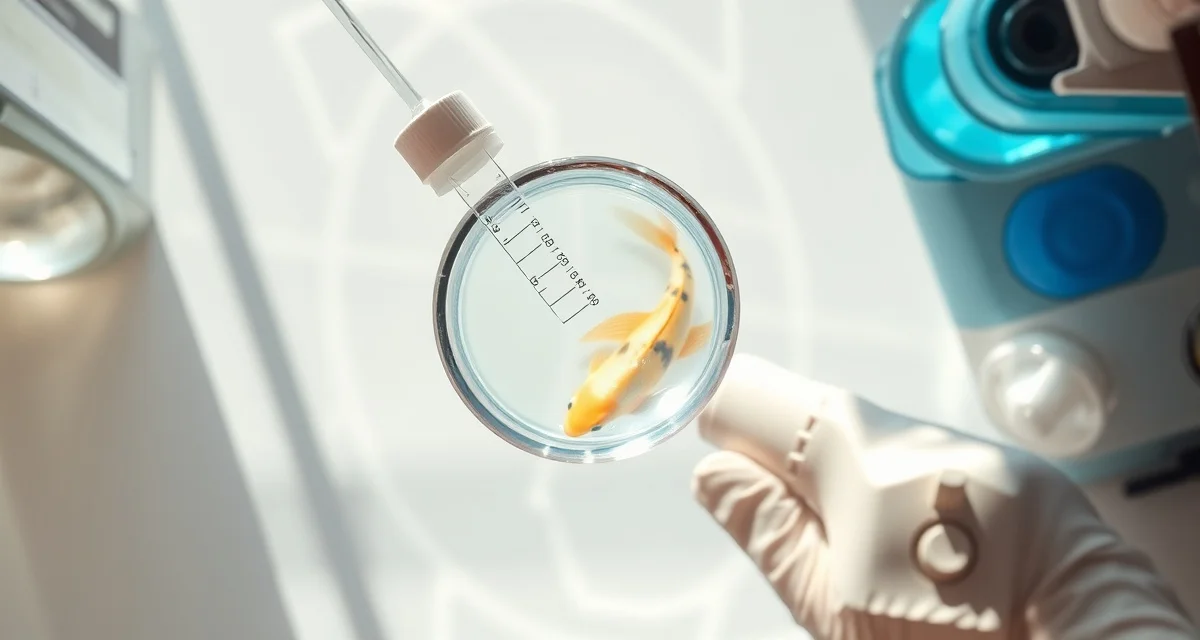
Dechlorinating Water for Koi Ponds: Methods and Products
Chloramine requires a sodium thiosulfate plus an ammonia binder -- standard dechlorinators alone are insufficient. This is the dechlorination mistake that many koi keepers don't realize they're making. If your municipal water contains chloramine (increasingly common as water utilities move away from simple chlorination), adding sodium thiosulfate (the active ingredient in most standard dechlorinators) neutralizes the chlorine portion but leaves ammonia attached to it -- which then enters your pond as free ammonia and affects your fish.
Before treating your water, find out whether your utility uses chlorine or chloramine. This changes what product you need.
TL;DR
- Chloramine: The Critical Difference Chlorine (Cl2): Simple chlorine gas dissolved in water.
- Volatile -- it off-gases from water over 24-48 hours when water is left to stand in an open container.
- Dose: 10-20 mg of sodium thiosulfate per liter of water per 1 mg/L of chlorine.
- Most tap water contains 0.2-2 mg/L chlorine, so you need 2-40 mg/L sodium thiosulfate.
- For a 500-gallon water change: 50 mL of Prime.
- If you suspect chlorine/chloramine exposure: 1.
- Immediately add dechlorinator at double normal dose 2.
Chlorine vs. Chloramine: The Critical Difference
Chlorine (Cl2): Simple chlorine gas dissolved in water. Volatile -- it off-gases from water over 24-48 hours when water is left to stand in an open container. Neutralized by sodium thiosulfate instantly.
Chloramine (NH2Cl): Chlorine chemically bonded to ammonia. More stable than chlorine -- it doesn't off-gas over time and is not fully neutralized by simple sodium thiosulfate. When sodium thiosulfate breaks the chloramine bond, chlorine is neutralized but ammonia is released.
How to find out which your utility uses:
- Check your annual koi pond water quality tracker report (utilities are required to send these)
- Call your water utility directly and ask
- Many utility websites list their disinfection method in water quality information
KoiQuanta's water change log includes a dechlorination product field. Logging which product you use alongside your water change records creates a record of your water treatment practices, useful for troubleshooting any water quality issues that arise after water changes.
Products for Chlorine Treatment
Sodium thiosulfate (pure): Neutralizes chlorine instantly. Very inexpensive. Often sold as a bulk powder for ponds. Does NOT neutralize chloramine. Only use for chlorine-only water.
Dose: 10-20 mg of sodium thiosulfate per liter of water per 1 mg/L of chlorine. Most tap water contains 0.2-2 mg/L chlorine, so you need 2-40 mg/L sodium thiosulfate. Commercial pond dechlorinators typically provide this at their recommended dosing rates.
Ascorbic acid (Vitamin C): Also neutralizes chlorine rapidly. Safe, inexpensive, and doesn't add sodium or any concern about overdosing. Does NOT neutralize chloramine reliably.
Products for Chloramine Treatment
Sodium thiosulfate + ammonia binding combination products: Products like Seachem Prime, API Stress Coat, and similar formulations combine sodium thiosulfate to neutralize the chlorine component of chloramine with an ammonia binder (usually sodium hydroxymethanesulfonate or similar) that detoxifies the released ammonia. These are the appropriate choice for chloramine water.
Seachem Prime specifically: Temporarily detoxifies ammonia for 24-48 hours, allowing the biological filter to process it safely. This is the mechanism that makes these products useful for chloramine water -- they don't remove the ammonia, they neutralize it temporarily.
How much dechlorinator do I use per gallon?
For Seachem Prime and similar products: typically 1 mL per 40 liters (about 10 gallons). For large pond water changes, this adds up -- buy in larger containers. For a 500-gallon water change: 50 mL of Prime.
For sodium thiosulfate powder (chlorine only): follow your product's dosing for your estimated chlorine level. Most products are designed so one measured dose per volume is adequate.
Chlorine/Chloramine Exposure Signs in Koi
If you add chlorinated or chloraminated water without adequate dechlorination, you'll see:
- Immediate flashing, erratic swimming, and surface gasping
- Rapid mucus overproduction (protective response to chemical irritation)
- Gill damage (chlorine is a powerful oxidizer that damages gill tissue)
- In severe exposure: mortality within hours
This is a true emergency. If you suspect chlorine/chloramine exposure:
- Immediately add dechlorinator at double normal dose
- Do a 25-30% water change with properly treated water
- Maximize aeration
- Add activated carbon to the filter if available (adsorbs some residual chlorine)
Practical Application for Water Changes
Water change using a garden hose: The most practical approach for most pond keepers. Add dechlorinator to the pond before you start adding the hose water, or add it to a bucket and pour it in during the water addition. You don't need to pre-mix it -- dechlorinator acts instantly on contact with water.
For large water changes or new pond filling: Pre-treating water in a holding tank or barrel allows you to add dechlorinator, verify the treatment, and let any residual off-gas before adding to the pond. This is ideal for adding large volumes but more logistically complex than hose addition.
Temperature matching: Dechlorination doesn't affect temperature. Match temperature separately (see the koi water change guide) -- this is equally important for fish welfare.
For the chemical side of water treatment and the full water chemistry context, the koi water chemistry guide covers how dechlorination fits into overall water quality management.
Dechlorinating for Quarantine Tanks
Quarantine tank water changes happen more frequently and the tank volume is smaller, but the dechlorination requirement is identical. In fact, it's more important -- the quarantine tank biofilter is potentially less than your main pond filter, and any chlorine exposure can set back the bacterial colony considerably.
Always dechlorinate quarantine tank water changes, even if it feels excessive for "just" a small tank. Chlorine damage to the biofilter in a quarantine tank causes ammonia spikes that harm the fish you're trying to protect.
Frequently Asked Questions
How do I treat tap water for my koi pond?
First, determine whether your tap water contains chlorine or chloramine -- check your utility's annual water quality report or contact them directly. For chlorine: sodium thiosulfate or any standard dechlorinator works. For chloramine: use a product that combines a chlorine neutralizer with an ammonia binder (Seachem Prime and similar products). Add the dechlorinator before or during the water addition to the pond. Dose accurately based on your product's instructions and your water change volume.
What is the difference between chlorine and chloramine for koi?
Chlorine is simple dissolved chlorine gas, volatile and easily neutralized by standard dechlorinators (sodium thiosulfate). Chloramine is chlorine chemically bonded to ammonia, more stable than chlorine, and not fully neutralized by sodium thiosulfate alone. When sodium thiosulfate breaks chloramine, the chlorine is neutralized but the ammonia is released -- requiring an ammonia binder component. Using a chlorine-only dechlorinator in chloramine water leaves ammonia in your pond water, creating a hidden water quality problem. Many utilities have switched to chloramine, so check before assuming your old dechlorination routine is still adequate.
How much dechlorinator do I use per gallon?
Follow your specific product's dosing instructions. For Seachem Prime: approximately 1 mL per 10 gallons (40 liters). For most commercial pond dechlorinators: check the label for the stated dose per gallon/liter and apply accordingly. When in doubt, slightly overdosing a dechlorinator like Prime is safe (the ammonia-detoxifying effect has some excess capacity). Never add chlorinated or chloraminated water to a koi pond without dechlorination first -- the gill damage from even brief chlorine exposure can be severe.
What is Dechlorinating Water for Koi Ponds: Methods and Products?
Dechlorinating water for koi ponds is the process of neutralizing harmful chlorine or chloramine added by municipal water utilities before that water enters your pond. Tap water treated with these disinfectants is toxic to koi and beneficial pond bacteria. Dechlorination involves using chemical treatments—most commonly sodium thiosulfate or multi-action products like Seachem Prime—to make tap water safe for water changes, top-offs, and new pond fills.
How much does Dechlorinating Water for Koi Ponds: Methods and Products cost?
Dechlorination products are inexpensive and widely available. Basic sodium thiosulfate costs just a few dollars for a large quantity. Multi-action dechlorinators like Seachem Prime run roughly $10–$20 for a 500 mL bottle, which treats thousands of gallons. The real cost of skipping dechlorination—sick or dead koi, crashed beneficial bacteria colonies, and emergency treatments—far exceeds any savings on product.
How does Dechlorinating Water for Koi Ponds: Methods and Products work?
Standard dechlorinators contain sodium thiosulfate, which chemically neutralizes free chlorine by reducing it to harmless chloride ions. For chloramine-treated water, you need a product that also contains an ammonia binder, because sodium thiosulfate only breaks the chlorine portion of the chloramine bond, releasing free ammonia. Multi-action products like Prime neutralize both components simultaneously, making the water safe within minutes of dosing.
What are the benefits of Dechlorinating Water for Koi Ponds: Methods and Products?
Dechlorinating before water changes protects koi from gill damage, stress, and death caused by chlorine exposure. It also preserves your pond's beneficial nitrogen-cycling bacteria, which are highly sensitive to chlorine and chloramine. Using the correct product for your water supply—especially if your utility uses chloramine—prevents ammonia spikes that stress fish and destabilize water quality. It's a low-cost step with an outsized impact on fish health.
Who needs Dechlorinating Water for Koi Ponds: Methods and Products?
Any koi keeper who uses municipal tap water for their pond needs to dechlorinate. This includes hobbyists doing routine water changes, those topping off ponds lost to evaporation, and anyone setting up a new pond. Even experienced keepers can be caught off guard when their water utility silently switches from chlorine to chloramine—making it important to periodically verify what disinfectant your supplier uses.
How long does Dechlorinating Water for Koi Ponds: Methods and Products take?
Liquid dechlorinators like sodium thiosulfate or Prime work almost instantly—within 30 seconds to a few minutes of mixing into the water. This means you can add dechlorinator directly to your pond during a water change rather than pre-treating in a separate container. Chlorine will also dissipate naturally if tap water is left in an open container for 24–48 hours, but this method does not work for chloramine.
What should I look for when choosing Dechlorinating Water for Koi Ponds: Methods and Products?
First, confirm whether your municipal water contains chlorine or chloramine—this determines which product you need. For chloramine, choose a product that neutralizes both chlorine and ammonia, such as Seachem Prime or similar multi-action dechlorinators. Check the dosing instructions carefully; most products recommend around 1 mL per 10–50 gallons depending on concentration. Opt for a reputable brand with clear labeling, and keep enough on hand to double-dose in emergencies.
Is Dechlorinating Water for Koi Ponds: Methods and Products worth it?
Yes. Dechlorinating tap water before adding it to a koi pond is one of the most fundamental and cost-effective practices in koi keeping. The products are cheap, the process takes seconds, and the alternative—chlorine or ammonia exposure—can kill fish, wipe out beneficial bacteria, and result in expensive losses. If your water utility uses chloramine, using the wrong product is a silent threat. Getting this step right is non-negotiable.
Related Articles
Sources
- Associated Koi Clubs of America (AKCA)
- Koi Organisation International (KOI)
- University of Florida IFAS Extension Aquaculture Program
- Fish Vet Group
- Water Quality Association