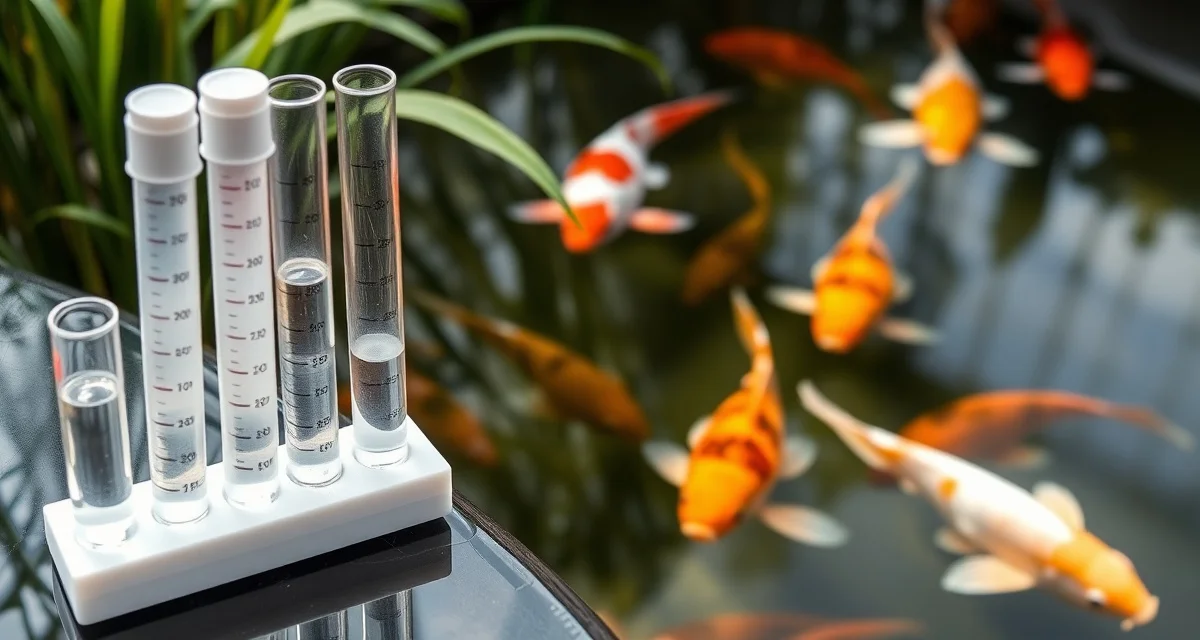
Calcium Hardness in Koi Ponds: Testing and Management Guide
Koi in water with calcium hardness below 50 ppm experience increased mucus coat disruption and higher susceptibility to gill parasites. This relationship between soft water and disease vulnerability is real but often overlooked, as most hobbyists focus on ammonia, nitrite, and pH without ever testing calcium hardness specifically.
If you live in a soft-water region, this parameter may be the missing piece that explains chronic health problems you haven't been able to resolve.
TL;DR
- It's expressed in parts per million (ppm) or degrees of hardness (°dGH or °dH), where 1 degree = approximately 17.9 ppm.
- Municipal water in these areas often has calcium hardness below 50 ppm.
- Calcium hardness above 150 ppm is common.
- Very soft water (below 50 ppm) doesn't cause direct equipment problems, but the fish health implications are the primary concern.
- Raising calcium hardness to 100-150 ppm typically improves disease resistance noticeably in affected populations.
- The safe minimum is approximately 50 ppm - below this, measurable health effects begin to appear.
- The upper end of acceptable is around 250 ppm for fish health purposes, though very hard water above 300 ppm starts causing equipment scaling issues.
What Calcium Hardness Measures
Calcium hardness (sometimes called general hardness or GH when combined with magnesium) measures the concentration of calcium ions dissolved in your pond water. It's expressed in parts per million (ppm) or degrees of hardness (°dGH or °dH), where 1 degree = approximately 17.9 ppm.
This is distinct from alkalinity/KH (carbonate hardness), which measures the buffering capacity. Calcium and magnesium ions are the "permanent hardness" component of water - they don't change with aeration or pH adjustment the way carbonate hardness does.
Why Calcium Hardness Affects Koi Health
Koi maintain a delicate internal chemistry that's quite different from the water around them. Their blood and body fluids are more saline than fresh pond water. They're constantly working to maintain this difference through a process called osmoregulation - actively moving ions across their gill membranes.
Calcium plays a direct structural role in this process:
Gill permeability: Calcium ions help maintain the integrity of gill epithelium, the thin membrane tissue through which gas exchange and ion regulation occur. In very soft water (low calcium), gill membranes become more permeable - meaning the fish has to work harder to maintain internal ion balance and becomes more vulnerable to external threats like parasites and pathogens.
Mucus coat integrity: The mucus coat covering koi skin is their first line of defense against environmental pathogens. Calcium is a component of the mucus matrix. Fish in very soft water produce thinner, less protective mucus coats.
Scale and skeletal health: Long-term calcium deficiency can affect bone density and scale mineralization in extreme cases, though this is rarely a primary concern in hobby ponds.
Target Ranges for Koi Ponds
Adequate: 50-75 ppm (about 3-4 °dGH)
Optimal: 100-150 ppm
Acceptable range: 75-250 ppm
Below 50 ppm: Increased disease vulnerability, mucus coat disruption, and osmoregulatory stress. Intervention warranted.
Above 300 ppm: Equipment scaling becomes a concern; generally not harmful to fish at these levels, but equipment maintenance and water clarity can be affected.
Geographic Variation in Source Water Hardness
Calcium hardness in source water varies enormously by geography and is determined by the geology of the watershed.
Soft-water regions (generally, areas with granite or sandstone geology) include much of the Pacific Northwest, New England, parts of the upper Midwest, the Scottish Highlands, and Scandinavia. Municipal water in these areas often has calcium hardness below 50 ppm.
Hard-water regions (limestone and chalk geology) include much of the central US, Southern England, and many parts of Europe. Calcium hardness above 150 ppm is common.
If you're in a soft-water region and have persistent health challenges - particularly with parasite susceptibility and mucus coat condition - low calcium hardness is worth investigating.
Testing Calcium Hardness
Standard aquarium GH test kits (API GH/KH test kit, for example) measure general hardness which includes calcium and magnesium. This is adequate for most hobby purposes. Dedicated calcium hardness tests (calcium titration kits used in swimming pool chemistry) give calcium-specific readings.
Test calcium hardness monthly during normal operation. Test more frequently if you're troubleshooting chronic health problems in a soft-water region.
Raising Calcium Hardness
Calcium chloride is the most direct way to raise calcium hardness without significantly affecting other parameters. It's available as pool calcium hardness raiser. Dissolve in pond water before adding. Note that it raises calcium specifically, not general hardness via magnesium.
Calcium carbonate (crushed coral, limestone) raises both calcium hardness and alkalinity simultaneously. Adding crushed coral to your filter provides a slow-dissolving calcium source that buffers alkalinity at the same time - an efficient solution in soft-water ponds.
Epsom salt (magnesium sulfate) raises magnesium hardness but not calcium hardness specifically. If your GH is low due to magnesium deficiency, Epsom salt is appropriate, but if calcium specifically is low, it won't help.
Water blending in very soft-water areas: some hobbyists blend their source water with a small proportion of a harder water source (where this is safe and available) to raise baseline hardness.
Calcium Hardness and Equipment
Very hard water (above 300 ppm) can cause calcium scaling on pond equipment, UV quartz sleeves, and plumbing. This reduces equipment efficiency over time. Regular cleaning with citric acid solution removes calcium deposits.
Very soft water (below 50 ppm) doesn't cause direct equipment problems, but the fish health implications are the primary concern.
Related Articles
- KH (Carbonate Hardness) in Koi Ponds: Why It Matters
- Nitrate in Koi Ponds: Acceptable Levels and Management
- Chlorine and Chloramine Removal for Koi Ponds: Complete Guide
- Copper Toxicity in Koi Ponds: Risks, Testing, and Treatment
FAQ
What is Calcium Hardness in Koi Ponds: Testing and Management Guide?
Calcium hardness in koi ponds refers to the concentration of dissolved calcium ions in your pond water, measured in parts per million (ppm) or degrees of hardness (°dGH). It directly affects koi health by supporting mucus coat integrity and gill function. The safe range is 50–250 ppm, with 100–150 ppm considered optimal. Below 50 ppm, koi become more susceptible to gill parasites and skin infections. Most hobbyists overlook this parameter, but it can explain chronic health problems that ammonia and pH testing fail to identify.
How much does Calcium Hardness in Koi Ponds: Testing and Management Guide cost?
Calcium hardness management is free in the sense that testing and adjusting the parameter requires only inexpensive equipment and readily available additives. A liquid test kit or test strips cost $10–$30. Calcium chloride or agricultural lime used to raise hardness costs just a few dollars per treatment. If you already own a basic water testing kit, calcium hardness is one of the most affordable parameters to monitor and correct, making it an accessible fix for hobbyists dealing with unexplained fish health issues.
How does Calcium Hardness in Koi Ponds: Testing and Management Guide work?
Calcium hardness works by providing dissolved calcium ions that koi absorb through their gills and skin to maintain osmotic balance. In soft water below 50 ppm, this osmotic regulation becomes strained, weakening the mucus coat that protects koi from pathogens. To raise hardness, you add calcium chloride or agricultural lime gradually, testing after each addition. Conversely, diluting with rainwater or RO water lowers hardness if levels exceed 250 ppm. Regular testing ensures levels stay within the 100–150 ppm optimal window.
What are the benefits of Calcium Hardness in Koi Ponds: Testing and Management Guide?
Maintaining proper calcium hardness delivers several measurable benefits: stronger mucus coat protection against bacteria and parasites, reduced susceptibility to gill disease, improved osmotic regulation that reduces fish stress, and more stable overall water chemistry. Koi in water with 100–150 ppm calcium hardness tend to show better color, more active behavior, and fewer unexplained infections. For hobbyists in soft-water regions, correcting calcium hardness alone has resolved chronic health problems that resisted other treatments.
Who needs Calcium Hardness in Koi Ponds: Testing and Management Guide?
Any koi keeper whose fish experience recurring gill parasites, frequent infections, or unexplained lethargy despite normal ammonia, nitrite, and pH readings should test calcium hardness. It is especially critical for hobbyists in soft-water regions where municipal supply regularly falls below 50 ppm. New pond owners setting up with rainwater or RO water are also at risk. If you have never tested calcium hardness and your koi have persistent health issues, this parameter is the most likely overlooked cause.
How long does Calcium Hardness in Koi Ponds: Testing and Management Guide take?
Adjusting calcium hardness does not happen overnight. After adding calcium chloride or lime, allow 24–48 hours for full distribution and retesting before making additional adjustments. Raising hardness from very soft (under 50 ppm) to the optimal 100–150 ppm range typically takes one to three treatments spread over several days. Fish health improvements following correction may take one to two weeks to become visible. Ongoing maintenance requires testing monthly or after significant rainfall or water changes that dilute calcium levels.
What should I look for when choosing Calcium Hardness in Koi Ponds: Testing and Management Guide?
When managing calcium hardness, look for a reliable test kit that measures specifically in ppm rather than only general hardness degrees, since ppm is easier to apply directly to target ranges. For raising hardness, calcium chloride is the most controlled and predictable additive. Avoid using products that raise both GH and KH simultaneously if you only need calcium correction. Also consider your water source: if tap water is consistently soft, factor that into regular top-up and water change routines to prevent levels dropping again.
Is Calcium Hardness in Koi Ponds: Testing and Management Guide worth it?
Yes, monitoring and correcting calcium hardness is absolutely worth it for koi keepers dealing with unexplained health issues. It is one of the cheapest water parameters to test and fix, yet one of the most commonly overlooked. Raising calcium hardness to 100–150 ppm in soft-water ponds has resolved chronic gill and skin problems for many hobbyists after years of frustration. Even as a preventative measure, maintaining this parameter protects your investment in koi and reduces long-term disease treatment costs significantly.
Sources
- Associated Koi Clubs of America (AKCA)
- Koi Organisation International (KOI)
- University of Florida IFAS Extension Aquaculture Program
- Fish Vet Group
- Water Quality Association