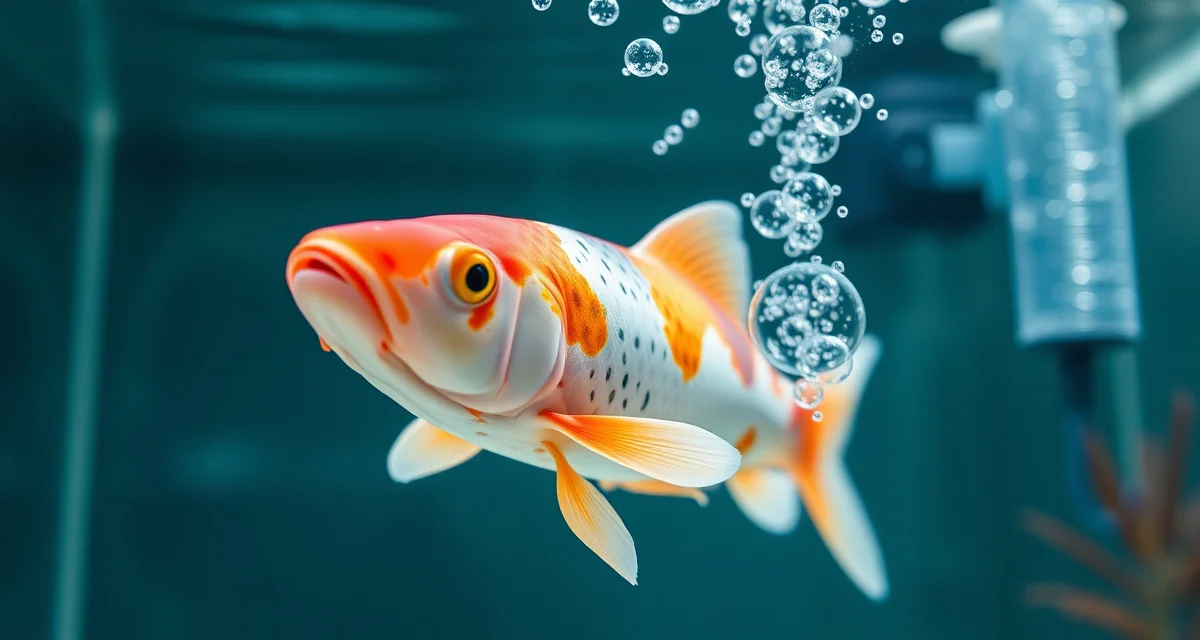
Supplemental Oxygen for Koi Ponds: When and How
Liquid oxygen delivery is 30x more efficient than air diffusion for emergency oxygen supplementation. When koi are gasping at the surface during a summer heat event or during formalin treatment, an air pump adding atmospheric oxygen (21% O2) is working against considerably higher background oxygen demand than usual. Liquid oxygen -- pure O2 -- delivers effective oxygen much faster when you need it most.
KoiQuanta's oxygen event logging correlates supplemental oxygen use with health recovery, tracking when emergency oxygen was used alongside fish outcome records.
TL;DR
- When koi are gasping at the surface during a summer heat event or during formalin treatment, an air pump adding atmospheric oxygen (21% O2) is working against considerably higher background oxygen demand than usual.
- Liquid oxygen -- pure O2 -- delivers effective oxygen much faster when you need it most.
- In normal conditions, well-aerated water contains 7-9 mg/L of dissolved oxygen -- adequate for koi.
- At 30°C, water holds approximately 7.5 mg/L at saturation, vs.
- During a heat wave, a pond that's adequately aerated at 20°C may become oxygen-limited at 28°C with the same aeration equipment.
- Therapeutic formalin doses can reduce dissolved oxygen by 30-50% within hours.
- Below 3 mg/L, acute distress and mortality risk is high.
Why Supplemental Oxygen Is Sometimes Necessary
Atmospheric air contains approximately 21% oxygen. Air pumps diffuse this air into pond water as fine bubbles. In normal conditions, well-aerated water contains 7-9 mg/L of dissolved oxygen -- adequate for koi.
Several situations overwhelm standard aeration's ability to maintain adequate oxygen:
Summer heat events: Water's ability to hold dissolved oxygen decreases sharply with temperature. At 30°C, water holds approximately 7.5 mg/L at saturation, vs. 11.3 mg/L at 15°C. During a heat wave, a pond that's adequately aerated at 20°C may become oxygen-limited at 28°C with the same aeration equipment.
High stocking density: More fish means more oxygen demand. A pond running near its maximum stocking density may have adequate oxygen with normal aeration but insufficient margin for any reduction.
Formalin treatment: Formalin rapidly depletes dissolved oxygen in pond water. Therapeutic formalin doses can reduce dissolved oxygen by 30-50% within hours. Standard aeration is often insufficient to compensate.
Disease events: Fish with gill damage (from KHV, bacterial gill disease, or flukes) have reduced oxygen uptake capacity. These fish need higher ambient dissolved oxygen to extract adequate oxygen from the water than healthy fish do.
Large water change with cold water: Adding large volumes of cold, oxygenated water sometimes increases overall oxygen levels -- but the temperature change itself stresses fish and can trigger increased oxygen consumption.
Post-spawning: The physical exertion of spawning, combined with organic load from eggs and milt decomposing in the water, can temporarily stress oxygen levels.
Forms of Supplemental Oxygen
Liquid Oxygen (LOX) and High-Pressure Cylinder Oxygen
Commercially sourced oxygen -- either as liquid oxygen in a dewar flask or compressed oxygen gas in a cylinder -- provides pure O2 that's bubbled into the pond through a regulator and diffuser.
How to use it:
- Connect the regulator to the oxygen source
- Run tubing to a fine bubble diffuser (airstone) placed in the pond, ideally at depth
- Open the regulator slowly to a low flow rate initially
- Monitor fish response -- they should stop surface crowding within 20-30 minutes of adequate oxygenation
Flow rate: You don't need maximum flow -- pure oxygen at 1-2 liters per minute through a fine diffuser in a 1,000-gallon pond is significant supplementation. Running oxygen at excessive rates wastes product and can over-oxygenate (though this requires quite high flow rates to achieve problematic levels).
Sources: Welding supply companies sell oxygen cylinders. Medical oxygen is available through medical supply companies. Homebrewing supply stores sometimes carry small oxygen canisters. Oxygen for fish transport (available from aquatic suppliers) is the same product.
Safety: Oxygen cylinders are under high pressure. Store upright, secured, away from flame and heat. Handle with the caution appropriate for any compressed gas cylinder.
Oxygen Concentrators
Medical-grade oxygen concentrators pull oxygen from air and deliver it at 90-95% concentration through a tubing outlet. These are practical for continuous supplementation rather than emergency situations.
Advantages: No refilling, continuous supply, manageable running cost (electricity only).
Disadvantages: Expensive upfront ($300-800 for a new concentrator), flow rate limited (typically 1-5 liters/minute -- adequate for quarantine tanks and smaller ponds but potentially insufficient for large ponds in emergencies).
Best use: Continuous oxygen supplementation for quarantine tanks during treatment, for holding facilities, or as background supplementation for ponds running at high stocking density in summer.
Commercial Oxygen Products
Several products release oxygen through chemical reaction when added to pond water (potassium permanganate combinations, hydrogen peroxide, or dedicated oxygen-releasing products). These are useful as emergency supplements when cylinders aren't available.
Hydrogen peroxide (H2O2): Breaks down into water and oxygen. Can be added to pond water in an emergency at calculated doses. Effect is relatively short-lived as the peroxide rapidly decomposes. Useful as an emergency bridge while setting up proper supplementation.
When to Deploy Emergency Oxygen
The threshold for emergency intervention is a dissolved oxygen reading of 5 mg/L or below, or fish behavior indicating oxygen distress:
- Multiple fish at the surface, gasping
- Fish gathering around return jets or waterfalls (seeking higher-oxygen water)
- Fish showing reduced activity and poor feeding response during warm periods
- Any fish showing these signs during or after formalin treatment
What dissolved oxygen level requires emergency intervention? Below 5 mg/L, fish are stressed. Below 3 mg/L, acute distress and mortality risk is high. Above 7 mg/L, conditions are adequate for healthy koi. The threshold for deploying supplemental oxygen is not a precise number but a combination of measurement and behavioral observation.
For the full emergency water quality response framework, the koi dissolved oxygen guide covers dissolved oxygen management in detail. For the emergency response protocol when fish are in oxygen distress, the koi oxygen depletion emergency guide covers the rapid response sequence.
Supplemental Oxygen for Transport
Koi can survive 12-24 hours in a correctly oxygen-charged transport bag at appropriate temperature. This is the most common use of supplemental oxygen in koi keeping -- charging transport bags with pure O2 rather than air before sealing them.
Transport bag procedure:
- Bag the fish in double bags with adequate water (enough to cover the fish completely, roughly 1/3 water to 2/3 air space)
- Deflate the air from the bag
- Charge with pure oxygen until the bag is inflated firmly
- Seal with a rubber band
The pure oxygen atmosphere in the bag gives considerably more dissolved oxygen capacity than air-charged bags, allowing longer transport times and higher fish survival rates.
Frequently Asked Questions
When should I use supplemental oxygen for koi?
Deploy supplemental oxygen when: dissolved oxygen tests below 5 mg/L (or below 6 mg/L during high-stress situations like disease treatment), multiple fish are surface-crowding and gasping, you're running formalin treatment (which depletes oxygen considerably), during summer heat events when water temperature exceeds 27°C and your standard aeration is already maximized, or during transport where bag charges with pure oxygen extend safe transport duration. Having a cylinder or oxygen concentrator available before you need it -- rather than trying to source it during an emergency -- is the practical approach.
How do I add liquid oxygen to a koi pond?
Connect a regulator to your oxygen cylinder or concentrator. Run tubing from the regulator to a fine bubble diffuser (a standard aquarium air stone works well) placed at the deepest convenient point in the pond. Open the regulator to a modest flow rate -- 1-3 liters per minute for most ponds. You don't need high flow; pure oxygen is 5x more effective than air per unit volume. Monitor fish: they should stop surface crowding within 20-30 minutes as dissolved oxygen recovers. Maintain supplementation until fish behavior normalizes and oxygen readings return to above 6 mg/L. Don't open the regulator to maximum flow -- you'll waste oxygen and risk over-pressuring thin diffuser tubing.
What dissolved oxygen level requires emergency intervention?
Fish showing distress symptoms (surface crowding, gasping, gathering near aeration sources) at any oxygen level warrants investigation. As a measurement threshold: below 5 mg/L calls for immediate action (maximize standard aeration and deploy supplemental oxygen if available), below 4 mg/L is acute risk (emergency response required, all fish are stressed), below 3 mg/L is lethal for extended exposure. Don't wait for measurement to respond to behavioral signs of distress -- the visible behavioral signs tell you oxygen is insufficient well before you can get a number. Behavior plus a confirming test is faster than waiting for a measurement before acting.
What is Supplemental Oxygen for Koi Ponds: When and How?
Supplemental oxygen for koi ponds refers to the practice of boosting dissolved oxygen levels beyond what standard aeration provides. This typically involves using liquid oxygen or pure O2 diffusers during emergencies like summer heat events, formalin treatments, or disease outbreaks. Unlike air pumps that deliver only 21% oxygen, supplemental systems deliver pure O2, making them 30x more efficient at raising dissolved oxygen quickly when koi are under stress.
How much does Supplemental Oxygen for Koi Ponds: When and How cost?
Basic air pumps and airstones cost $20–$100 and are sufficient for routine aeration. Purpose-built oxygen diffusers run $50–$200. Liquid oxygen setups, including regulators and cylinders, typically cost $150–$400 upfront with ongoing refill costs of $30–$80 per cylinder. Emergency oxygen kits designed for pond use fall in the $100–$300 range. Cost scales with pond size and how quickly you need oxygen delivery during a crisis.
How does Supplemental Oxygen for Koi Ponds: When and How work?
Supplemental oxygen works by introducing pure O2 directly into pond water through a diffuser or stone, dissolving it far more efficiently than air. At warm temperatures, water holds less dissolved oxygen naturally — around 7.5 mg/L at 30°C. Liquid oxygen bypasses the 21% O2 limitation of air, rapidly raising dissolved oxygen back to safe levels (above 6 mg/L). During formalin treatments, which can drop DO by 30–50%, this direct delivery prevents acute hypoxia.
What are the benefits of Supplemental Oxygen for Koi Ponds: When and How?
The primary benefit is speed during emergencies. When koi gasp at the surface, dissolved oxygen may already be below 3 mg/L — a level where mortality risk is high. Liquid oxygen can restore safe levels in minutes rather than the hours an air pump might require. Secondary benefits include supporting koi recovery during disease treatment, enabling higher stocking densities, and providing insurance during heatwaves when existing aeration becomes inadequate.
Who needs Supplemental Oxygen for Koi Ponds: When and How?
Any koi keeper with a moderately stocked pond should understand supplemental oxygen, but it is especially critical for hobbyists in warm climates, those who treat fish with formalin or other oxygen-depleting medications, and keepers with heavily stocked ponds where oxygen demand is already high. Large koi (over 18 inches) consume significantly more oxygen, so owners of large specimen fish face greater risk during heat events and should have emergency oxygen available.
How long does Supplemental Oxygen for Koi Ponds: When and How take?
In an emergency, liquid oxygen can raise dangerously low dissolved oxygen levels to safe thresholds within 15–30 minutes depending on pond volume and diffuser placement. Standard air pump aeration may take several hours to produce the same effect. For routine use, supplemental oxygen systems run continuously during high-risk periods such as heat waves or active treatment courses, which typically last 3–7 days. Regular monitoring with a DO meter guides how long supplementation is needed.
What should I look for when choosing Supplemental Oxygen for Koi Ponds: When and How?
Look for a delivery method matched to your pond size — fine-bubble diffusers maximize oxygen transfer efficiency. Prioritize systems with adjustable flow rates so you can dial back oxygen once levels stabilize. Choose regulators rated for aquatic use, not industrial applications. A dissolved oxygen meter is essential alongside any supplemental system so you can confirm effectiveness. For emergencies, opt for purpose-built koi oxygen kits that include everything needed for rapid deployment.
Is Supplemental Oxygen for Koi Ponds: When and How worth it?
Yes, for koi keepers in warm climates or those who use medications like formalin, supplemental oxygen is worth having on hand. A single heat event or treatment gone wrong can kill an entire pond of valuable fish within hours. The cost of a liquid oxygen setup is minor compared to the value of mature koi. KoiQuanta's oxygen event logging also allows you to correlate supplemental oxygen use with fish health outcomes, helping refine your response for future events.
Related Articles
- What Is the Correct Salt Percentage for Koi Ponds? Complete Guide
- Air Pumps for Koi Ponds: Sizing and Selection
Sources
- Associated Koi Clubs of America (AKCA)
- Koi Organisation International (KOI)
- University of Florida IFAS Extension Aquaculture Program
- Fish Vet Group
- Water Quality Association