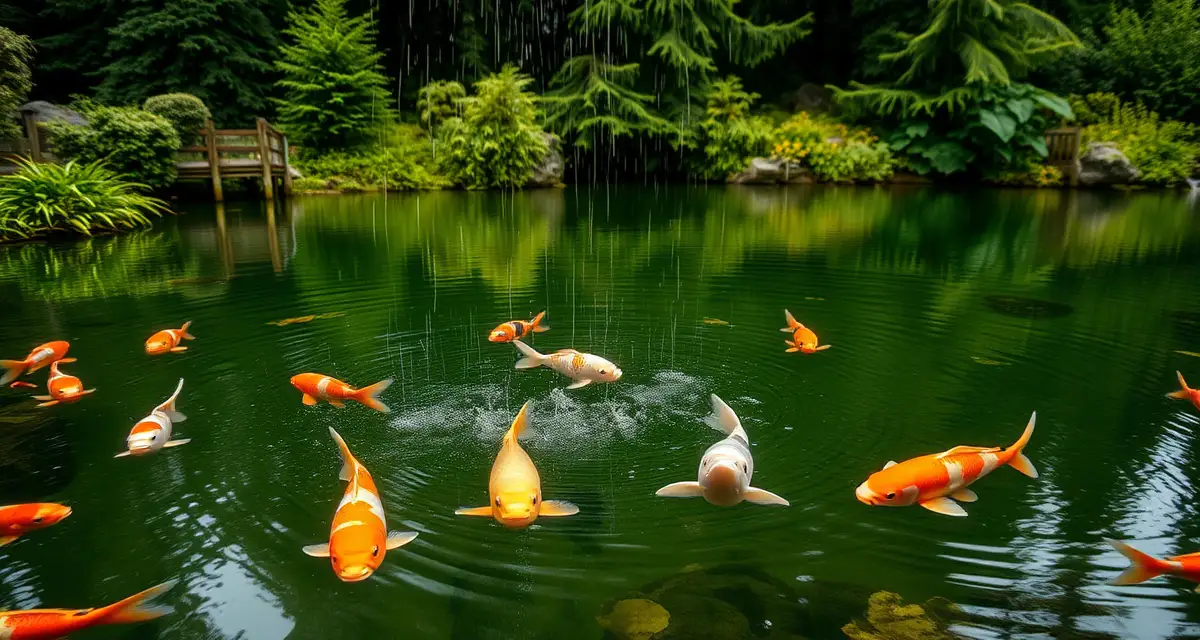
Koi Keeping in the Pacific Northwest: Rain and Temperature Guide
Heavy rainfall in the Pacific Northwest can dilute KH and trigger pH crashes in koi ponds. This is a uniquely Pacific Northwest problem -- not a concern for hobbyists in the arid Southwest or the Southeast, but a genuine management challenge for koi keepers in Oregon and Washington. Rain that falls directly into the pond, plus runoff from surrounding surfaces, can dilute your carefully buffered water chemistry within hours during heavy events.
KoiQuanta's Pacific Northwest profiles track rainfall-linked pH and KH dilution events, letting you correlate rainy periods with parameter changes in your actual pond data.
TL;DR
- The challenges are specific and manageable: Rainfall and chemistry dilution: Western Oregon and Washington receive 35-60+ inches of rain annually, much of it concentrated in November through March.
- Water temperatures rarely exceed 25-27°C west of the Cascades, and dissolved oxygen management during summer is less critical than in Texas or Arizona.
- Rain is essentially distilled water with a slightly acidic pH (natural CO2 in the atmosphere makes rainfall mildly acidic, typically pH 5.5-6.5).
- If your KH is already marginal (below 80-100 ppm), a heavy rain event can push it low enough that your pond loses pH stability.
- Maintain your target KH well above the minimum (target 120-150 ppm rather than just trying to stay above 80 ppm) to provide buffer against rainfall dilution events.
- If it's dropped below 100 ppm, supplement with sodium bicarbonate (baking soda) at 1 teaspoon per 100 gallons per day until KH returns to target.
- A 3-4°C temperature drop from a cold rain event in autumn is enough to trigger feeding behavior changes and potentially stress fish.
Pacific Northwest Climate for Koi Keepers
The Pacific Northwest offers a genuinely excellent koi-keeping climate for most of the year. The challenges are specific and manageable:
Rainfall and chemistry dilution: Western Oregon and Washington receive 35-60+ inches of rain annually, much of it concentrated in November through March. Rainfall is naturally soft and slightly acidic, and regular rainfall events -- especially heavy ones -- can dilute pond KH considerably.
Mild winters: Unlike the Midwest or New England, most of the Pacific Northwest (west of the Cascades) doesn't experience sustained hard freezes. Portland, Seattle, and their surrounding areas have mild enough winters that koi don't need the same winter preparation as northern and eastern keepers. Most ponds don't ice over completely, and when they do, it's typically for days rather than weeks.
Cool summers: Pacific Northwest summers are generally mild by continental US standards. Water temperatures rarely exceed 25-27°C west of the Cascades, and dissolved oxygen management during summer is less critical than in Texas or Arizona. This is a genuine advantage for koi keeping.
The Cascade divide: East of the Cascades (eastern Oregon and Washington), the climate shifts dramatically -- hotter summers, colder winters, drier conditions. This guide focuses primarily on the wetter west-side climate.
Rainfall and Water Chemistry: The KH Challenge
The mechanism is straightforward. Rain is essentially distilled water with a slightly acidic pH (natural CO2 in the atmosphere makes rainfall mildly acidic, typically pH 5.5-6.5). When this soft, slightly acidic water enters your pond in large quantities, it dilutes the calcium carbonate alkalinity (KH) that buffers your pond's pH.
If your KH is already marginal (below 80-100 ppm), a heavy rain event can push it low enough that your pond loses pH stability. The result is a pH crash -- typically overnight or the morning after a heavy rain -- that can be severe enough to stress or kill fish.
What to do about rain-driven KH dilution:
Test KH regularly, especially after rainfall events. In the wet season (November through March), test KH weekly rather than monthly.
Maintain your target KH well above the minimum (target 120-150 ppm rather than just trying to stay above 80 ppm) to provide buffer against rainfall dilution events.
After significant rain events, test KH before the next scheduled test. If it's dropped below 100 ppm, supplement with sodium bicarbonate (baking soda) at 1 teaspoon per 100 gallons per day until KH returns to target. This is explained in more detail in the koi KH and carbonate hardness guide.
Pond design for rainfall: Consider a pond overflow at a level that allows excess water to leave the pond during heavy rain rather than allowing the pond to rise indefinitely. An overflow standpipe or pond edge design that allows controlled overflow prevents the pond from filling beyond capacity during extended rain events.
Does Rain Affect My Koi Pond Water Chemistry?
Yes, and in multiple ways:
KH dilution (discussed above) -- the primary chemistry concern in the Pacific Northwest.
pH change: Rain is slightly acidic, so heavy rainfall can directly lower pH even before KH dilution kicks in. If you have a pH-sensitive pond already running at lower KH, rain can push pH below comfortable ranges quickly.
Temperature drop: Heavy cold rain can lower pond temperature measurably. A 3-4°C temperature drop from a cold rain event in autumn is enough to trigger feeding behavior changes and potentially stress fish.
Runoff contamination: If your pond is in an area with treated lawn, a driveway, or a roof drainage point nearby, heavy rain can carry herbicides, fertilizers, oils, or roof-runoff contaminants into the pond. Design drainage away from the pond, and use a buffer area of gravel or mulch to absorb and filter runoff before it reaches the water.
For the pH management side of this, the koi pH guide covers the full spectrum of pH management strategies relevant to Pacific Northwest conditions.
Winter Management for Pacific Northwest Koi
The Pacific Northwest's mild winters are an advantage, but a few considerations apply:
Ice events: Ice-over events do happen, particularly in eastern Oregon/Washington and occasionally in valley locations during cold snaps. Have a floating deicer available as a precaution. It doesn't need to run continuously -- plug it in when temperatures are forecast to stay below freezing for multiple days.
Feeding in winter: Pacific Northwest winters are mild enough that many koi keepers in the Willamette Valley, Puget Sound area, and similar climates continue light feeding on wheat germ food through winter, since water temperatures often stay in the 8-12°C range rather than dropping to 5°C or below. Use water temperature rather than calendar date to guide feeding decisions. Stop if temperatures drop below 8-10°C.
Filter management: Biological filters remain partially active through the mild Pacific Northwest winter. Don't shut down your filter -- reduce flow if needed, but keep bacteria alive. The mild winter is one of the genuine advantages of the Pacific Northwest for koi keeping.
Disease Season in the Pacific Northwest
What is the koi disease season in the Pacific Northwest?
The spring transition is the primary disease risk window -- as water temperatures rise from winter lows through the 10-20°C range in March through May. This is broadly the same risk window as the Midwest and New England, though typically compressed because Pacific Northwest springs are milder.
KHV risk exists through the spring and autumn windows when water temperatures are in the 18-28°C range. The Pacific Northwest's cool summers mean the KHV active window may be shorter than in southern states.
Fluke pressure is year-round but peaks in the warmer months. Run prophylactic Praziquantel in early spring (April) before the season fully warms up.
The wet, overcast Pacific Northwest weather doesn't eliminate parasite pressure -- temperature and stocking density are the primary drivers of parasite load, and both are present in Pacific Northwest koi ponds.
Do Koi Thrive in the Pacific Northwest Climate?
Yes, very well when managed correctly. The mild summers mean dissolved oxygen management is less critical than in southern states. The absence of deep winter freeze eliminates the most extreme ice management challenges. The primary management focus is water chemistry stability through the wet season.
Pacific Northwest hobbyists tend to have very high-quality fish condition because the climate is genuinely good for koi. The challenge is chemistry stability, not temperature extremes.
Frequently Asked Questions
How does rain affect my koi pond water chemistry?
Pacific Northwest rainfall dilutes KH (carbonate hardness) in your pond, which reduces the water's ability to buffer pH. Rainfall is naturally soft and slightly acidic, so heavy rain events can lower both KH and pH directly. The risk is a pH crash, typically overnight or the morning after a heavy rain event, when depleted KH can no longer hold pH stable. Test KH weekly in the wet season (November through March) and supplement with sodium bicarbonate when KH drops below 100 ppm. Maintain target KH at 120-150 ppm to build in buffer against dilution events.
Do koi thrive in the Pacific Northwest climate?
Yes -- the mild summers and moderate winters are genuinely well-suited to koi. You're not fighting the heat extremes of Texas or Arizona, and the winter challenges are far milder than the Midwest or New England. The primary management focus is water chemistry stability through the wet season. Koi keepers in the Willamette Valley and Puget Sound area often run ponds with very healthy fish because the temperature profile is nearly optimal for koi biology.
What is the koi disease season in the Pacific Northwest?
The spring transition (March through May) is the peak disease risk window, as water temperatures rise from winter lows through the parasite-active range. KHV risk is present through the spring and autumn windows when water temperatures are in the 18-28°C range. Fluke pressure exists year-round but intensifies in the warmer months. Running prophylactic Praziquantel in early April -- before the season fully warms -- is good practice for Pacific Northwest keepers to get ahead of fluke population buildup.
What is Koi Keeping in the Pacific Northwest: Rain and Temperature Guide?
This is a practical guide for koi hobbyists in Oregon and Washington covering the region's two defining challenges: heavy seasonal rainfall that dilutes pond chemistry, and cool year-round water temperatures. Unlike guides written for warmer, drier climates, it addresses Pacific Northwest-specific issues like KH and pH crashes during rain events, winter pond management, and why dissolved oxygen stress in summer is less critical here than in Texas or Arizona.
How much does Koi Keeping in the Pacific Northwest: Rain and Temperature Guide cost?
The guide itself is free editorial content on KoiQuanta. There is no purchase required to read it. KoiQuanta does offer pond-tracking software with Pacific Northwest profiles that correlate rainfall data with your pond's pH and KH readings, which may involve a subscription, but the guide and its recommendations are publicly accessible at no cost.
How does Koi Keeping in the Pacific Northwest: Rain and Temperature Guide work?
The guide walks you through understanding how Pacific Northwest rainfall—essentially distilled, mildly acidic water at pH 5.5–6.5—dilutes your pond's KH and destabilizes pH. It explains the seasonal rainfall pattern (heavy November through March), temperature ranges west of the Cascades, and practical steps like maintaining KH above 100 ppm as a buffer against storm events. KoiQuanta's tracking tools let you log and correlate real pond data with weather.
What are the benefits of Koi Keeping in the Pacific Northwest: Rain and Temperature Guide?
Following this guide helps you avoid the most common Pacific Northwest koi loss: pH crashes triggered by heavy rain diluting low-KH water. You gain a clear framework for proactive buffering, seasonal temperature management, and understanding why your pond behaves differently than ponds in other regions. The result is more stable water chemistry, healthier fish, and fewer emergency interventions after storm events.
Who needs Koi Keeping in the Pacific Northwest: Rain and Temperature Guide?
Any koi keeper in western Oregon or Washington will benefit, especially those who have experienced unexplained fish stress or losses following heavy rain. It is also valuable for hobbyists relocating from drier or warmer states who find their previous pond management habits do not translate well. Beginners starting ponds in the region will find it essential groundwork before their first wet season.
How long does Koi Keeping in the Pacific Northwest: Rain and Temperature Guide take?
Reading the guide takes roughly 10–15 minutes. Implementing the recommendations—primarily testing KH regularly and maintaining adequate buffering capacity before the rainy season—is an ongoing practice rather than a one-time task. Seasonal preparation each autumn before the November–March rain window takes an hour or two of testing and chemistry adjustment to get your pond into a stable baseline.
What should I look for when choosing Koi Keeping in the Pacific Northwest: Rain and Temperature Guide?
Look for guidance that is specific to the Pacific Northwest climate rather than generic koi advice. Good indicators include coverage of rainfall-driven KH dilution, acknowledgment that dissolved oxygen management differs from hot-climate ponds, and realistic temperature ranges for western Oregon and Washington. Guidance backed by actual pond data tracking, as KoiQuanta provides, is more reliable than advice based solely on general hobbyist rules of thumb.
Is Koi Keeping in the Pacific Northwest: Rain and Temperature Guide worth it?
Yes, if you keep koi west of the Cascades. The Pacific Northwest presents chemistry challenges that generic koi guides do not address, and pH crashes from rainfall dilution are a real, preventable cause of fish loss. Understanding the regional dynamics—and maintaining KH proactively—costs very little but protects a significant investment in fish. For hobbyists in this region specifically, this is among the most directly applicable guidance available.
Related Articles
- Koi Keeping in New England: Winter Survival Guide
- Why Is My Koi Flashing and Rubbing Against Rocks? Diagnosis Guide
Sources
- Associated Koi Clubs of America (AKCA)
- Koi Organisation International (KOI)
- University of Florida IFAS Extension Aquaculture Program
- Fish Vet Group
- Water Quality Association