Koi Flashing: What It Means and What to Do
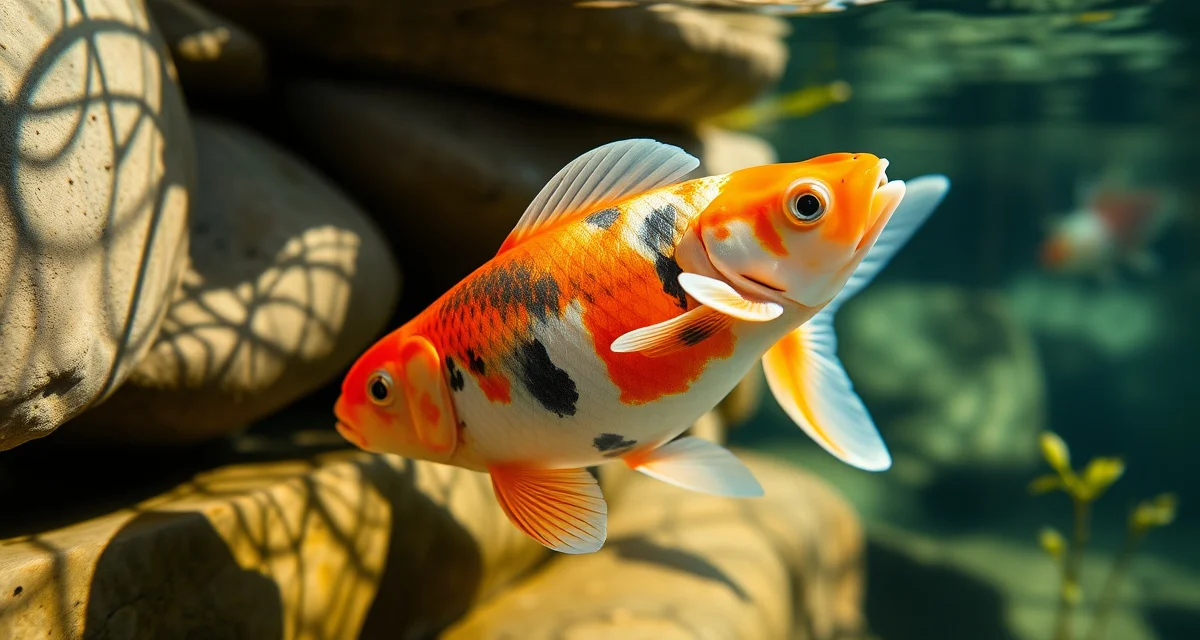
Over 80% of flashing koi are confirmed to have external parasites on diagnostic skin scrape. Flashing, the behavior where a koi rolls to its side and briefly rubs against the pond bottom, wall, or a decoration, is the most reliable early warning sign of external parasite infestation available to koi keepers.
KoiQuanta's behavioral observation log captures flashing events with timestamp and frequency. No competitor explains flashing behavior as a diagnostic signal that drives a specific investigation pathway.
TL;DR
- The 80% parasitic confirmation rate for flashing koi is a strong prior probability, but it leaves 20% of cases with other causes.
- Confirmed external parasites are found in over 80% of flashing koi that undergo a diagnostic skin scrape.
- The remaining 20% have other causes including water quality irritation, handling stress, or physical irritation.
- Early detection based on parameter trends reduces treatment costs and fish stress.
- Seasonal changes require adjusted monitoring schedules; automated reminders help maintain consistency.
What Flashing Means
Flashing is a response to skin or gill irritation. The fish is trying to relieve discomfort by rubbing the affected area against a surface. It's analogous to a dog rubbing its ear.
The irritation can come from several sources. The most common is external parasites: gill flukes (dactylogyrus), body flukes (gyrodactylus), trichodina, chilodonella, and other protozoan parasites all cause skin irritation that drives flashing behavior.
Poor water quality also causes flashing. Elevated ammonia and nitrite irritate gill tissue and can cause fish to flash without any parasites being present. This is why water quality testing before treating for parasites is an important diagnostic step.
Physical irritation from net damage, handling injury, or debris entering the gill chamber can also cause flashing. In these cases, the behavior is typically limited to one specific fish and resolves within a day or two.
Is Flashing Always a Sign of Parasites?
No, but it usually is. The 80% parasitic confirmation rate for flashing koi is a strong prior probability, but it leaves 20% of cases with other causes.
Flashing that suggests parasites:
- Multiple fish flashing simultaneously
- Consistent flashing that continues or increases over several days
- Flashing accompanied by other parasite signs: clamped fins, excess mucus, skin cloudiness
- Flashing that becomes more frequent or more intense over time
Flashing that may not indicate parasites:
- One fish flashing briefly and never repeating
- Flashing that follows a net handling event (handling stress/gill irritation)
- Flashing in a newly filled pond before water quality is established
- Brief, infrequent flashing in an otherwise completely healthy-appearing group
When flashing occurs in multiple fish, is persistent, or is accompanied by any other symptom, treat it as a parasite signal and investigate.
Immediate Response When You See Flashing
Step 1: Check water quality. Test ammonia, nitrite, and pH immediately. Poor water quality causing flashing requires a different response (water change, filtration investigation) than parasitic flashing. Don't skip this step.
Step 2: Log the observation in KoiQuanta. Record which fish are flashing, how frequently, and whether other signs are present. KoiQuanta's flashing frequency log tracks whether the behavior is increasing, stable, or decreasing over subsequent observations.
Step 3: Do a skin scrape. If water quality is good and flashing persists past 24 hours, a skin scrape is the correct next step. A scrape from the lateral body and a separate scrape from near the gill opening (without entering the gill) gives the best diagnostic yield.
Step 4: Treat based on findings. If the scrape shows flukes, treat with praziquantel. If it shows trichodina or other protozoan parasites, salt and/or potassium permanganate are appropriate. If the scrape shows nothing unusual, expand your water quality investigation and consider whether handling or physical irritation might be the cause.
Related Articles
- Koi Not Eating: What It Means and What to Do Next
- Koi Pineconing Scales: What It Means and What to Do
- Redox Potential in Koi Ponds: What ORP Means for Fish Health
FAQ
What is Koi Flashing: What It Means and What to Do?
Koi flashing is a behavior where a koi rolls to its side and briefly rubs against the pond bottom, wall, or decoration. It signals skin or gill irritation — most commonly caused by external parasites. Over 80% of flashing koi are confirmed to have parasites on diagnostic skin scrape, making it the most reliable early warning sign available to koi keepers.
How much does Koi Flashing: What It Means and What to Do cost?
Diagnosing and treating koi flashing has no fixed cost — it depends on what you find. A basic skin scrape microscopy kit costs $20–$80. Treatments like salt, potassium permanganate, or antiparasitic medications range from $10 to $60+ depending on pond volume. Catching the problem early through flashing observation typically reduces treatment costs significantly compared to late-stage infestations.
How does Koi Flashing: What It Means and What to Do work?
When a koi flashes, it is physically trying to relieve irritation by rubbing the affected area against a surface. You observe the behavior, log its frequency, then run a diagnostic skin scrape to identify the cause. Results guide treatment: parasites require antiparasitic medication, while water quality irritation requires parameter correction. The behavioral signal drives a specific investigation and response pathway.
What are the benefits of Koi Flashing: What It Means and What to Do?
Recognizing flashing early gives you a critical head start. Because over 80% of flashing koi have confirmed external parasites, you can act before the infestation spreads to other fish. Early treatment reduces fish stress, lowers medication costs, and improves survival outcomes. Flashing is also a non-invasive signal — you spot it through observation alone, before any visible physical damage occurs.
Who needs Koi Flashing: What It Means and What to Do?
Any koi keeper benefits from understanding flashing, but it is especially important for those with established ponds, multiple fish, or recent new additions. New fish introductions are a primary parasite vector. Keepers who monitor their pond regularly are best positioned to catch flashing early. If you keep koi in any serious capacity, recognizing this behavior is a foundational diagnostic skill.
How long does Koi Flashing: What It Means and What to Do take?
A single flashing episode may resolve quickly if caused by minor stress or a brief water quality spike. However, if flashing is caused by parasites — the case in over 80% of confirmed diagnoses — treatment typically takes one to two weeks depending on the parasite type and medication protocol. Monitoring should continue after treatment to confirm the behavior has stopped and the infestation is cleared.
What should I look for when choosing Koi Flashing: What It Means and What to Do?
Look for specificity and diagnostic depth. A good resource on koi flashing should distinguish between parasitic and non-parasitic causes, explain how to perform or interpret a skin scrape, and provide a clear response pathway. KoiQuanta's approach treats flashing as a diagnostic signal with defined next steps, rather than just listing it as a symptom. Logging frequency and timestamps also helps track progression accurately.
Is Koi Flashing: What It Means and What to Do worth it?
Yes — understanding koi flashing is one of the highest-leverage things you can do as a koi keeper. Because it appears early, before visible lesions or behavioral decline, acting on it can prevent losses that would otherwise be costly or irreversible. Given the 80% parasitic confirmation rate, treating flashing as a serious diagnostic signal rather than ignoring it protects both individual fish health and the wider pond population.
Sources
- Associated Koi Clubs of America (AKCA)
- Koi Organisation International (KOI)
- University of Florida IFAS Extension Aquaculture Program
- Fish Vet Group
- Water Quality Association