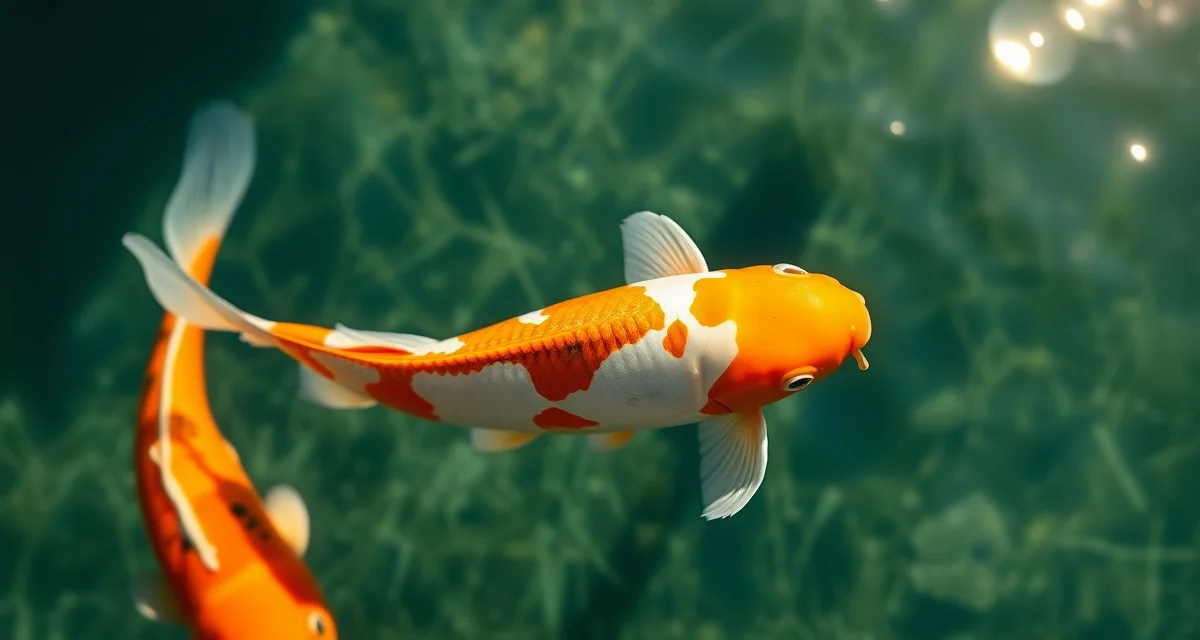
Koi Feeding Guide: What, When, and How Much to Feed
Koi digestive systems shut down below 10°C -- feeding in cold water causes fatal impaction. This is the most important thing to know before you establish any feeding routine. The bacteria in a koi's gut that break down food become inactive in cold water, and food that sits undigested in the gut ferments, causing gas, internal damage, and death.
Every feeding decision you make should start with a temperature check.
TL;DR
- Feed 2-4 times daily based on what fish can consume in 5 minutes per feeding.
- Fish should clean up food in 5 minutes -- remove anything left over.
- As a rough starting point: 1-3% of fish body weight per day at peak summer temperatures, divided across your feeding sessions.
- For a pond with 20 kg of fish total, that's 200-600 grams of food per day across 2-4 feedings.
- Use when water is consistently above 18°C.
- Heavily stocked ponds with large fish need regular water changes -- often weekly at 10-20% -- to manage nitrate accumulation from feeding.
- As a rough calculation, 1-3% of total fish body weight per day at summer temperatures across 2-4 feedings is a reasonable starting point.
The Temperature-Based Feeding Framework
Koi are ectotherms -- their metabolism runs at the temperature of the water. When the water is warm, they can eat a lot, digest quickly, and use nutrients for growth and immune function. When water is cold, their metabolic rate drops and their digestive capacity shrinks dramatically.
Above 20°C (warm water season):
Koi are at peak metabolism. Feed 2-4 times daily based on what fish can consume in 5 minutes per feeding. Use a high-protein, color-enhancing food. This is the growth season and the time when quality feeding makes the most difference.
15-20°C (transition season, spring and autumn):
Reduce to 1-2 feedings per day. Switch to a lower-protein, easier-to-digest food -- wheat germ-based foods are ideal in this range. Fish are still feeding actively but their digestion is slower.
10-15°C (cool water):
Feed once daily or every other day, and only wheat germ or similar easily digestible food. Reduce portion sizes considerably. Fish should clean up food in 5 minutes -- remove anything left over.
Below 10°C:
Stop feeding entirely. Koi don't need to eat in winter if your pond maintains safe oxygen levels and you've built fish up adequately through autumn feeding.
KoiQuanta's feeding log correlates food type and quantity with parameter readings, which is genuinely useful for identifying when overfeeding is driving ammonia or nitrate spikes.
How Much to Feed Per Feeding
The 5-minute rule is the most practical guideline: offer what your fish can consume completely in 5 minutes, then stop. Remove any uneaten food with a net.
As a rough starting point: 1-3% of fish body weight per day at peak summer temperatures, divided across your feeding sessions. For a pond with 20 kg of fish total, that's 200-600 grams of food per day across 2-4 feedings. This scales down proportionally in cooler water.
The 5-minute rule self-regulates better than weight calculations for most hobbyists because it accounts for appetite variation (fish eat less when water parameters are off, when they're mildly stressed, or in periods of weather instability).
Choosing the Right Food
Not all koi foods are equal, and using the right food for the season matters as much as how much you feed.
Summer/growth food: High protein (30-40%), includes color-enhancing ingredients like spirulina and krill. Use when water is consistently above 18°C.
Wheat germ food: Lower protein, easily digestible. Use in the 10-15°C range. Wheat germ foods are also good for fish recovering from illness or stress.
Wheatgerm-based color food: Combines digestibility with color enhancement -- useful in the 15-20°C transition window when you want to maintain color development but digestion is slower.
Medicated food: Used during bacterial infection treatment. Contains antibiotic mixed into the food for oral administration. Only use when specifically needed.
Avoid cheap foods with fillers and artificial colors. They contribute to water quality problems without providing meaningful nutrition.
Overfeeding: The Most Common Mistake
Overfeeding is the leading cause of water quality problems in established koi ponds. Uneaten food breaks down, consuming oxygen and releasing ammonia and nutrients that drive algae growth. Even food that gets eaten produces waste -- the more you feed, the more waste your filter needs to process.
The signs of chronic overfeeding are poor water clarity, elevated nitrate, green water, and algae blooms despite otherwise good filtration. If you're seeing these issues and your fish health is otherwise good, reduce feeding volume before investing in more filtration.
For guidance on the water quality side of feeding management, the koi water chemistry guide covers how feeding rate connects to ammonia, nitrate, and overall parameter balance. For seasonal management specifics, including autumn prep and winter protocols, the koi seasonal management guide goes into depth on year-round feeding transitions.
Feeding and Water Quality: The Direct Connection
Every gram of food you put in the pond eventually becomes ammonia. Through the nitrogen cycle, that ammonia converts to nitrite (briefly) and then to nitrate, which accumulates until you do a water change. The relationship is direct: feed more, produce more nitrate, need more water changes.
Heavily stocked ponds with large fish need regular water changes -- often weekly at 10-20% -- to manage nitrate accumulation from feeding. Lightly stocked ponds with good plant coverage can sometimes go longer between changes, but eventually everyone's nitrate climbs.
Log your feeding alongside your water tests. When nitrate spikes, look at whether feeding volume increased around the same time.
Feeding During Treatment or Stress Events
When koi are sick, stressed, or being treated for disease, reduce feeding considerably. Fish under physiological stress have reduced appetite and compromised digestion. Forcing high feeding rates into sick fish creates excess organic load in the treatment environment.
During antibiotic treatment with medicated food, continue feeding at a moderate rate -- the food is the delivery mechanism for the medication. For all other treatments, cut to once-daily light feeding or skip feeding days if fish show reduced interest.
Frequently Asked Questions
How much should I feed my koi?
Feed what your fish can consume completely in 5 minutes per feeding session, and remove anything left over. As a rough calculation, 1-3% of total fish body weight per day at summer temperatures across 2-4 feedings is a reasonable starting point. Adjust down considerably in cooler water -- half-rate or less at 15-18°C, quarter-rate at 10-15°C, and stop entirely below 10°C. The 5-minute rule self-corrects for appetite variation better than weight calculations in practice.
What is the best koi food?
It depends on the season. In summer above 18°C, use a high-protein (30-40%) food with color-enhancing ingredients like spirulina and krill. In spring and autumn between 10-18°C, switch to wheat germ-based food which is easier to digest at lower temperatures. Avoid cheap foods with artificial colors and excessive fillers -- they produce more waste relative to the nutrition they provide. For fish recovering from illness, wheat germ foods at reduced ration are appropriate during convalescence.
Should I feed koi in winter?
No. Stop feeding when water temperature drops below 10°C. Koi digestive systems essentially shut down in cold water, and food fed below this temperature cannot be digested -- it sits in the gut and ferments, causing fatal internal damage. You should also reduce feeding considerably in the 10-15°C range and switch to easily digestible wheat germ food in the 15-18°C range. Koi survive winter on fat reserves built up through good autumn feeding -- they don't need food through the winter months.
What is Koi Feeding Guide: What, When, and How Much to Feed?
The Koi Feeding Guide: What, When, and How Much to Feed is a comprehensive feeding reference for koi pond owners. It covers the critical role of water temperature in feeding decisions, how much food to offer based on fish body weight, how often to feed across seasons, and how to avoid common mistakes like overfeeding in cold water. The guide gives practical rules — including the 5-minute consumption test — to keep koi healthy year-round.
How much does Koi Feeding Guide: What, When, and How Much to Feed cost?
Following this feeding guide costs nothing — it is free editorial content on KoiQuanta. The ongoing cost of feeding koi depends on pond size and stocking level. At peak summer temperatures, a pond with 20 kg of fish requires roughly 200–600 grams of food per day. Quality koi pellets vary in price, but feeding correctly actually reduces costs by minimising waste, water quality problems, and fish health emergencies caused by overfeeding.
How does Koi Feeding Guide: What, When, and How Much to Feed work?
The guide works by anchoring every feeding decision to water temperature. Below 10°C, feeding stops entirely because koi digestive bacteria become inactive and undigested food ferments in the gut. Between 10–18°C, reduced portions of wheat germ-based food are used. Above 18°C, full feeding resumes at 1–3% of total fish body weight per day, split across 2–4 sessions, with uneaten food removed within 5 minutes.
What are the benefits of Koi Feeding Guide: What, When, and How Much to Feed?
Following a structured koi feeding routine delivers cleaner pond water, faster fish growth, and significantly reduced disease risk. Correct feeding prevents ammonia and nitrate spikes caused by decomposing uneaten food. It eliminates the risk of fatal gut impaction from cold-water feeding. Fish fed on an appropriate seasonal schedule also display better colour, stronger immune response, and more consistent growth compared to koi fed irregularly or without temperature awareness.
Who needs Koi Feeding Guide: What, When, and How Much to Feed?
This guide is essential for anyone keeping koi in an outdoor pond, from first-time hobbyists to experienced keepers refreshing their knowledge. It is particularly valuable for owners heading into their first winter transition, those who have lost fish to overfeeding, and anyone noticing water quality problems they cannot explain. Keepers managing heavily stocked ponds or large fish benefit most, as feeding errors at scale compound quickly into serious water quality and health problems.
How long does Koi Feeding Guide: What, When, and How Much to Feed take?
Each individual feeding session takes roughly 5 minutes — that is the practical benchmark the guide uses. If fish clean up all food within 5 minutes, portions are appropriate. If food remains after 5 minutes, you are overfeeding and should remove the excess immediately. Daily feeding across 2–4 sessions adds up to around 10–20 minutes of active pond time per day during summer, plus a few minutes for a temperature check each morning.
What should I look for when choosing Koi Feeding Guide: What, When, and How Much to Feed?
When applying this feeding framework, prioritise a reliable pond thermometer — temperature accuracy drives every decision. Look for a koi-specific pellet with varied formulas for summer and cooler seasons; wheat germ pellets digest more easily at lower temperatures. Choose a pellet size appropriate to your fish. Evaluate food quality by checking protein and fat content on the label. Avoid cheap bulk feeds with high filler content, which increase waste load and degrade water quality faster.
Is Koi Feeding Guide: What, When, and How Much to Feed worth it?
Yes. The consequences of feeding koi incorrectly — particularly in cold water — include fish death from gut impaction, chronic water quality failures, and expensive veterinary interventions. A clear feeding framework prevents these outcomes with minimal effort. The time investment is small: a daily temperature check and feeding sessions of a few minutes each. For anyone serious about keeping koi alive and thriving long-term, understanding and applying a temperature-based feeding routine is one of the highest-value practices in the hobby.
Related Articles
Sources
- Associated Koi Clubs of America (AKCA)
- Koi Organisation International (KOI)
- University of Florida IFAS Extension Aquaculture Program
- Fish Vet Group
- Water Quality Association