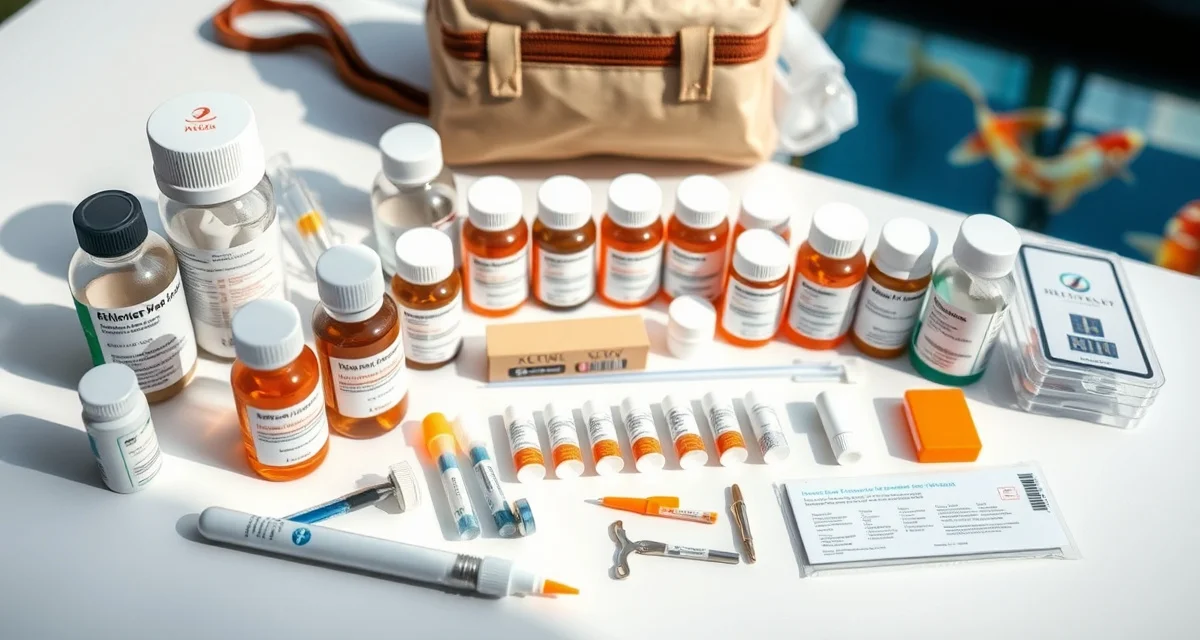
Koi Emergency Disease Kit: What to Have Ready
Having a pre-stocked koi emergency kit reduces disease response time from days to hours. When koi disease appears, waiting 3-5 days for medication delivery is often the difference between successful treatment and a catastrophic loss. The time to buy medications is before you need them.
KoiQuanta's medication inventory feature tracks what you have on hand with expiry date alerts so you always know your kit is current and complete.
TL;DR
- When koi disease appears, waiting 3-5 days for medication delivery is often the difference between successful treatment and a catastrophic loss.
- For parasitic infestations in summer, every day at 25°C+ means another generation of parasite reproduction.
- A basic compound microscope (40-400x) allows skin scrapes to be examined and parasites identified before treatment.
- A strong illuminated magnifying glass (10x) gives rough capability for scrape examination.
- Praziquantel powder stored correctly in cool, dry conditions is stable for 3-5 years.
- Methylene blue solutions are stable for 2-3 years.
- Antibiotic products have variable shelf lives (typically 2-3 years) and degrade more quickly once opened.
Why Pre-Stocking Matters
Koi disease can move fast. An Aeromonas bacterial infection that shows mild symptoms on Monday can produce severe ulcers by Friday. A gill fluke infestation that you notice as occasional flashing can become a clinical gill disease problem within two weeks in summer.
The delay in treatment when you don't have medications on hand isn't just inconvenient. For bacterial infections, every day without appropriate treatment is a day the infection advances. For parasitic infestations in summer, every day at 25°C+ means another generation of parasite reproduction.
Build your emergency kit now, before any fish shows signs. Check it against expiry dates at least once per year. KoiQuanta's medication inventory alert system makes this easy by notifying you when a stored medication is approaching its expiry date.
The Core Emergency Kit
1. Salt (Sodium Chloride, Non-Iodized)
Salt is the single most important item in a koi emergency kit. No other item covers as many emergency scenarios as cheaply and safely.
Salt treats or helps with:
- Nitrite toxicity (blocks gill uptake at 0.3%)
- Protozoan parasites (many species are salt-sensitive)
- Osmotic stress after injury or transport
- Minor bacterial wound treatment at higher concentrations
Stock: 25-50 lbs of non-iodized salt. Pool salt, pickling salt, or kosher salt (no additives) all work. Do not use table salt with iodine or anti-caking agents.
Cost: $15-25
2. Praziquantel
The most important antiparasitic medication for koi quarantine and emergency treatment. Praziquantel is effective against gill flukes (dactylogyrus) and body flukes (gyrodactylus), which are two of the most common parasites in the koi trade.
Stock: Enough to treat your display pond twice (calculate for your pond volume). Powder form is more economical and stable than tablets for pond use.
Shelf life: 3-5 years when stored correctly (cool, dry, away from light).
Cost: $20-40 for a typical hobbyist pond supply
3. Potassium Permanganate (KMnO4)
The koi quarantine medications overview identifies potassium permanganate as a versatile emergency treatment for protozoan parasites (trichodina, chilodonella, costia), bacterial skin infections, and fungal surface infections.
Potassium permanganate works well for rapid knockdown of external parasitic and bacterial loads. It requires careful handling and accurate dosing (the margin between therapeutic and toxic doses is tighter than with most medications).
Stock: 100-200g for a typical hobbyist supply.
Shelf life: Indefinite when dry, but solutions degrade quickly.
Cost: $15-25
4. Formalin (Formaldehyde Solution)
Formalin treats external protozoan parasites when other options aren't sufficient. It's particularly useful for costia (ichthyobodo), chilodonella, and gyrodactylus in situations where praziquantel hasn't cleared the infestation.
Formalin is the most toxic medication in the common koi arsenal. It depletes dissolved oxygen during treatment and is harmful to biological filtration. Use carefully and increase aeration during treatment.
Stock: 250-500ml (use according to manufacturer directions, never above the therapeutic dose).
Important: Never use formalin in water above 24°C without close monitoring. Toxicity to fish increases significantly at high temperatures.
Cost: $20-30
5. Methylene Blue
Methylene blue is useful for fungal infections (particularly on eggs, fins, and wounds) and mild bacterial skin conditions. It's gentle and safe at therapeutic doses, making it appropriate for small fish or fragile individuals that might not tolerate stronger treatments.
It's also useful as an emergency transport additive: adding methylene blue to transport water helps with oxygen utilization stress during shipping.
Stock: 250ml of a 2% solution.
Cost: $10-15
6. Acriflavine
Acriflavine is effective against bacterial infections and some fungal surface conditions. It's gentler than formalin and appropriate for mild bacterial presentations.
Stock: 100ml is adequate for most hobbyist emergencies.
Cost: $10-20
7. Antibiotics (Where Available)
This is the most important emergency item that many hobbyists don't have because of availability. In the US, prescription antibiotics for fish have become increasingly regulated.
If you can legally obtain oxytetracycline (available in some states through feed stores or a vet prescription), keeping a therapeutic supply on hand is valuable for bacterial disease emergencies.
Where prescription antibiotics aren't available, medicated koi food (terramycin-medicated food is available at some farm stores) is a useful alternative that provides internal antibiotic delivery through feeding.
Note: The koi disease antibiotic resistance concerns are real. Store antibiotics only if you have a clear protocol for their use and won't reach for them without confirmed bacterial disease.
8. A Microscope or Strong Magnifying Glass
Not a medication, but essential for diagnosis. A basic compound microscope (40-400x) allows skin scrapes to be examined and parasites identified before treatment. A strong illuminated magnifying glass (10x) gives rough capability for scrape examination.
Treating the wrong parasite with the wrong medication wastes time and money. A scrape and basic microscope examination tells you what you're dealing with.
Cost: $60-200 for a basic compound microscope; $10-20 for an illuminated magnifying glass.
9. Test Kits
Your emergency kit should include fresh test kits for:
- Ammonia
- Nitrite
- pH
These are your immediate diagnostic tools when disease appears. Water quality is often a contributing factor to disease onset, and knowing your parameters is the first step in any disease response.
Storage and Management
Store your emergency kit in a cool, dry location out of direct sunlight. Many medications degrade significantly with temperature fluctuation and light exposure.
Use KoiQuanta's medication inventory feature to:
- Log each medication in your kit with purchase date and expiry date
- Receive alerts when medications are approaching expiry
- Track remaining quantities so you know when to restock before an emergency
Review your kit at least once per year, ideally in early spring before the high-risk season begins.
Frequently Asked Questions
What medications should I always have for koi emergencies?
The seven core items in a koi emergency kit are: non-iodized salt (25-50 lbs), praziquantel (for flukes), potassium permanganate (for protozoan parasites and surface bacterial/fungal infections), formalin (for resistant protozoan parasites), methylene blue (for fungal infections), acriflavine (for mild bacterial conditions), and antibiotics where legally available. Additionally, a basic compound microscope for skin scrape examination is essential for accurate diagnosis before treatment. Having all of these on hand means you can respond to virtually any koi disease emergency within hours.
How long do koi medications last in storage?
Storage life varies by medication. Praziquantel powder stored correctly in cool, dry conditions is stable for 3-5 years. Salt has an indefinite shelf life if kept dry. Potassium permanganate crystals are stable indefinitely when dry. Formalin solutions may polymerize over time (formation of white precipitate); discard and replace if you see this. Methylene blue solutions are stable for 2-3 years. Antibiotic products have variable shelf lives (typically 2-3 years) and degrade more quickly once opened. KoiQuanta tracks expiry dates for every item in your medication inventory and alerts you as dates approach.
What is the single most important medication to have for koi emergencies?
Salt is the most important single item in any koi emergency kit, by a wide margin. It covers more emergency scenarios than any other product: nitrite toxicity (potentially lifesaving), osmotic support after injury or transport stress, protozoan parasite management at 0.3%, and supportive therapy during bacterial infections. It's available everywhere, inexpensive, safe to use within normal dose ranges, and has an indefinite shelf life. If you could only have one item in a koi emergency kit, salt is the choice.
What is Koi Emergency Disease Kit: What to Have Ready?
A koi emergency disease kit is a pre-stocked collection of medications, diagnostic tools, and treatment supplies kept on hand before illness strikes. It typically includes antiparasitic treatments like praziquantel, antibiotics, methylene blue, salt, a basic microscope for skin scrapes, water testing equipment, and isolation tank supplies. The goal is to cut disease response time from days to hours, since many koi infections escalate rapidly and waiting for medication delivery can mean the difference between recovery and loss.
How much does Koi Emergency Disease Kit: What to Have Ready cost?
Building a koi emergency kit is a one-time investment that varies based on what you include. A basic kit with essential medications, salt, and a quality magnifying glass can cost $100–$200. A more complete setup with a compound microscope (40–400x), a wider medication range, and a quarantine tank can run $300–$600+. Costs are offset by avoiding the far greater expense of losing valuable fish to preventable disease. Medications like praziquantel powder are shelf-stable for years, making the cost per use low over time.
How does Koi Emergency Disease Kit: What to Have Ready work?
When disease is suspected, the kit lets you immediately assess and treat rather than waiting on shipping. You start by isolating affected fish in a quarantine tank, then use water test kits to rule out parameter issues. A microscope or illuminated magnifying glass helps identify parasites from a skin scrape. Once the problem is identified—bacterial infection, parasites, or fungal issue—you pull the appropriate medication from your kit and begin treatment the same day symptoms appear.
What are the benefits of Koi Emergency Disease Kit: What to Have Ready?
The core benefit is speed. Bacterial infections like Aeromonas can progress from mild symptoms to severe ulcers within days. Parasitic infestations at warm water temperatures (25°C+) can complete a full reproductive cycle every day, rapidly compounding the problem. Having treatments on hand eliminates the 3–5 day shipping delay that often turns a manageable problem into a catastrophic loss. Secondary benefits include cost savings over time, reduced stress for both fish and keeper, and more confident, informed disease management.
Who needs Koi Emergency Disease Kit: What to Have Ready?
Any koi keeper benefits from an emergency kit, but it is essential for those with multiple or high-value fish, ponds in warm climates where parasites reproduce quickly, or setups that are difficult to monitor daily. New pond owners especially benefit because unfamiliarity with early disease symptoms means problems are often caught later. Keepers who purchase fish from multiple sources or attend koi shows face higher disease introduction risk and have more to gain from being prepared.
How long does Koi Emergency Disease Kit: What to Have Ready take?
Building the kit itself takes a few hours of research and purchasing, but the real time saving comes during a disease event. With a pre-stocked kit, you can go from noticing symptoms to beginning treatment within hours. Without one, you lose 3–5 days to shipping, plus the time it takes to correctly identify the problem after medications arrive. Diagnostic steps like a skin scrape examined under a microscope take minutes and immediately inform which medication to use.
What should I look for when choosing Koi Emergency Disease Kit: What to Have Ready?
Look for coverage across the main disease categories: a broad-spectrum antiparasitic (praziquantel powder is the standard), a topical treatment like methylene blue, potassium permanganate for external infections, aquarium salt, and an antibiotic option. Prioritize medications with long shelf lives—praziquantel stores well for 3–5 years; methylene blue lasts 2–3 years. Include diagnostic tools: at minimum a 10x illuminated magnifying glass, ideally a 40–400x compound microscope. Add reliable water test kits and a designated quarantine vessel.
Is Koi Emergency Disease Kit: What to Have Ready worth it?
Yes. The cost of a well-stocked emergency kit is small compared to the value of even a single quality koi. More importantly, koi disease does not wait for convenient timing—symptoms can appear on a weekend, overnight, or during a holiday when shops and vets are unavailable. A kit gives you the ability to act immediately, which is often the deciding factor in treatment outcomes. KoiQuanta's medication inventory feature also helps you track expiry dates so your kit stays current and ready when you need it most.
Related Articles
- Why Are My Koi Gasping at the Water Surface? Oxygen or Disease?
- Koi Ich (White Spot Disease): Fast Treatment Before It Kills Your Fish
Sources
- Associated Koi Clubs of America (AKCA)
- Koi Organisation International (KOI)
- University of Florida IFAS Extension Aquaculture Program
- Fish Vet Group
- Water Quality Association