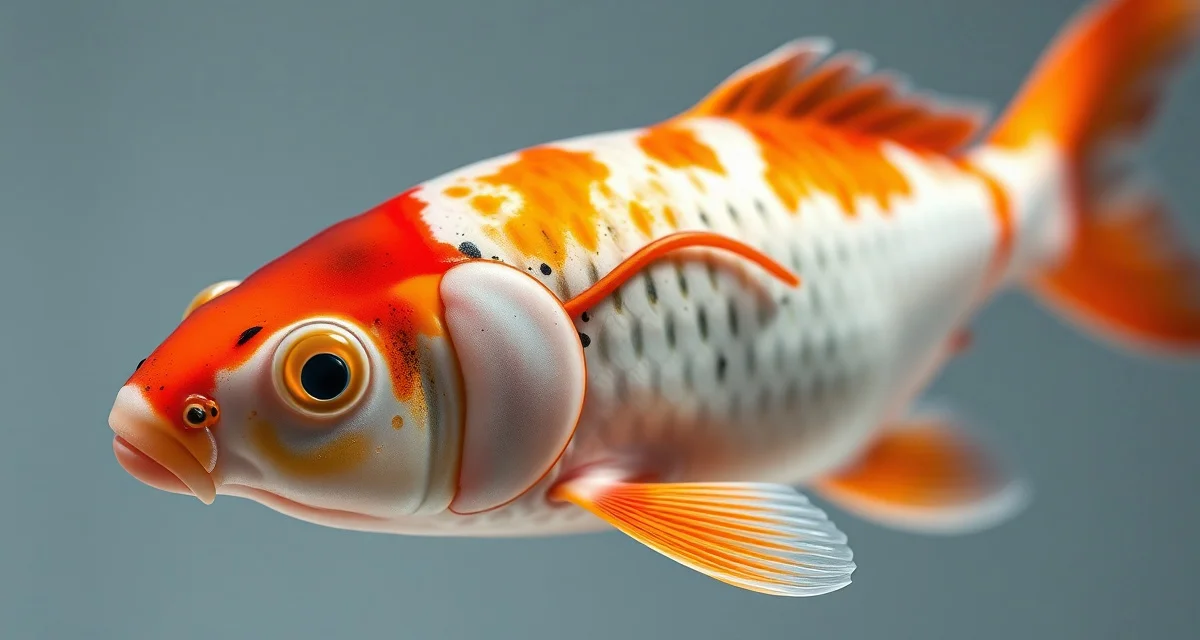
Anchor Worm (Lernaea) Treatment for Koi
Anchor worm is one of the few koi parasites you can see with the naked eye - which is both useful for diagnosis and unsettling for keepers who weren't expecting to find visible organisms attached to their fish.
Lernaea cyprinacea burrows its forked anchor into the fish's muscle tissue, feeding on blood and causing both direct physical damage and severe local inflammatory response. The worm itself can be removed, but the secondary bacterial infection at the attachment site is often the bigger clinical problem.
TL;DR
- Heavy burdens (10+) cause significant blood loss, immune stress, and can be fatal in smaller or juvenile fish.
- This means effective anchor worm management requires two components: 1.
- Net the fish carefully and keep it calm in a wet towel or on a damp foam surface - just far enough out of water to access the attachment site 2.
- Grasp the worm as close to the skin surface as possible with the forceps - not at the middle or end, which risks snapping the worm and leaving the anchor in 3.
- The forked anchor will typically come out cleanly with controlled traction 4.
- Immediately apply betadine or chlorhexidine to the wound site with a cotton swab 5.
- One treatment often sufficient; repeat in 3–4 weeks if reinfestation occurs.
Identifying Anchor Worm
Anchor worm is visible as thin, thread-like structures 1–2 cm long protruding from the skin, most commonly at the base of fins, behind the pectoral fins, and along the body flanks. The worm is pale green or white, and you'll often see a small pair of egg sacs dangling from the end of the visible body.
At the attachment site, the skin is typically:
- Reddened and inflamed (hemorrhagic response to the anchor)
- May show a small raised bump or crater-like wound around the worm's entry point
- If untreated for more than a few weeks, the wound may be deep enough to expose underlying muscle
Individual fish can carry 2–3 anchor worms without severe clinical impact. Heavy burdens (10+) cause significant blood loss, immune stress, and can be fatal in smaller or juvenile fish.
The Life Cycle Matters for Treatment
Lernaea has a free-swimming larval stage that's susceptible to chemical treatment. The embedded adult female is much harder to kill chemically - most chemical treatments don't penetrate effectively to the burrowed anchor.
This means effective anchor worm management requires two components:
- Manual removal of attached adult worms
- Chemical treatment to kill free-swimming larvae in the water
Treating with chemicals alone, without removing adult worms, leaves the most damaging stage of the parasite on the fish. Removing adults without treating the water leaves free-swimming larvae to reinfect.
Manual Removal Technique
This is the part most keepers are anxious about. Done correctly, it's straightforward. Done badly - particularly if the worm breaks off with the anchor still embedded - it creates a worse inflammatory response.
What you need:
- Fine-tipped, blunt-nosed forceps (tweezers) - not pointed, to reduce puncture risk
- A wet towel or soft mesh net support for the fish
- Dilute betadine or chlorhexidine for wound treatment
- A helper if the fish is large
The procedure:
- Net the fish carefully and keep it calm in a wet towel or on a damp foam surface - just far enough out of water to access the attachment site
- Grasp the worm as close to the skin surface as possible with the forceps - not at the middle or end, which risks snapping the worm and leaving the anchor in
- Pull slowly, steadily, and straight out from the skin - don't twist or jerk. The forked anchor will typically come out cleanly with controlled traction
- Immediately apply betadine or chlorhexidine to the wound site with a cotton swab
- Return the fish to the tank within 30–60 seconds of netting
If the worm breaks and the anchor remains embedded: The remaining anchor tissue will cause a significant local inflammatory response and is a prime entry point for Aeromonas. Treat the site topically with antiseptic and monitor closely for secondary bacterial infection. The anchor will eventually be expelled by the fish's immune response, but it may take several weeks.
Count the worms as you remove them. Log the count per fish in KoiQuanta. If you're doing a treatment protocol and retreating, the worm burden count tells you whether the treatment is working.
Chemical Treatment for Free-Swimming Larvae
After removing adult worms, treat the water to kill free-swimming larvae and prevent reinfestation.
Diflubenzuron (Dimilin):
The most effective option where available. A chitin synthesis inhibitor that prevents larval molting - larvae can't complete development and die. Dose: 0.066 mg/L. One treatment often sufficient; repeat in 3–4 weeks if reinfestation occurs.
Organophosphates (Trichlorfon/Dylox):
Trichlorfon is highly effective against Lernaea larvae. Dose varies by product - follow manufacturer guidelines precisely. Note: trichlorfon is toxic to koi at doses above the therapeutic range and is temperature-sensitive (toxicity increases with temperature). Not for use above 75°F (24°C). Some products require prescription.
Potassium Permanganate:
KMnO4 at 2–4 mg/L kills free-swimming Lernaea larvae and provides broad antiparasitic action. Less specific than Dimilin but useful as a general antiparasitic treatment alongside anchor worm management.
Salt:
Salt at 0.3% does not effectively control Lernaea. Don't rely on salt alone.
Treatment timing: Free-swimming larvae are present throughout the warmer months (water above 60°F). If anchor worms are found on fish, treat for larvae immediately and plan a follow-up treatment 3–4 weeks later to catch the next generation of hatching eggs.
Secondary Bacterial Infection Management
This is where anchor worm causes its worst long-term damage. The attachment wound is a direct breach in the skin - an open invitation for Aeromonas, Pseudomonas, and fungal infection (Saprolegnia).
After manual removal, monitor the attachment site daily:
- Clean healing: redness reducing, wound contracting, no discharge
- Problem signs: increasing redness around the site, white/cream discharge from the wound, wound enlarging rather than contracting, cotton-like fungal growth
If bacterial infection develops at the attachment site, topical treatment at water-out time (betadine, chlorhexidine) may be sufficient for small, superficial wounds. For wounds that are deepening or showing systemic spread (redness tracking up the fin or body from the site), systemic antibiotic treatment is necessary.
Salt at 0.3% throughout anchor worm treatment provides mild antibacterial protection at wound sites and reduces osmotic stress.
Pond Environment Treatment
Anchor worm eggs persist in pond substrate and sediment. After adult worm removal and water treatment, the pond environment itself needs attention:
- Vacuum or siphon loose substrate to remove accumulated eggs and organic matter
- A follow-up Dimilin or KMnO4 treatment 3–4 weeks after the first addresses the next generation of hatching larvae
- If anchor worm was found on quarantine fish: the quarantine tank should be treated before the next batch
Related Articles
- Koi Hemorrhagic Septicemia: Symptoms, Treatment, and Emergency Protocol
- Koi Pop Eye (Exophthalmia): Causes, Treatment, and Recovery
- Should You Prophylactically Treat New Koi During Quarantine?
- Does Water Temperature Affect Koi Disease Treatment Efficacy?
FAQ
How do I remove anchor worms from koi?
Grasp the anchor worm as close to the fish's skin as possible with fine-tipped, blunt-nosed forceps. Pull slowly and steadily straight out from the skin without twisting - this removes the forked anchor cleanly. Immediately apply betadine or chlorhexidine antiseptic to the wound site. Don't grasp the middle of the worm, as breaking it leaves the anchor embedded and causes more severe inflammation.
What chemical kills anchor worm in koi?
Diflubenzuron (Dimilin) is the most effective and specific treatment for anchor worm larvae - it prevents larval molting and stops the life cycle. Trichlorfon (Dylox) is also highly effective but has a narrow safety margin and is temperature-sensitive. Potassium permanganate at 2–4 mg/L kills free-swimming larvae as part of a broader treatment. Chemical treatment targets the free-swimming larval stage; adult worms embedded in fish must be removed manually.
How do I treat the wound after anchor worm removal?
Apply dilute betadine (povidone-iodine) or chlorhexidine directly to the attachment wound immediately after removal. For clean wounds in good-condition fish, topical treatment alone is sufficient with 0.3% salt in the tank. If the wound shows expanding redness, discharge, or fails to contract in 5–7 days, add systemic antibiotic treatment (oxytetracycline bath) to address Aeromonas infection at the wound site. Monitor daily and photograph the wound for progress comparison.
What is Anchor Worm (Lernaea) Treatment for Koi?
Anchor worm (Lernaea cyprinacea) treatment for koi involves physically removing the visible parasites with fine-tipped forceps and disinfecting the wound site with betadine or chlorhexidine. A chemical treatment—typically diflubenzuron or potassium permanganate—is then applied to the pond to kill juvenile stages and prevent reinfestation. Because adult worms burrow their forked anchor into muscle tissue, treatment must address both the visible adults and the microscopic larvae in the water column.
How much does Anchor Worm (Lernaea) Treatment for Koi cost?
Anchor worm treatment is relatively low cost. Forceps and betadine for manual removal cost only a few dollars. Pond-wide chemical treatments like diflubenzuron (Dimilin) typically range from $15–$50 depending on pond volume. Potassium permanganate is similarly affordable. The main expense can be salt if used as a supplementary bath. Total treatment cost for most backyard ponds is usually under $50–$75, though severe infestations requiring multiple rounds will increase that.
How does Anchor Worm (Lernaea) Treatment for Koi work?
Treatment works in two phases. First, adult worms are physically grasped with forceps as close to the skin as possible and pulled out cleanly so the anchor doesn't break off and remain embedded. The wound is then disinfected. Second, a pond-wide larvicide like diflubenzuron is dosed to interrupt the parasite's life cycle by killing juvenile Lernaea before they can mature and reattach to fish. One treatment round is often sufficient; a follow-up dose in 3–4 weeks handles any survivors.
What are the benefits of Anchor Worm (Lernaea) Treatment for Koi?
Effective treatment prevents serious health consequences for your koi. Left untreated, heavy burdens of 10 or more worms cause significant blood loss, chronic inflammation, immune suppression, and open wounds that invite bacterial and fungal infections—often more dangerous than the worm itself. Treating early stops the infection cascade, allows wounds to heal cleanly, and protects younger or smaller fish that are most at risk of fatality. Treating the whole pond also protects fish that haven't yet shown visible signs of infestation.
Who needs Anchor Worm (Lernaea) Treatment for Koi?
Any koi keeper whose fish show visible worm-like appendages—typically 1–2cm threads protruding from the body with redness or inflammation at the base—needs to treat immediately. Ponds are at higher risk after introducing new fish without quarantine, after wild bird visits, or during warm summer months when Lernaea reproduces rapidly. Juvenile koi, smaller pond fish, and any fish already stressed by poor water quality or other illness are particularly vulnerable and require prompt intervention to avoid fatality.
Sources
- Associated Koi Clubs of America (AKCA)
- Koi Organisation International (KOI)
- University of Florida IFAS Extension Aquaculture Program
- Fish Vet Group
- Water Quality Association