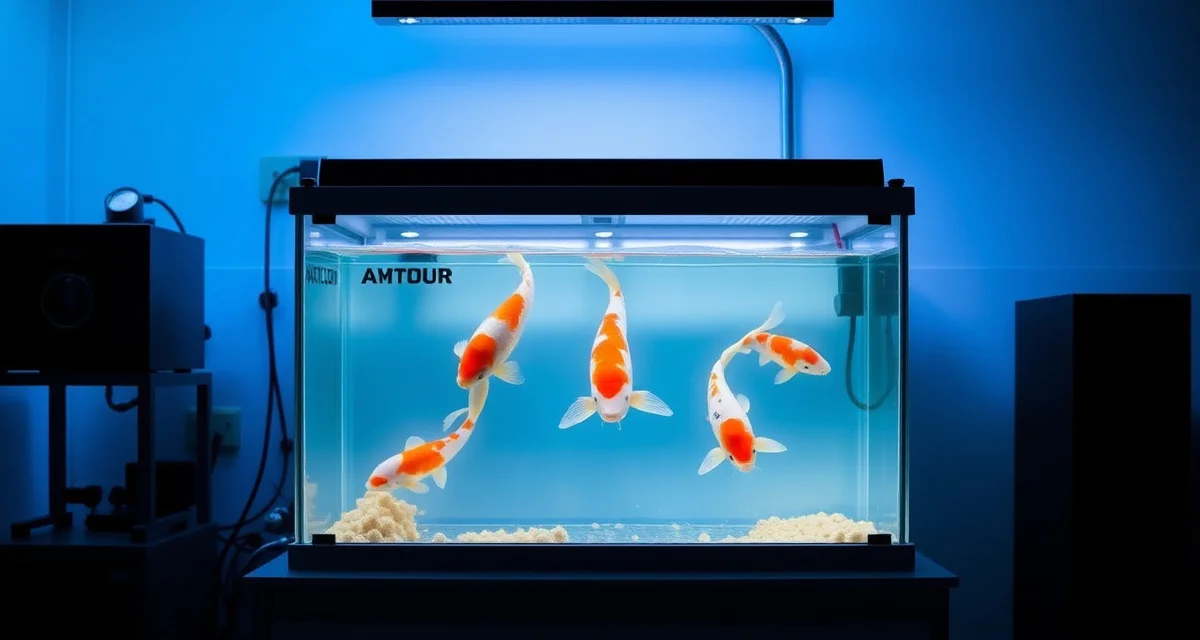
When Should You Use a Koi Isolation Tank?
An isolation tank is one of the most valuable pieces of equipment a koi keeper can have, and one of the most underused. The moment you see a fish showing signs of illness, the single best thing you can do for that fish and for every other fish in your pond is to isolate it immediately. Isolation tanks for treating koi disease should have a minimum volume of 100 gallons per fish being treated for effective treatment dosing and fish welfare.
Without simultaneous multi-pond management capability, you can't track your main pond while treating isolated fish. KoiQuanta manages your koi quarantine program tank, isolation tank, and main pond as separate live environments, keeping all three in view without letting any fall through the cracks.
TL;DR
- Isolation tanks for treating koi disease should have a minimum volume of 100 gallons per fish being treated for effective treatment dosing and fish welfare.
- Dosing a single fish in 150 gallons is far more controllable and economical than treating a 3,000-gallon pond.
- Errors in a small tank are more dangerous because a 10% overdose in 150 gallons is a lot more fish per gallon than the same error in 3,000 gallons.
- For a single average koi of 30-45 cm, a 100-150 gallon tank is workable.
- For larger fish (50 cm+), go bigger, ideally 200+ gallons.
- A 300-gallon stock tank works well for one or two average-sized koi.
- If you don't have seeded media available, add a bacterial supplement and test ammonia every 12 hours, doing water changes if it climbs above 0.25 ppm.
When to Isolate
Isolate a fish when you see any of the following:
- Visible ulcers, lesions, or hemorrhaging
- Progressive fin erosion
- Pinecone scale raising (dropsy)
- Severe surface breathing or gill involvement
- Inability to maintain normal swimming posture
- Persistent isolation and refusal to feed over more than 48 hours with no environmental explanation
Early signs like mild flashing or slight clamped fins may warrant close observation rather than immediate isolation, but if symptoms worsen or spread, isolate without delay.
Setting Up an Isolation Tank Quickly
Having a pre-staged isolation setup is far better than scrambling when a fish is already sick. You want at minimum:
- A tank or tub of at least 100 gallons (bigger is better for treatment dosing accuracy)
- A sponge filter or HOB filter with seeded media from your established filter
- A heater capable of holding 20-22°C
- Strong aeration
- A lid or cover to prevent jumping (sick fish jump)
- Salt, methylene blue, and your primary treatment medications on hand
The cycled sponge filter is critical. An uncycled isolation tank will spike ammonia on top of whatever disease you're treating, rapidly compounding the fish's stress. Keep a spare seeded sponge running in your main pond filter at all times so you always have cycled media available.
Dosing in an Isolation Tank
One key advantage of isolation is treatment precision. Dosing a single fish in 150 gallons is far more controllable and economical than treating a 3,000-gallon pond. You can use medications that aren't pond-safe (like methylene blue, which stains silicone), achieve accurate therapeutic concentrations without worrying about pond chemistry variables, and adjust dose quickly if needed.
Use KoiQuanta's treatment dose calculator to calculate exact treatment volumes for your isolation tank volume. Errors in a small tank are more dangerous because a 10% overdose in 150 gallons is a lot more fish per gallon than the same error in 3,000 gallons.
Frequently Asked Questions
What size isolation tank do I need for sick koi?
Minimum 100 gallons per fish being treated. For a single average koi of 30-45 cm, a 100-150 gallon tank is workable. For larger fish (50 cm+), go bigger, ideally 200+ gallons. The size requirement is driven by two factors: the fish needs adequate water volume for comfortable movement and oxygen availability while stressed, and treatment dosing accuracy degrades in very small volumes where minor measurement errors create significant concentration errors. Bigger is always better, within reason. A 300-gallon stock tank works well for one or two average-sized koi.
Do I need a filter in my koi isolation tank?
Yes, always. A filter isn't optional, it's essential. Without filtration, ammonia from a single sick fish will spike rapidly in a closed tank, adding toxic stress on top of whatever disease you're already treating. Use a sponge filter with media seeded from your main pond filter to get immediate biological filtration. If you don't have seeded media available, add a bacterial supplement and test ammonia every 12 hours, doing water changes if it climbs above 0.25 ppm. The goal is stable water quality that supports recovery, not just a container to put the sick fish in.
How do I set up a koi isolation tank quickly?
Fill the tank with pond water (not tap water) to match temperature and chemistry instantly. Add a cycled sponge filter from your main pond filter. Set the heater to 20-22°C. Add salt to 0.3% as immediate osmotic support. Increase aeration to maximum. Transfer the fish gently using a large net. Do this entire process in under 30 minutes. The quicker you isolate, the less pathogen exposure your main pond fish receive and the sooner targeted treatment can begin. Keep a ready isolation setup staged so this process takes minutes, not hours.
What is When Should You Use a Koi Isolation Tank??
A koi isolation tank is a dedicated separate vessel used to quarantine new fish, treat sick koi, or recover injured specimens away from your main pond. It allows targeted treatment in a controlled volume, typically 100–150 gallons per fish, without exposing your entire pond population to disease, medications, or stress.
How much does When Should You Use a Koi Isolation Tank? cost?
The tank itself can cost anywhere from $50 for a basic stock tank to several hundred dollars for a purpose-built system. Ongoing costs include aeration, heating, filtration media, and medications. Treating one fish in 150 gallons is far more economical than dosing a 3,000-gallon pond, making isolation tanks cost-effective in the long run.
How does When Should You Use a Koi Isolation Tank? work?
You fill the isolation tank with conditioned water, establish basic filtration and aeration, then move the affected fish into it. Medications or salt treatments are dosed precisely to the known water volume. You monitor the fish daily, performing water changes as needed, and return it to the main pond only after a full recovery period.
What are the benefits of When Should You Use a Koi Isolation Tank??
Isolation tanks protect your entire pond population by containing disease before it spreads. They allow precise, economical medication dosing, reduce stress on healthy fish, and give sick or new fish a calm recovery environment. They also let you observe a single fish closely without the distraction of a full pond.
Who needs When Should You Use a Koi Isolation Tank??
Any koi keeper who introduces new fish, has a pond with multiple specimens, or has experienced disease outbreaks needs an isolation tank. It is especially critical for keepers with valuable or large koi, where a disease spreading to the main pond could mean catastrophic losses. Even hobbyists with small ponds benefit significantly.
How long does When Should You Use a Koi Isolation Tank? take?
Quarantine for new fish typically runs 30 days minimum. Disease treatment varies by condition but commonly takes 2–4 weeks. Recovery from injury or stress may require 1–2 weeks of isolation. The timeline depends on the illness, medication protocol, and how quickly the fish responds to treatment.
What should I look for when choosing When Should You Use a Koi Isolation Tank??
Look for a minimum capacity of 100 gallons per fish, easy-to-clean smooth walls, reliable aeration and filtration, and a heater to maintain stable temperature. Avoid tanks with sharp edges or rough surfaces. A lid or cover helps prevent jumps. Choose a setup you can monitor daily and drain and refill easily.
Is When Should You Use a Koi Isolation Tank? worth it?
Yes, unequivocally. A koi isolation tank is one of the highest-return investments a pond keeper can make. It can mean the difference between losing one fish and losing your entire pond. The cost of a basic setup is trivial compared to the value of your koi collection and the peace of mind it provides.
Related Articles
- Should You Prophylactically Treat New Koi During Quarantine?
- How Often Should I Do Water Changes in My Koi Pond?
- How to Use Potassium Permanganate on Koi: Safe Dosing Guide
Sources
- Associated Koi Clubs of America (AKCA)
- Koi Organisation International (KOI)
- University of Florida IFAS Extension Aquaculture Program
- Fish Vet Group
- Water Quality Association